EUR/USD forecast: CPI delay holds EUR in range as Euro strength builds
- EURUSD remains range-bound as another U.S. CPI delay weakens the dollar and injects uncertainty into the market.
- The euro retains structural strength, supported by improving sentiment and narrowing policy divergence with the Fed.
- A breakout above 1.16059 may target 1.16688, while a breakdown below 1.15627 exposes deeper pullbacks.

EUR/USD consolidates as traders brace for delayed CPI
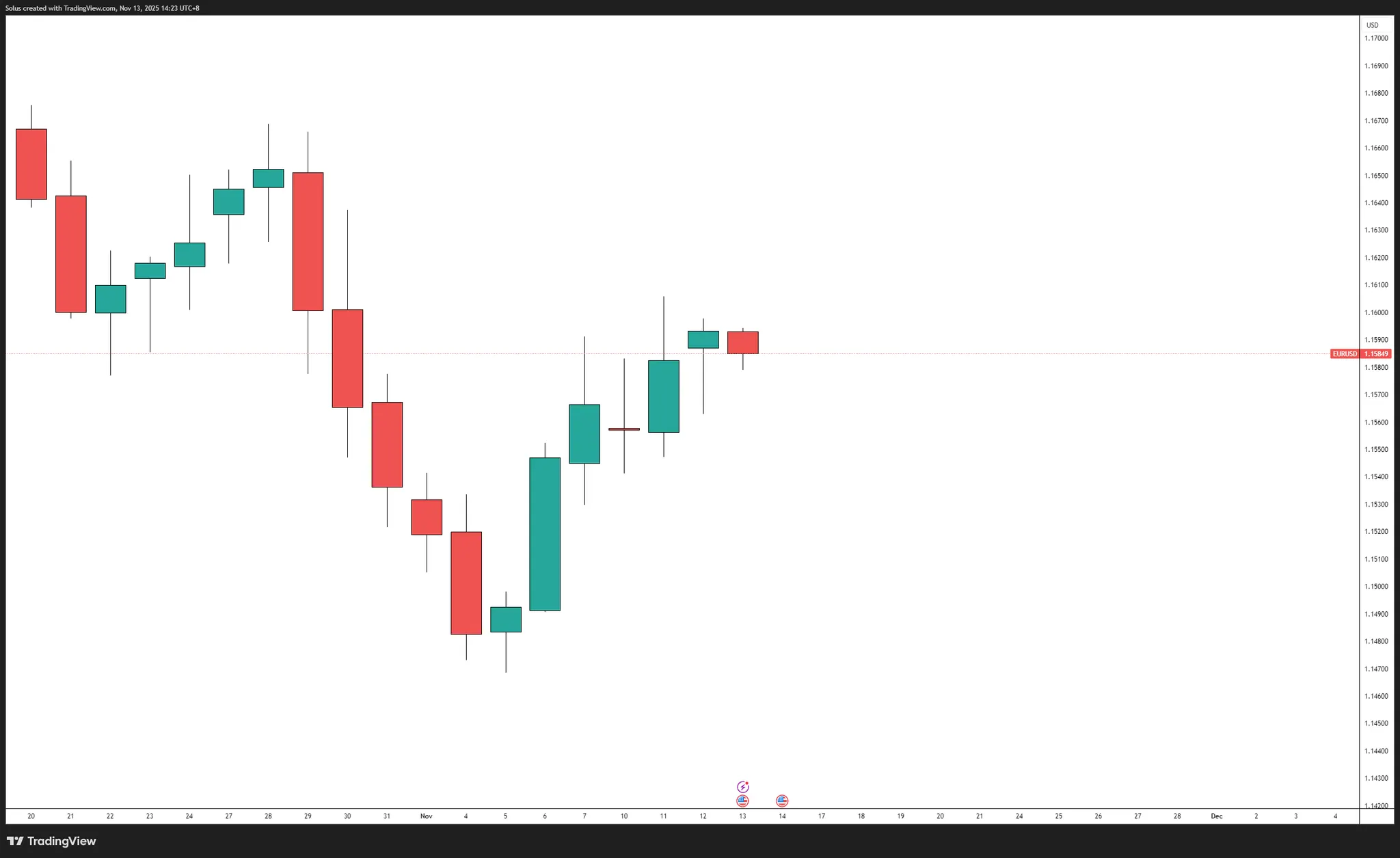
EURUSD continues to trade inside a tight consolidation range, with the chart showing clear boundaries at 1.16059 resistance and 1.15627 support. This sideways structure reflects hesitation and a lack of conviction from both buyers and sellers, especially with the U.S. CPI release being delayed once again.
The delay removes the biggest near-term directional data point for the U.S. dollar. Without it, USD sentiment has softened, and EURUSD has managed to hold onto recent gains despite being capped under resistance. The pair is effectively in "pause mode" — awaiting the next macro catalyst before confirming a directional move.
The broader structure shows that EURUSD has climbed from earlier November lows, but buyers are now waiting for confirmation before attempting to break above the 1.16059 ceiling.
How the CPI delay affects EUR/USD
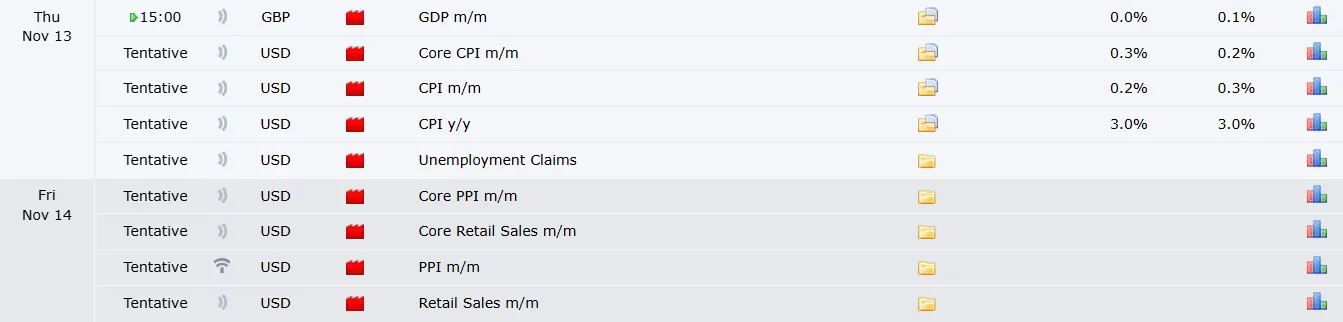
The U.S. CPI delay is one of the most important factors affecting EURUSD right now:
1. USD weakens on uncertainty
CPI is the single most influential inflation indicator for the Federal Reserve. When its release becomes uncertain, traders pull back on USD long exposure. This provides natural support to EURUSD.
2. Market suspended in “Neutral mode”
Instead of reacting to fresh inflation data, the entire FX market is waiting. Without new information, traders are left managing expectations — and uncertainty typically hurts the USD more than the euro.
3. Reduced momentum across majors
Delays prevent clean trending conditions. That’s why EURUSD continues to compress inside your boxed range. Breakouts normally occur after CPI prints, not before it.
Because of all this, EURUSD’s consolidation makes perfect sense: the dollar can’t strengthen decisively, but the euro also needs real catalysts to extend higher.
Separate narrative: The main driver behind Euro strength
While near-term price action is dominated by the CPI delay, the larger driver of Euro resilience comes from deeper macro shifts:
1. Policy divergence is narrowing
The market sees the Federal Reserve closer to easing than the ECB. This reduces the USD's yield advantage — historically a bullish condition for EURUSD.
2. Stabilization in Eurozone data
Even small improvements in European sentiment, services activity, and industrial demand help the euro stay supported. Stability is now an advantage, not a weakness.
3. Eurozone risk premium has faded
Energy concerns, bond fragility, and geopolitical pricing have eased compared to previous years. With fewer structural risks, EUR becomes a safer alternative when the USD stumbles.
4. USD weakness is doing heavy lifting
A significant portion of EURUSD’s strength comes from the USD losing appeal amidst delayed data, political noise, and inconsistency in U.S. growth signals.
Together, these create a macro environment where the euro does not need to be strong — it just needs to be stable. And that’s enough to support upward bias when the USD is vulnerable.
Technical outlook on EUR/USD
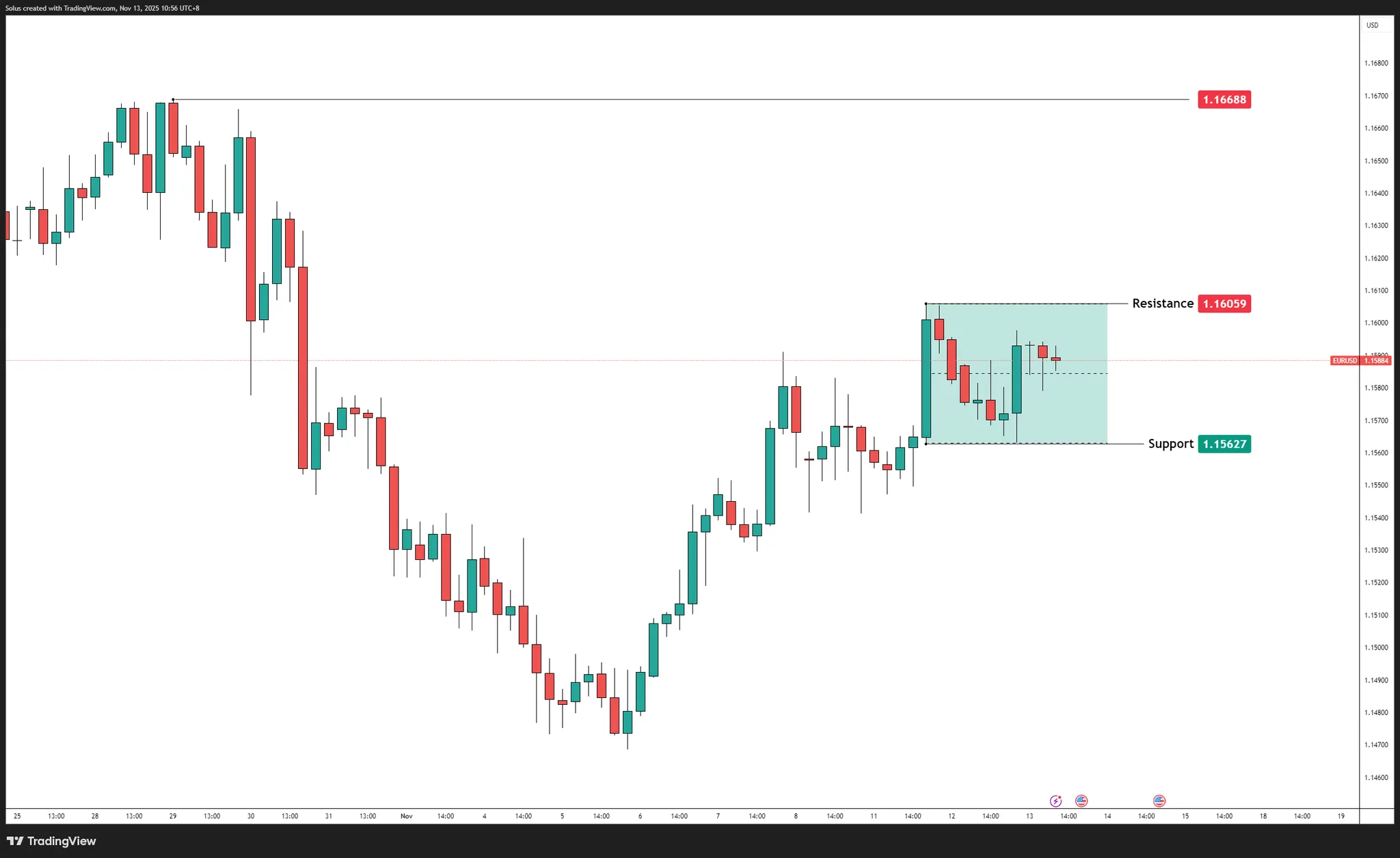
Reference points from your chart:
- Resistance: 1.16059
- Support: 1.15627
- Upside Target: 1.16688 swing high
EURUSD is coiling between support and resistance as liquidity builds on both sides of the range. Price remains above short-term structure, showing that buyers are still active, but without the catalyst needed to punch through resistance.
The next decisive move is likely to happen once the CPI release is rescheduled and traders get the inflation data necessary to recalibrate the USD outlook.
Bullish scenario
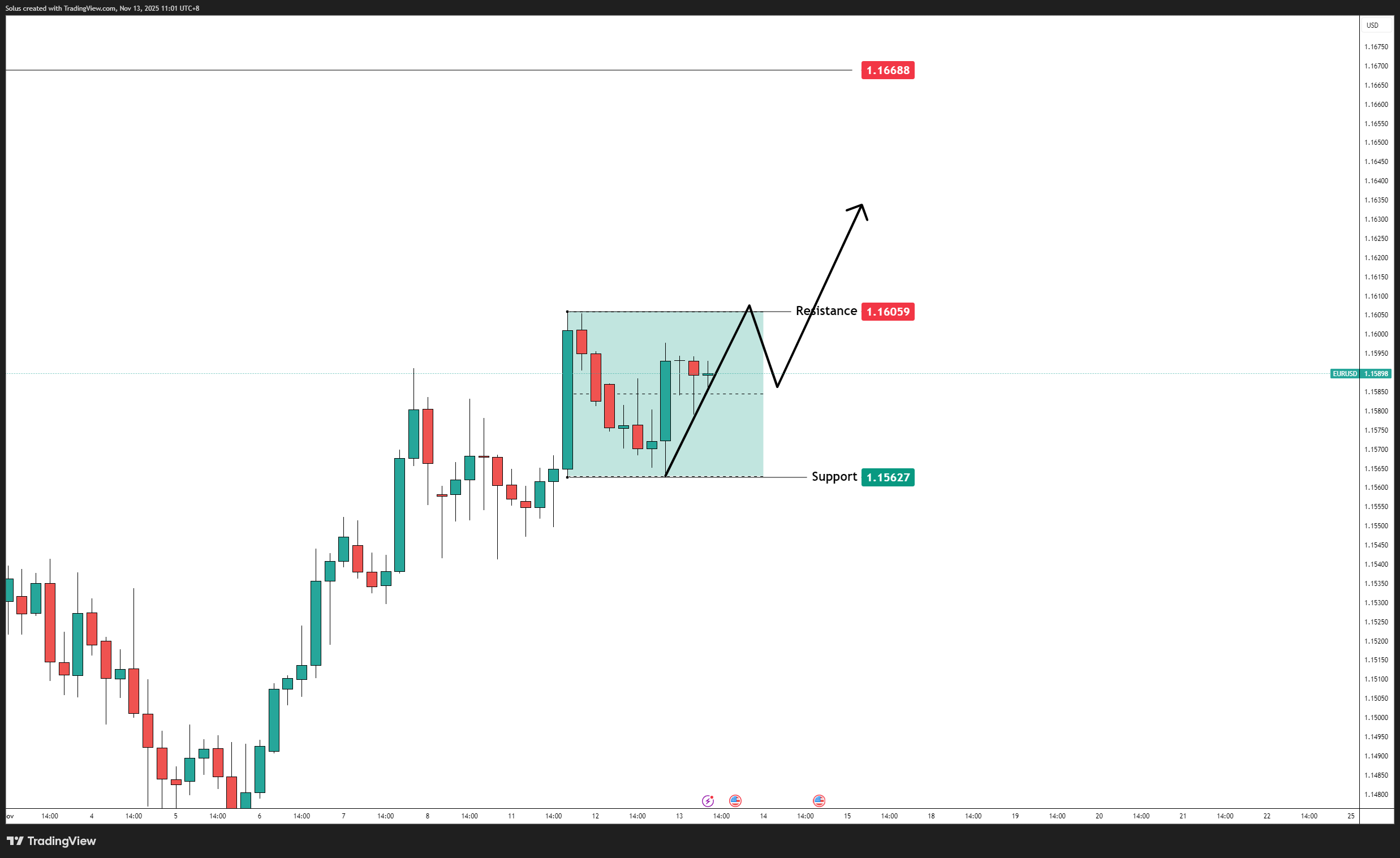
A bullish continuation strengthens if price:
- Breaks and holds above 1.16059,
- Shows strong follow-through without immediate rejection,
- Closes above the mid-range on H1/H4 candles.
A breakout may open the path toward the liquidity pocket at 1.16350 and ultimately 1.16688.
Bullish Targets:
- 1.16350.
- 1.16688.
Bearish scenario
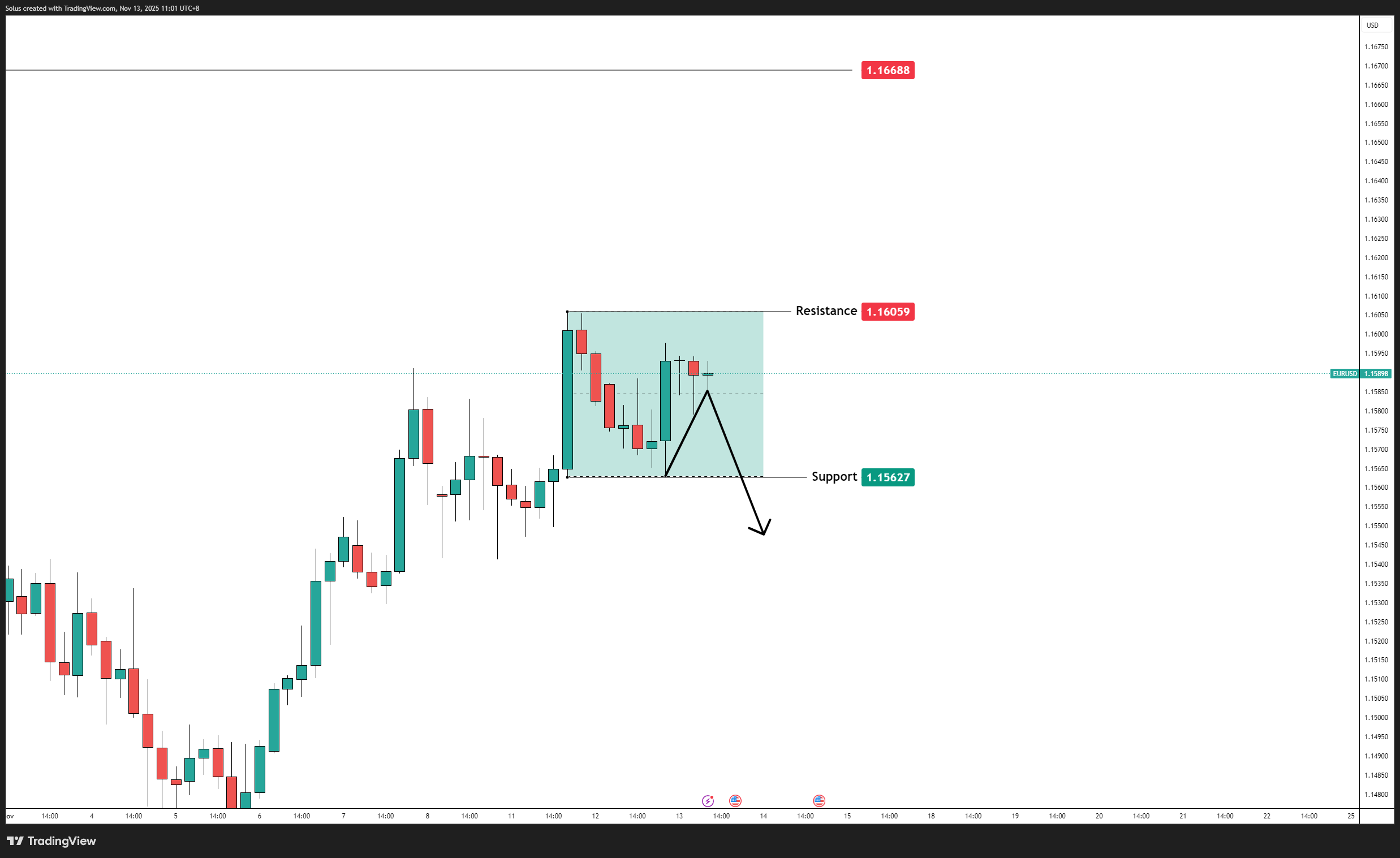
Sellers regain control if EURUSD:
- Rejects the 1.16059 ceiling,
- Breaks below 1.15627,
- Shows impulsive downside structure as USD strength returns once CPI is rescheduled.
A breakdown could revisit the next support cluster below 1.15400 or even deeper depending on volatility.
Bearish Targets:
- 1.15400
- 1.15050
Final thoughts
EURUSD is positioned for a significant move — the question is simply timing. With another CPI delay weighing on the dollar, EURUSD has maintained its short-term bullish tone, but a breakout still needs confirmation. The longer the delay drags on, the more hesitation accumulates in price, which is exactly why the pair is stuck between 1.15627 and 1.16059.
What matters now is not prediction, but reaction.
Let the breakout be the confirmation. Let CPI be the catalyst. And let the chart reveal where sentiment truly sits once uncertainty clears.
Until then, this range remains the battlefield. Patience will reward the disciplined trader.
Author

Jasper Osita
Independent Analyst
Jasper has been in the markets since 2019 trading currencies, indices and commodities like Gold. His approach in the market is heavily accompanied by technical analysis, trading Smart Money Concepts (SMC) with fundamentals in mind.