EUR/USD continues to decline: Too many risks

EUR/USD declined to 1.1368 on Tuesday and remains near two-month lows. The US currency is being supported by expectations of further Federal Reserve policy tightening amid inflationary risks linked to expensive energy and uncertainty surrounding US-Iran relations.
Oil continued to rise following reports that Iranian authorities doubt the possibility of reaching an agreement before the US mid-term elections in November. Earlier, Donald Trump rejected Tehran's latest proposal, heightening fears of a protracted conflict and persistently high energy prices.
US Treasury yields also remain at multi-year highs, with 10- and 30-year paper trading above 5%. This further supports the dollar and adds pressure on financial conditions.
Markets now estimate the likelihood of another Fed rate hike in October at 70%. Earlier in September, the regulator had already raised rates for the first time in three years.
Fed Board member Lisa Cook warned yesterday that potential productivity gains from artificial intelligence in the near term may not be sufficient to offset price pressures. According to her, this heightens the risk of a broader spread of inflation across the economy.
Technical analysis
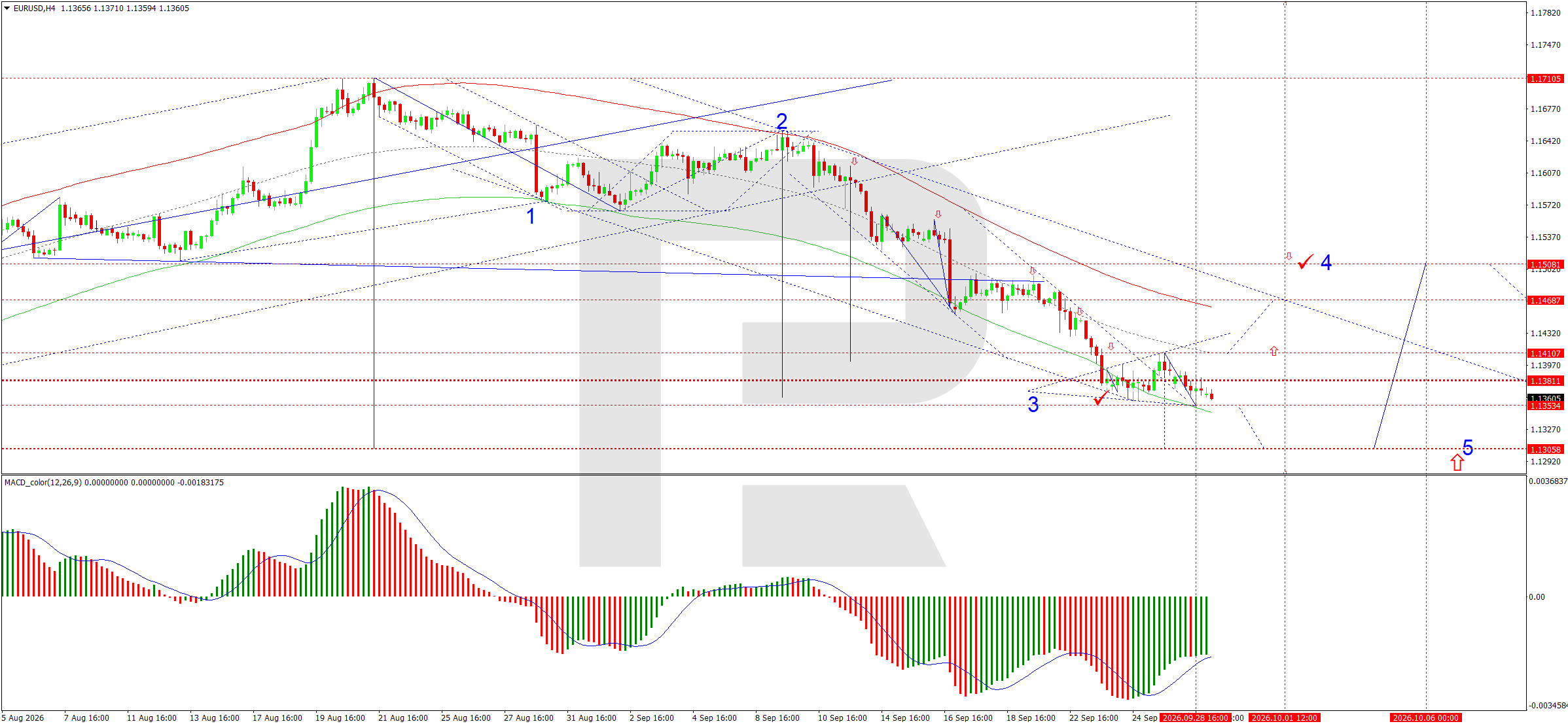
On the H4 chart, EUR/USD continues to move within a downward structure. Following the formation of the second wave near 1.1640, the market has consistently updated local lows. The price is currently consolidating around 1.1360, with the nearest range boundaries at 1.1353 and 1.1410. A breakdown below 1.1353 would create conditions for the development of the next downward impulse towards 1.1306, which is considered the main target of the current wave. A recovery above 1.1410 could allow for a correction towards 1.1469, though this would not alter the overall downward direction. Stronger resistance lies at the 1.1508 area.
The MACD remains below its zero line, confirming continued bearish momentum. At the same time, the shrinking negative histogram indicates a slowdown in the decline, suggesting that the market may form an additional correction or consolidation before continuing its move.
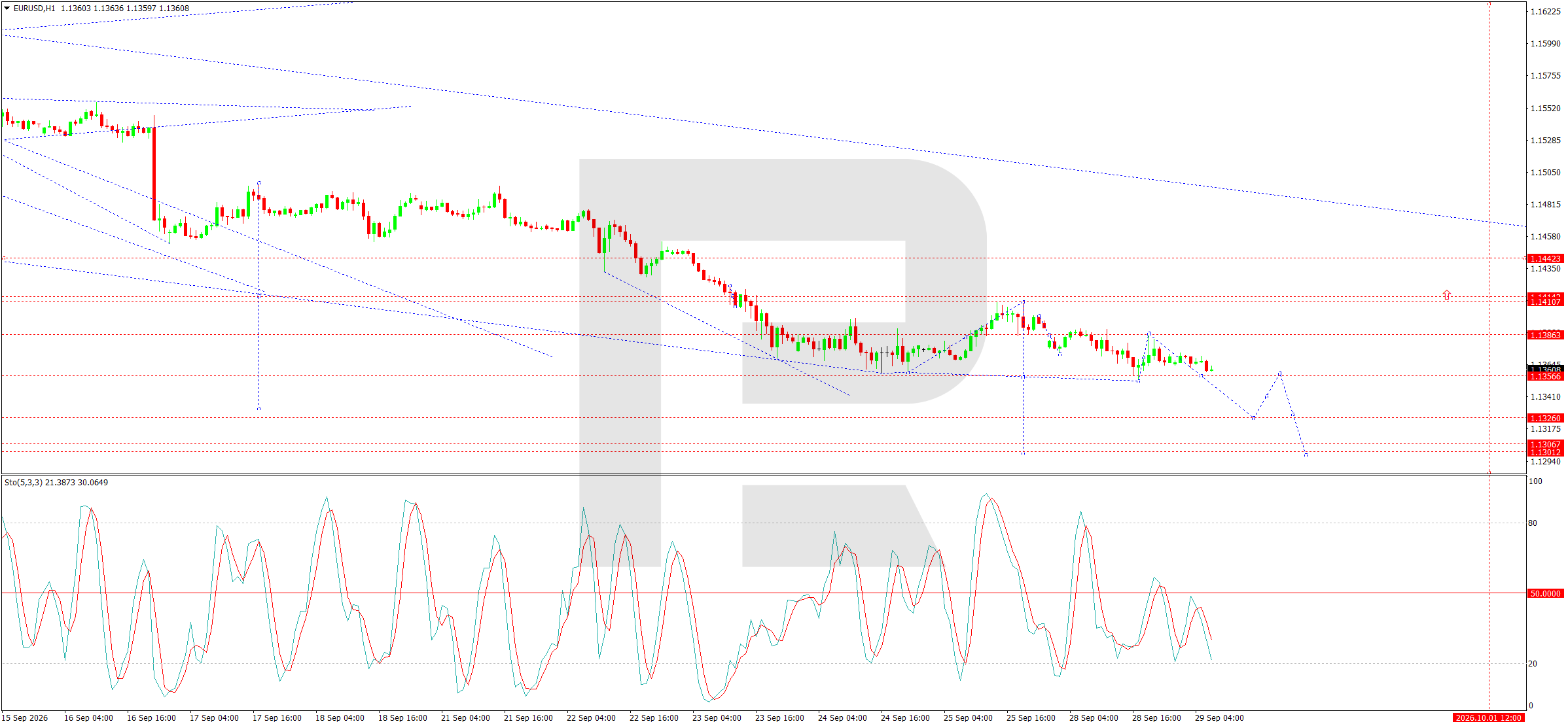
On H1, the structure also remains downward. After climbing to 1.1410, the price formed another sequence of lower highs and returned to support at 1.1353. The Stochastic oscillator has dropped below 50 and is approaching the 20 zone, confirming short-term selling pressure. A break below 1.1353 would open the way to the intermediate level of 1.1326, after which the main target would be 1.1306. A return above 1.1386 would allow the price to retest 1.1410, but to change the current technical picture, buyers would need to secure a close above this mark. Thus, the priority scenario for 29 September remains a continuation of the downward movement following the completion of the current consolidation.
Conclusion
EUR/USD remains under pressure near two-month lows, weighed down by a combination of factors: expectations of further Fed tightening, elevated oil prices driven by US-Iran uncertainty, and multi-year high Treasury yields. The rejection of Tehran's proposal by Trump and doubts over a pre-election agreement have reinforced fears of a protracted conflict, keeping energy prices elevated and inflation risks firmly in play. Fed official Lisa Cook's warning that AI-driven productivity gains may not offset price pressures adds to the hawkish backdrop, with October rate hike odds now at 70%. Technically, the pair remains bearish, with a breakdown below 1.1353 likely to trigger a move towards 1.1306. A recovery above 1.1410 would be needed to shift the short-term outlook, though the broader trend remains downward.
Author

RoboForex Analysis Department
RoboForex
RoboForex Analysis Department provides timely market insights, expert technical analysis, and actionable forecasts across forex, commodities, indices, and equities.