Elections in South America and Europe reveal backlash against socialism

As markets reopen following the Thanksgiving holiday, investors are feeling thankful that interest rates are no longer rising.
Stocks, bonds, and precious metals have all gained ground in recent days as long-term rates have come down. Meanwhile, expectations for the Federal Reserve to cut its benchmark short-term rate in 2024 have risen.
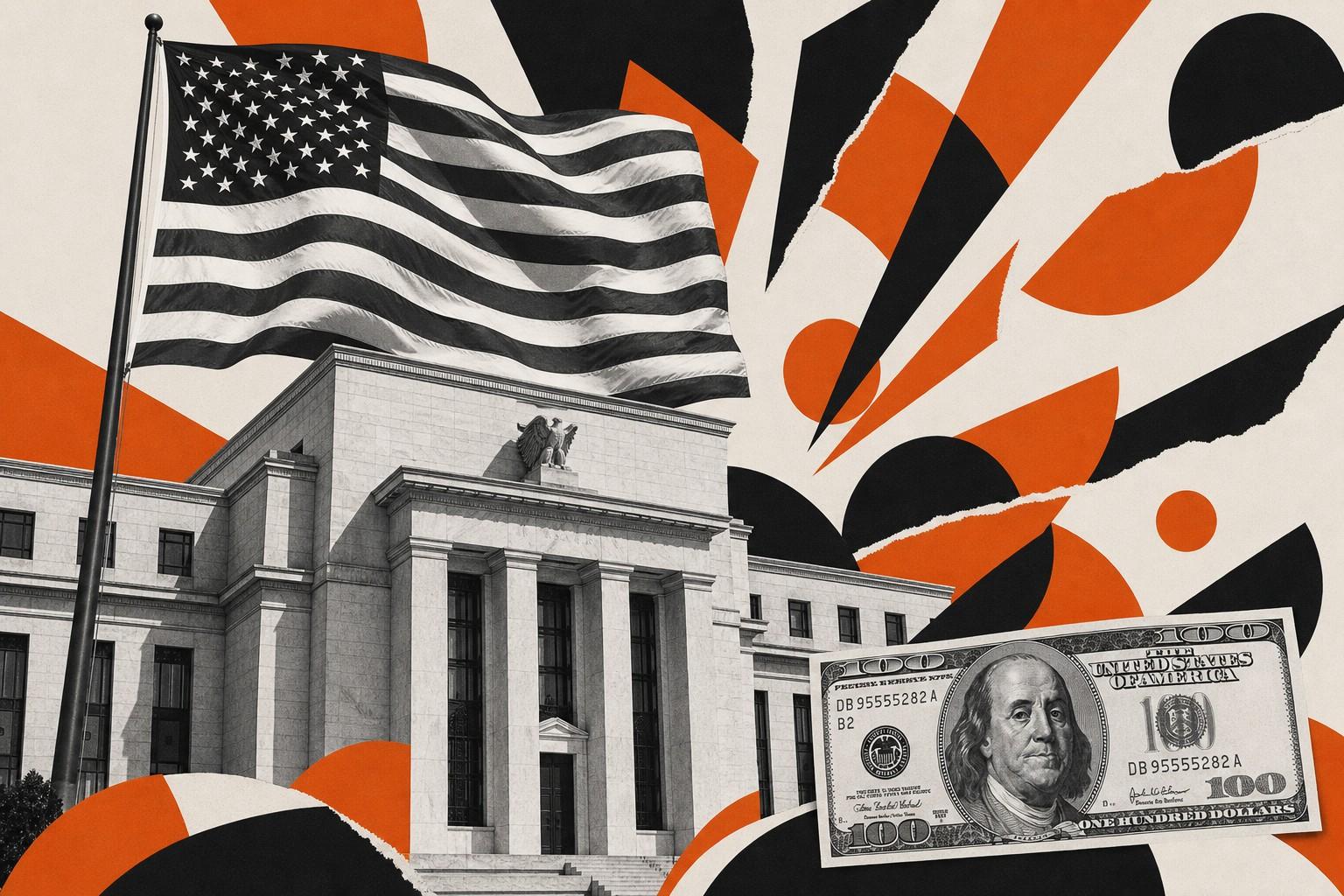
Minutes from the Fed’s latest meeting were released on Tuesday. They revealed policymakers intend to keep rates “restrictive” at current levels until inflation comes down further.
Despite giving no indication of cutting rates anytime soon, markets aren’t buying the Fed’s hawkish posturing. Traders in Fed funds futures are pricing in monetary easing next year starting in May. They currently expect four rate cuts before the end of 2024.
That’s reflective of a strong likelihood of recession next year amid deteriorating economic conditions. The recession by some measures may have already begun. The leading economic index fell again in October, marking a new low for the year in the LEI. Tighter credit conditions combined with persistently high inflation are crimping consumer spending as well as business investment.
For now, though, the stock market is flush with cash as investors see reason for optimism at least through the holiday season.
Gold, meanwhile, continues to oscillate around the $2,000 level, and silver has posted some nice gains to trade well above $24 per ounce.
Looking ahead, metals markets could benefit from a bearish combination of headwinds for the U.S. dollar’s exchange rate – namely falling interest rates and a slowing economy.
They also stand to get a lift from bullish supply and demand fundamentals. Supply shortfalls emerging across the metals space. Deficits are becoming especially large in silver, platinum, and palladium in particular.
According to the 2023 World Silver Survey, demand outstripped supply last year by nearly 238 million ounces, representing a massive 20% deficit. Another large deficit is expected this year amid rising industrial demand and flat, at best, mining output.
An even more lopsided supply and demand imbalance is occurring in physical platinum. The World Platinum Investment Council reported this week that the platinum market is on track to post a record supply deficit of over 1 million ounces for 2023. Total supply is down 3% this year. Demand, meanwhile, is up a whopping 26% compared to last year.
The story behind falling platinum prices in recent years has been that automotive use in catalytic converters is going away. But that story doesn’t square with the fact that platinum demand is gaining from a variety of sources.
Meanwhile, as over 70% of mined platinum comes from South Africa, the supply outlook for the scarce metal is precarious. South Africa has been plagued by constant power blackouts that have hampered production of some of the country’s largest platinum and palladium mines.
Of course, the media continues to insist that post-Apartheid South Africa under one-party rule is a bastion of democracy.
But the reality is that South Africa can no longer keep the lights on. And as basic infrastructure fails, sky-high crime rates coupled with threats of land and business seizures by the highly corrupt government are driving talented entrepreneurs and technical workers to flee the country.
Meanwhile, institutionalized racism against whites has risen to even higher levels as the nation rushes headlong into Marxism and Wokeism, with new laws even making it illegal for larger South African businesses to hire people with lighter skin.
That all bodes poorly for the future of South Africa’s critical mining industry.
In other parts of the world, the political landscape is shifting to the right. This week elections in the Netherlands and Argentina delivered big victories to anti-establishment populists.
Free-market economist Javier Milei won Argentina’s presidential election. Derided in the media as a “far right libertarian” and a “madman,” Milei campaigned with a chainsaw in hand to represent his plans to cut government bureaucracy. He has also vowed to abolish the country’s central bank and link the Argentine peso to the U.S. dollar in an effort to stamp out inflation.
Argentina was once known as the most prosperous country on the continent. But in recent years its economy has been wrecked by waves of inflation that have regularly exceeded 100% on an annual basis.
While the Federal Reserve note dollar has lost value at a much slower pace, it’s not exactly a sound and stable anchor for the Argentinian currency. Instead of being ripped off by Argentinian central bankers, citizens would see their purchasing power arbitrarily taken away by the U.S. Federal Reserve.
Regardless of the shortcomings of some of his reform plans, Javier Milei has the potential to turn around a troubled country much like Nayib Bukele has done in El Salvador. In just a few short years, El Salvador went from one of the most dangerous countries on the planet to the safest on the continent and one that’s now open for business.
Bukele has championed Bitcoin as an alternative to U.S. dollar hegemony and invited cryptocurrency enthusiasts to move to El Salvador. While Bitcoin has its advantages, it’s also quite volatile and untested as a monetary reserve asset on par with gold.
Biden administration officials and establishment media outlets are trying to paint Bukele as a dictator despite the fact that he has a higher approval rating than any other major head of state.
Media mouthpieces are also freaking out over poll numbers that show Donald Trump running ahead of Joe Biden in a 2024 rematch. Behind the scenes, Democrat operatives are panicking over Biden’s sinking standing with voters. They are trying to nudge the 81-year-old incumbent to bow out gracefully so that California’s publicity seeking Governor Gavin Newsom can finally admit that he seeks to be the Democrat nominee for President.
It’s not just Biden’s perceived lack of energy and concerns over cognitive decline that are behind his bleak poll numbers. As shock elections in Europe and South America suggest, broader forces may be building for a voter backlash against the entrenched political left.
To receive free commentary and analysis on the gold and silver markets, click here to be added to the Money Metals news service.
Author

Mike Gleason
Money Metals Exchange
Mike Gleason is a Director with Money Metals Exchange, a national precious metals dealer with over 500,000 customers.