ECB is not about to introduce new QE buying distribution


In the ECB Minutes from the meeting in mid-January, the ECB concluded that on capital key purchases distribution ‘limited and temporary deviations were possible and inevitable'. The immediate market reaction was tighter French and Italian spreads versus Germany, reflecting speculation at the ECB following an outstanding debt key distribution, which would strongly benefit France and Italy but result in less purchases of German bonds (see Chart 1).
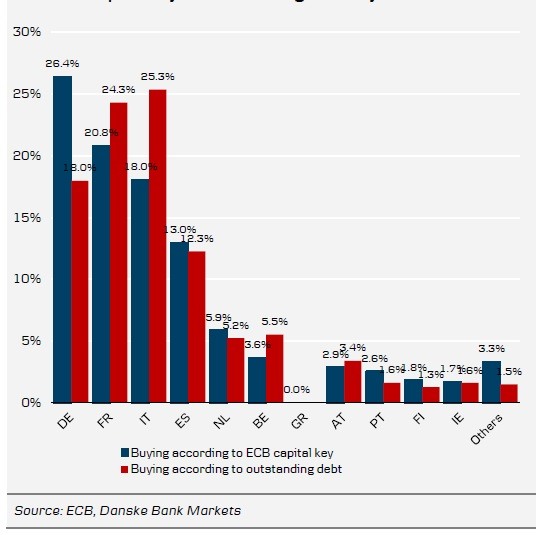
This is despite the ECB NOT mentioning a potential debt key purchase distribution. In our view, it is highly unlikely that the ECB would follow an outstanding debt key distribution, as it would thereby support countries that do not have sound fiscal policies. Related to this, the ECB still communicates that significant weight was placed on limiting deviations from the capital key.
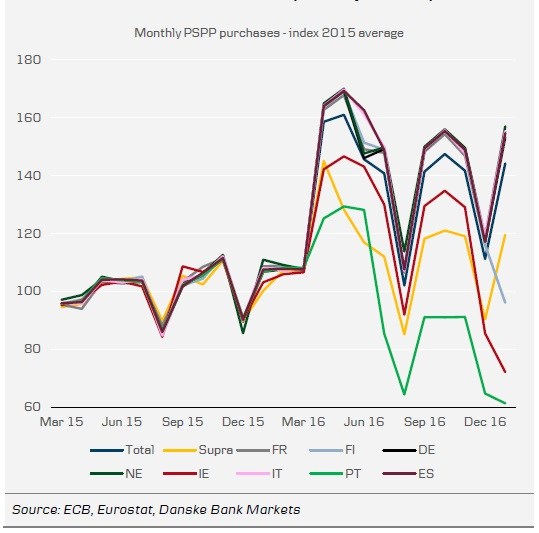
In our view, the biggest news was that the ECB now ‘admits' it is deviating from the capital key purchases distribution. The ECB has deviated somewhat since it stepped up its QE purchases to EUR80bn per month in April 2016 (see Chart 2). The deviations mainly reflect the ECB having reached other purchase constraints (33% issue/issuer limit). In our view, these will eventually result in less purchases of German government bonds.
The ECB Minutes also confirmed the previous signal that the ECB has a desire to buy bonds yielding above the deposit rate. According to the Minutes, ‘there was some room for a trade-off between relative deviations from the capital key across jurisdictions and limiting the extent of purchases below the deposit facility rate'.
Author
Danske Research Team
Danske Bank A/S
Research is part of Danske Bank Markets and operate as Danske Bank's research department. The department monitors financial markets and economic trends of relevance to Danske Bank Markets and its clients.