DXY resistant to significant gains without a hike

US stocks fail to gain
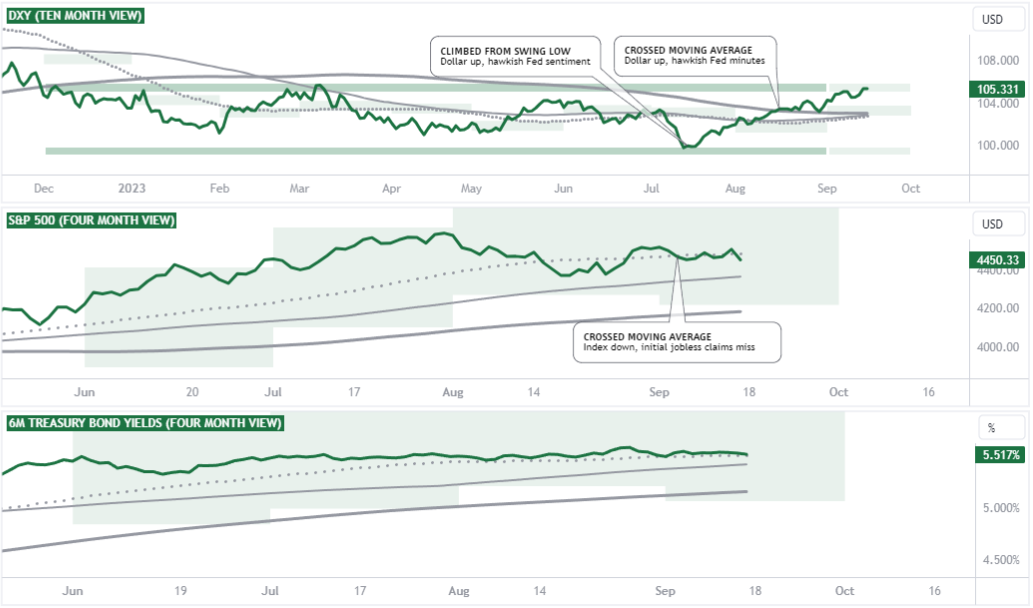
The US dollar index (DXY) has been volatile in recent months, but is now showing signs of momentum. This is due to a number of factors, including high inflation, rising interest rates, and safe-haven demand. Under the current macroeconomic conditions, the outlook for the DXY suggests that it will remain supported against losses.
Intermarkets are mirroring the pessimistic macroeconomic outlook for the US with the S&P 500 moving below the 50-day moving average while the yield on six-month Treasury bonds holds at around 5.5% after the Fed Funds rate was hiked in July to 5.5% and is expected to be held at the meeting this week.
CME group 30-day Fed fund futures
September favours a hold and odds have climbed to 98% from 94% last week. A 0.25 hike chance has fallen to 2% from 6%.
November favours a hold and odds have climbed to 72% from 67% last week. A 0.25 hike chance has fallen to 27% from 32%.
EUR/USD slightly pressured
The EUR/USD has been bullish over the past nine months, but is now in retreat. This is due to a number of factors, including high inflation, rising interest rates, and safe-haven demand. Under the current macroeconomic conditions, the outlook for the EUR/USD suggests that it will be slightly pressured against gains.
Intermarkets are mirroring the slightly pessimistic macroeconomic outlook for the EA with the DAX moving below the 50-day moving average while the yield on six-month German Bunds has risen above 3.7% after the Main Refinancing Operations rate was hiked last week to 4.50%.
-638305739618762752.png)
GBP/USD bearish despite FTSE 100 breakout
The GBP/USD has been bullish over the past nine months, but is now in retreat. This is due to a number of factors, including high inflation, rising interest rates, and safe-haven demand. Under the current macroeconomic conditions, the outlook for the GBP/USD suggests that it will be pressured against gains.
Intermarkets are no in agreement with the pessimistic macroeconomic outlook for the UK with the FTSE 100 moving above the 200-day moving average while the yield on six-month Gilt Bonds is holding around 5.70% while the Bank rate was hiked last month to 5.25% and is expected to be hiked this week to 5.50%.
-638305739835066761.png)
Economic events of interest
Tuesday, September 19
1000 (GMT +1) EA CPI could be mixed for EUR: The report is expected to match the preliminary which was a hold at 5.3% and may be a sign that inflation is sticky, increasing the demand for EUR. Be cautious of an interpretation that high inflation will damage the economy and reduce demand for the EUR.
Wednesday, September 20
0700 (GMT +1) UK CPI could be bullish for GBP: The report is expected to show an increase from 6.8% to 7.1% and signals that inflation is sticky. This could lead to a more hawkish BoE, increasing the yield on Gilt Bonds and increasing the demand for GBP.
1900 (GMT +1) US Fed FOMC Meeting, Rate Decision and Economic Projections could be indifferent for USD: The meeting is expected to see a rate hold at 5.50%. This could lead to a stable yield for Treasury Bonds and stable demand for USD. Be cautious of an interpretation that the Fed are being overly hawkish as high rates will damage the economy and increase demand for USD.
Thursday, September 21
1200 (GMT +1)UK BoE MPC Meeting and Rate Decision could be bullish for GBP: The meeting is expected to see a rate increase from 5.25% to 5.50%. This could lead to an increase in the yield for Gilt Bonds and increase the demand for GBP. Be cautious of an interpretation that high rates will damage the economy and reduce demand for GBP.
Friday, September 22
0700 (GMT +1) UK Retail Sales could be bullish for GBP: The report is expected to show an increase -1.2% to 0.5% and signals that inflation may remain sticky. This could lead to a more hawkish BoE, increasing the yield on Gilt Bonds and increasing the demand for GBP.
Author

Gavin Pearson
Independent Analyst
Gavin Pearson of Jeepson Trading is a currencies speculator from the UK focused on the G7 economies and is a recognized member of the eToro Popular Investor Program as well as being a funded prop trader with The 5%ers.
















