Dr Copper says don’t worry economy is fine

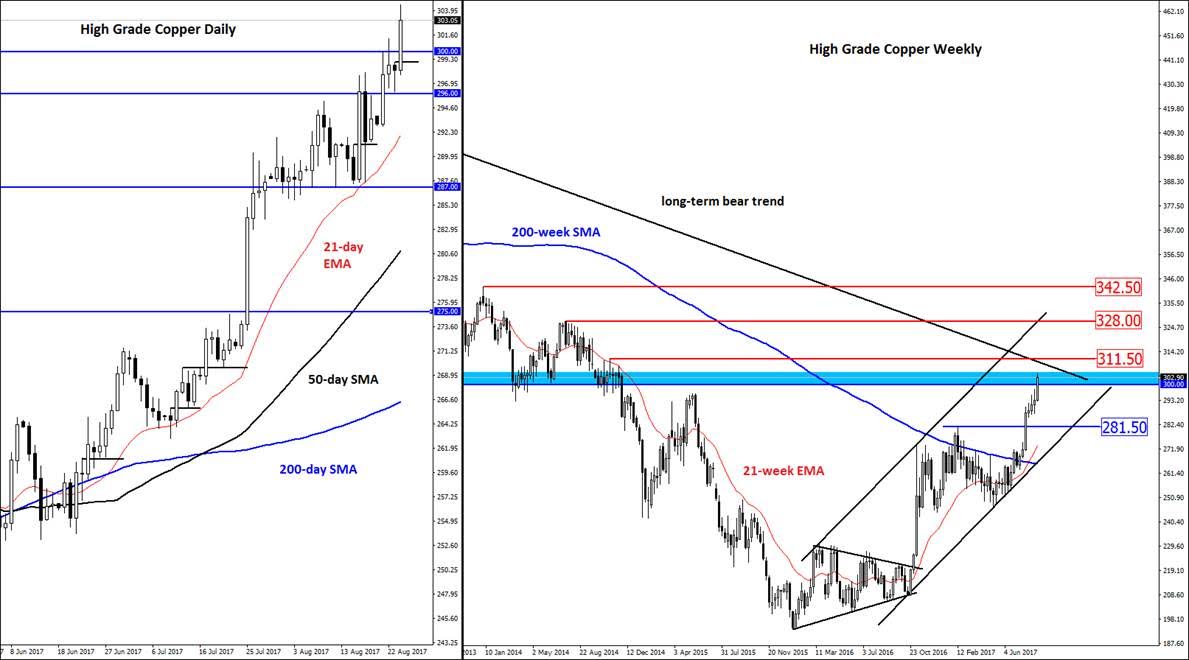
Concerned about the global economy? Don’t be, says Dr. Copper. Despite the recent slowdown in the US economy and equity markets becoming a little wobbly, copper prices have been surging higher over the past three months following a lengthy 6-month consolidation. As well as a small improvement in Chinese data of late, which has boosted expectations about demand, copper and other base metal prices have been supported this year by a depreciating US dollar. Weakness in the greenback makes dollar-denominated metals more affordable to foreign buyers. Speculators have been piling in on the metal. According to the CFCT, net long positions in copper rose for the fifth time last week. While the rally could continue due to bullish momentum, it is worth pointing out that copper supply remains comfortably high relative to demand. According to the International Copper Study Group, the seasonally-adjusted surplus of copper was about 125,000 tons on the global copper market from January to May. Given this finding, investors may be overly optimistic about the prospects of supply tightening in the future as demand growth rises steadily. They may also be underestimating the value of dollar, for if the ECB refuses to drop its easing bias then the EUR/USD could slump and this should help to support the dollar index, which in turn could weigh on buck-denominated metals. That being said, there’s no technical indication yet to suggest a top is in place or near. Quite the contrary, in fact. High Grade Copper prices have just taken out the psychologically important $3.00 hurdle and all the moving averages are pointing higher. For many traders, copper offers the momentum lacking in FX and now equity markets. Consequently copper prices may rise more than the metal’s fundamental value in the near-term, before we see a potential correction. Indeed we never recommend going against the trend purely on fundamentals alone. The trend is your friend until it is not.
Author

Fawad Razaqzada
TradingCandles.com
Experience Fawad is an experienced analyst and economist having been involved in the financial markets since 2010 working for leading global FX, CFD and Spread Betting brokerages, most recently at FOREX.com and City Index.

















