COVID-19 vaccine bullish scenario
It’s the talk of the town. COVID-19 vaccines are finally hitting the consumer media and are ready for mass distribution. Of course, this has set the market ablaze with positive forces that we are slowly, but surely, getting back to normalcy, or whatever passes for normal these days.
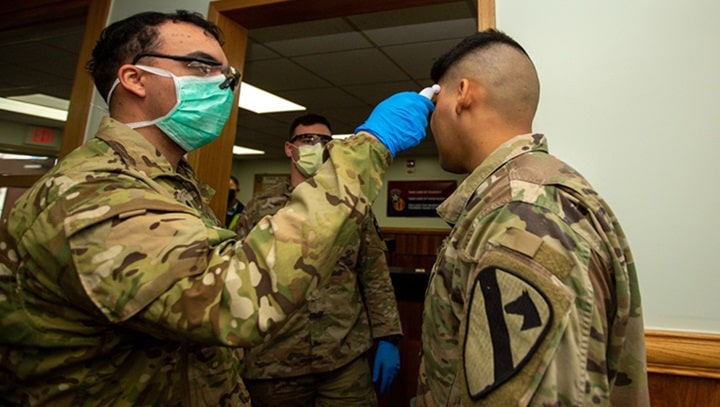
Pfizer and BioNTech‘s COVID-19 vaccine is being shipped across the world as the first people to get the first dose are those who are at high-risk of getting the virus and the elderly. This affects everything from how we are going to live our lives, to the market place which is taking the availability of a vaccine in the market as extremely bullish.
But how would the market actually react to the introduction of this vaccine in the market?
Gold
Experts believe that gold prices may correct post after a vaccine is approved. We have seen this happen first hand as the price of Gold has dropped dramatically over the past couple of months. While it still remains quite high, it is way off the highs from August 2020.
According to Chirag Mehta, senior fund manager, alternative investments, Quantum Mutual Fund “As the uncertainty over the pandemic has supported the price of gold, the rollout of vaccines may result in a deeper correction of gold prices. Gold had a substantial run over the past one year and as no asset class can move in a straight line forever, gold prices are expected to correct as soon as vaccines start to roll out properly."
Gold prices reached an All-Time High of $2,075 per ounce on the 7th of August this year, but since then it has been falling quite heavily. The yellow metal has already rallied 34% this year, as on 20 August, as its demand has increased due to the uncertainty over the impact of the COVID-19 pandemic on the economy and the ongoing geopolitical tensions between the US and China.
However, we saw gold fall sharply as the news of Russia discovering a vaccine came in. It fell over 6% and close to $1,944 per ounce in a matter of five days. Mehta believes that the correction in gold prices after the rollout of the vaccine may be temporary and may not be sharp as economies across the globe have been under stress even before COVID-19 set in.
“In order to support economic growth, countries will continue to hold interest rates low. Plus, the printing of currencies, especially the US dollar, to fund economic stimulus will support gold prices over the next two-three years," said Mehta.
Experts believe that the recent correction in gold prices has more to do with the speed of the rise. “The rally in gold prices was so steep it has overshot its fundamentals as of now. Investors took some money off the table leading to a steep correction," said Kishore Narne, associate director and head, commodities and currencies, Motilal Oswal Financial Services Ltd.
Equity
The equity market has seen a sharp recovery from the lows it touched in March. S&P 500 corrected around 38% from its peak in January to touch a low on 23 March. It has recovered around 47% between then and 20 August. Experts feel that the rollout of the vaccine will be a positive for the equity market but there may not be a sustained rally.
“I think the markets have already factored in the fact that a vaccine is expected to come out soon. It’s just a matter of time," said Srinivas Rao Ravuri, chief investment officer, PGIM India.
Madan Sabnavis, chief economist, Care Ratings, agreed. “The market has already buffered in such a solution in the last couple of months and hence, the upside may not be as large as what it was when it turned the corner," he said.
Ravuri believes that we may witness a correction in the near term, even when the vaccine starts to make its rounds across the globe, as the current rally is not supported by near-term fundamentals. The trigger could be reversals of liquidity resulting in foreign institutional investors’ exit and significant fund-raising by corporates, said Ravuri.
Advisers are asking investors to stick to their asset allocation to tide over the volatility. “Any such run in the market cannot last long because sooner or later, the market has to perform based on the performance of various companies. Investors need not be greedy but be disciplined with their investments and stick to the asset allocation and regular monthly investment to average out the cost of investment," said Melvin Joseph, a Sebi-registered investment adviser and founder of Finvin Financial Planners.
“Long-term investors just need to follow their goals through mutual fund SIPs," said Anurag Jhanwar, co-founder and partner at Fintrust Advisors, a wealth advisory firm.
Debt
Debt investments are unlikely to be affected much as the interest rates are likely to remain low for a while. However, there may be some hike in bond yields as an immediate reaction. “We may see an increase in bond yields as central banks may stop buying bonds which are currently keeping bond yields low. But central banks will take time to hike interest rates," said Pankaj Pathak, fund manager, fixed income, Quantum MF.
Mahendra Jajoo, chief investment officer, fixed income at Mirae Asset Investment Managers (India) Pvt. Ltd, said debt markets can expect a neutral or status quo environment. “For economic recovery, there is a need to keep interest rates low as we would need a stable rates environment to support growth. Increase in interest rates may halt recovery. They may not come down further but may not go up either," he said.
So you see that COVID-19 vaccines are affecting the market place in such a positive way. However, as things start to turn to normal times, people will start to go back to living as they did, but with a sense of “living for the day” which might lead to something that central banks have been wishing for, inflation. But that’s a topic for another time.
Author

Alexander Douedari
Independent Analyst
Alexander Douedari is an Award Winning Hedge Fund Manager and Selfmade 7-Figure Trader. Now Mentor for Students all around the world.