Commodity Currencies and the Dollar – a Cut, a Cap or a Phantom Rally?

Shares of Energy companies have rallied with the recent news of OPEC's promised cuts to its production levels. Talks in Algiers on Wednesday night led to an agreement to cut production by up to 700,000 barrels per day. Royal Dutch Shell, for instance, saw a 5.43% rise in its share price on Thursday afternoon as a result. Good news for oil investors, yet not all the news surrounding the OPEC deal is positive.
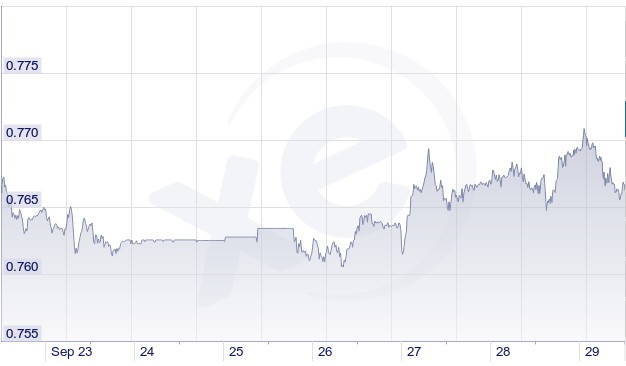
US Dollar per 1 AUD. Source: Xe.com
Arnaud Masset of Swissquote.com notes that 'the [OPEC] agreement says nothing about who will take the cut or how it will be divided', and there remains speculation that the cut will in fact operate more as a cap, as producers from the US shale industry step in to fill the production gap. The price of oil is therefore predicted by Goldman to reach $53 a barrel in 2017, whilst Barings predicts a ceiling of $60. Not a significant change, but the impact on the Forex market is clear. The US dollar has slipped against commodity currencies such as the Australian dollar, as the gains of these currencies track the rally in oil prices. The key question is how spirited will the rally in oil prices be?
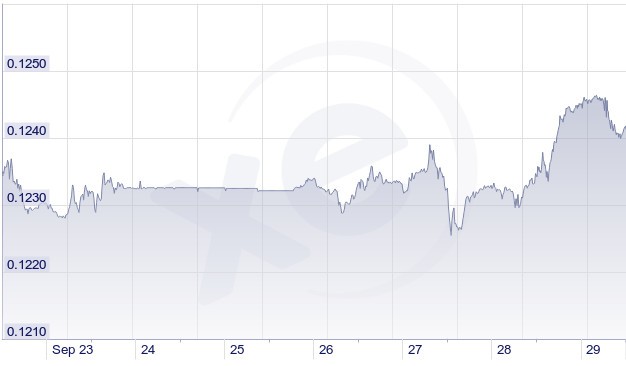
US Dollar per 1 NOK. Source: xe.com
If the market believes the OPEC deal has teeth, then the oil price should continue to rise and along with it. So too should commodity-influenced currencies against the US dollar. This augurs well for those who have, or are thinking of buying, commodity currencies. If, however, the deal is seen as little more than a paper tiger, you can expect a phantom rally which will quickly fizzle out, meaning that the safe bet is to sit on your dollars and adopt a wait and see approach.
-636108357247117500.PNG)
WTI and Brent spot oil prices from the EIA. Source: calculatedriskblog.com
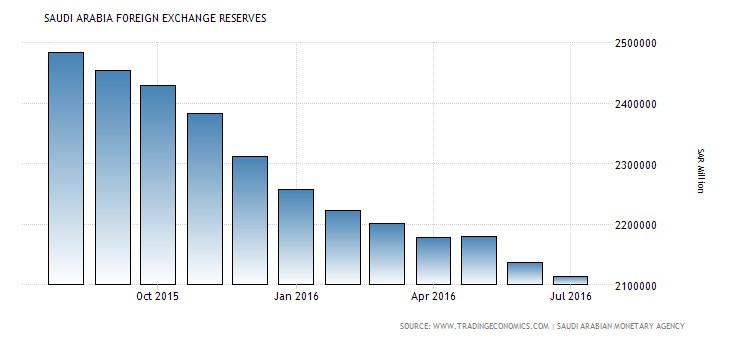
The case for investing in commodity currencies against the dollar relies on one key variable: is the OPEC agreement genuine? OPEC President Mohammed bin Saleh al-Sada spoke of “a greater degree of urgency” in reducing the production of crude oil, and stabilising the price at a higher base level. Indeed whilst the Saudi government had pushed for production cuts of 1,000,000 barrels a day, the 700,000 figure outlined in the deal is far closer to the harder cut than the minimum proposed level of 200,000, supporting the legitimacy of the deal. Additionally, the political difficulties experienced by Riyadh suggest that they have little option but to pursue a different course than that of the last few years, having spent in excess of $150bn of their foreign-exchange reserves, and with deep cuts in civil service pay in the offing. Betting on a higher oil price may prove key to the long-term prospects of Saudi-Arabia, and if this turns out to be the case, it's also a safe bet that the kingdom will do whatever it can to make sure it happens, a course of action which would guarantee a continued correlative bump in commodity currencies.
In favour of the wait and see approach is the fact that the OPEC deal which has led to the rally in oil prices remains provisional, needing still to be formalised at the cartel's November meeting. Between now and November a lot can change, and should other producers simply raise their own production levels, the cartel might come to the conclusion that the course it chose in September, having failed to support a strong rise in oil prices, may be self-defeating. Indeed while the oil price has risen, there was a small dip on Thursday morning, with Brent dropping by half a dollar, and WTI back below the $47 mark. Should the rally in oil prices fail to take hold, expect a drop in the value of commodity currencies relative to the US dollar, back to mid-September levels. In this scenario there would appear to be only two choices, to wait, or to short.
Author
Oisin Breen
Accendo Markets