Coffee and Cocoa prices reach new all-time high
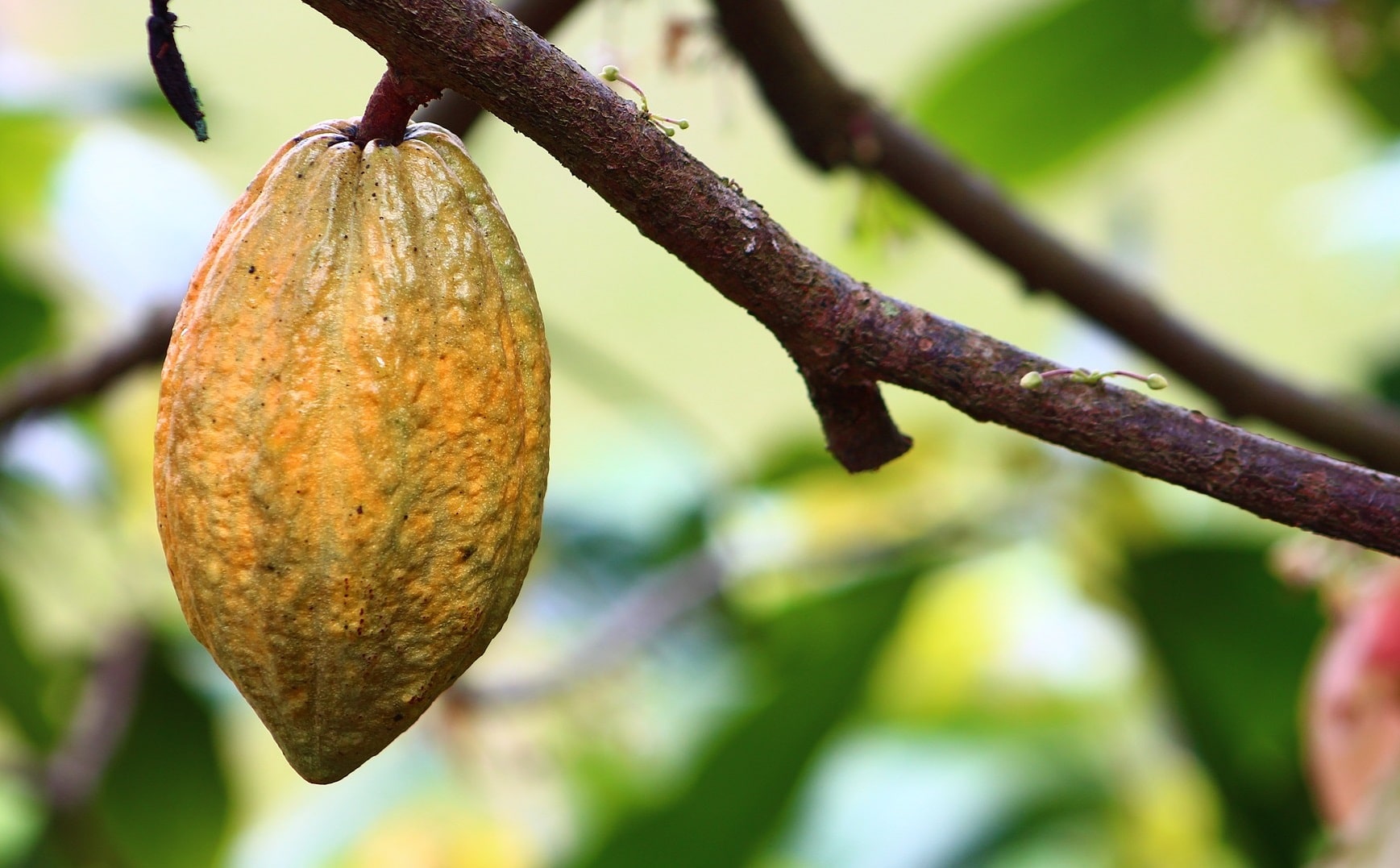
A perfect cup of coffee with a chocolate treat in the morning may soon become a luxury, as coffee and cocoa bean prices have reached unprecedented levels this week, raising concerns about the potential impact on consumer costs. With no immediate relief in sight for the coffee and cocoa markets, traders are bracing themselves for another year of volatility. Let’s take a closer look at the reasons behind the price rise of these commodities and what traders should expect next year:
Rising Coffee Bean prices could steepen your daily brew
The cost of coffee, the world’s second-most traded commodity after crude oil by trading volume, has skyrocketed, threatening to make your daily cup of joe significantly more expensive.
The price of arabica coffee beans, the premium variety used in most ground and roasted coffee, surged to nearly $3.50 per pound this month, its highest level since 1977—a staggering 83% increase in 2024. At the same time, robusta beans, the slightly lower-quality variety primarily used in instant coffee, have also climbed sharply, rising 73% in 2024 to reach $5,885 per metric ton in November.
This price rally reflects a perfect storm of challenges across the coffee supply chain, from unpredictable weather to geopolitical tensions, leaving coffee producers, distributors, and consumers grappling with the consequences.
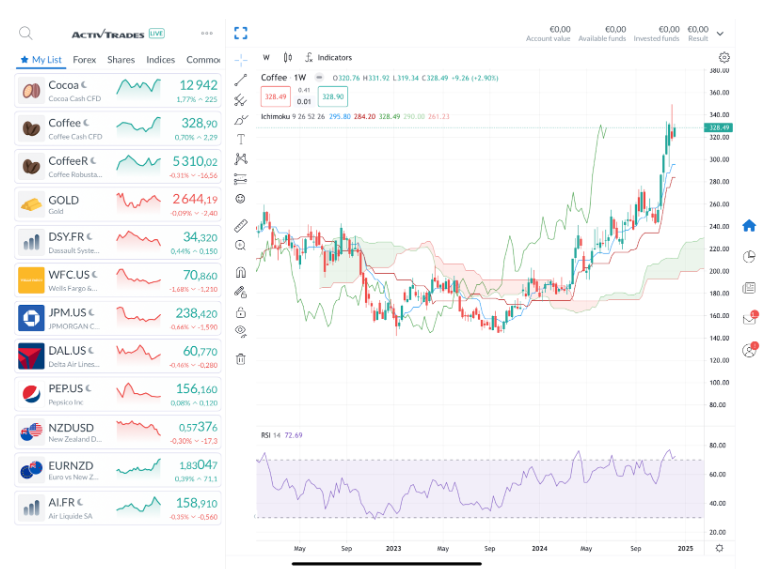
Weekly Arabica Cash CFD Chart - Source: ActivTrader
Why are Coffee Bean prices surging?
The first reason is undoubtedly the erratic weather patterns caused by climate change, including droughts, frosts, floods, and high temperatures, which have made coffee farming increasingly unpredictable.
Brazil, the world’s largest exporter of arabica coffee, experienced one of its worst droughts on record in 2024, followed by frost and excessive heat. This led to a significant reduction in crop yields. Vietnam, the leading producer of robusta beans, faced similar challenges, with severe drought conditions followed by heavier-than-usual rainfall.
Houthi rebel attacks in the Red Sea region have added uncertainty to global shipping routes, further complicating coffee shipments and driving up prices.
The projection for Brazil's arabica bean production for the 2025 season is only 34.4 million bags, a significant decrease of 11 million bags from previous estimates. This shortfall will contribute to a global production deficit of 8.5 million bags in the 2025–2026 season, marking the fifth consecutive year of supply shortages.
How are rising prices impacting the Coffee supply chain?
Every level of the coffee industry, from farmers to end consumers, is feeling the effects of these soaring prices.
Coffee farmers, particularly in Brazil and Vietnam, are struggling with lower yields caused by extreme weather. And with limited harvests comes reduced income, even as demand for their crops continues to rise.
With supply tightening, coffee traders have less stock to sell, creating fierce competition and price volatility in the market.
Skyrocketing costs particularly affect coffee roasters, who transform raw beans into the roasted blends we purchase, as they must choose whether to absorb the increased costs or pass them on to their customers.
Coffee drinkers are already seeing the effects. Major brands such as Folgers, Maxwell House, and Nescafé have raised prices, with more increases expected in the coming months. Analysts warn that further price hikes are inevitable as companies attempt to offset rising bean costs, which might impact the price of your daily brew.
Higher prices could result in potential retail consumption habits and potentially higher coffee shops’ menu prices or reduce portions to cope with rising costs.
Cocoa prices surge could transform the global confectionery market
Key ingredients in chocolate and related products, cocoa prices have reached unprecedented price levels, setting the stage for significant changes in the global confectionery industry. On Wednesday, December 18, cocoa prices soared to an all-time high of $12,987 per metric ton—representing a staggering 206% increase in 2024. This dramatic surge poses a threat to the global production, consumption, and marketing of chocolate.
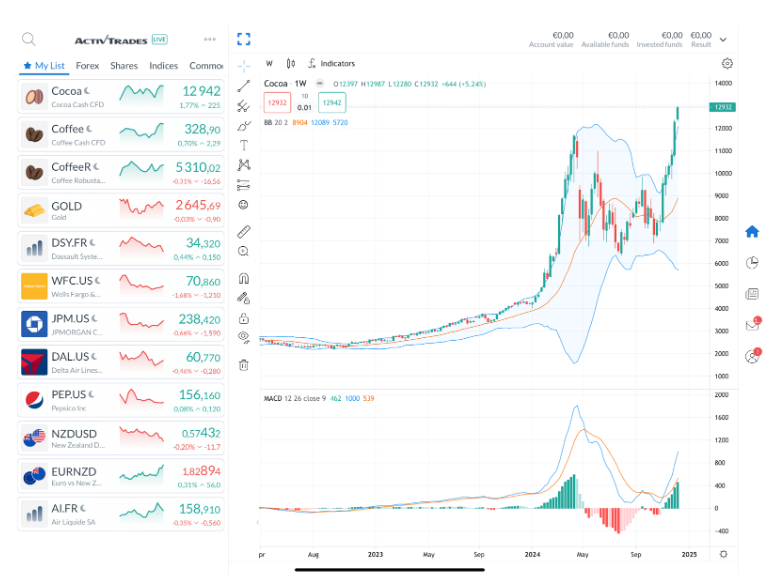
Weekly Cocoa Cash CFD Chart - Source: ActivTrader
Four reasons why Cocoa prices surged
The spike in cocoa prices is primarily driven by a global supply shortage exacerbated by a range of factors:
-
Climate change: Unpredictable rainfall patterns and rising temperatures in key cocoa-growing regions have severely disrupted cocoa production.
-
Crop diseases: Cocoa Swollen Shoot Virus Disease (CSSVD) and other plant infections have ravaged harvests, further depleting supplies.
-
Underinvestment in farmland: Decades of insufficient investment in cocoa farms in key producing regions have resulted in lower yields and an inability to meet rising global demand.
-
Stock deficits: The 2023–2024 season saw a massive 500,000-tonne deficit, marking the third consecutive year of shortfalls and the largest ever recorded in 60 years, according to ING.
According to JP Morgan, even though West Africa, responsible for 70–80% of global cocoa output, is projected to increase its production by 13%, the increase in worldwide production—expected to reach +11% from previous harvests to around 4.8 million tonnes—will not be enough to replenish critically low global inventories.
How are producers reacting?
Consequently, major chocolate manufacturers are grappling with soaring input and production costs, making it difficult for them to protect their profit margins. Many have already begun reformulating their products to avoid increasing the price of their products by reducing cocoa content with fillers and artificial flavors, altering recipes altogether by substituting cocoa with cheaper ingredients or adjusting chocolate product sizes.
But these decisions could compromise the taste and quality of their products and alienate consumers, particularly those who prioritize quality, taste and authenticity, which could lead to reduced demand for premium chocolate products, everyday chocolate items being out of reach for many consumers, and a growing preference for lower-cost alternatives or private-label brands.
What should chocolate consumers expect?
While efforts to increase production are underway, cocoa trees require four years to mature, meaning any new planting initiatives will not yield immediate results. In the short term, prices are expected to remain high and volatile, sustaining pressure on both producers and consumers.
Though the demand for chocolate has remained relatively resilient in recent years, driven by post-pandemic gifting trends, impulse buying, and the growing appeal of premium products, these tailwinds may weaken as prices continue to climb. While chocolate prices increased by only 1.5% in 2024, analysts predict that prices could surge by over 10% in 2025.
Stay up to date with what's moving and shaking on the world's markets and never miss another important headline again! Check ActivTrades daily news and analyses here.
Author

Carolane de Palmas
ActivTrades
Carolane graduated with a Masters in Corporate Finance & Financial Markets and got the AMF Certification (Financial Markets Regulator in France). Afterward, she became an independent trader, investing mostly in European and American stocks/indices.

















