China saw it coming and the market is starting to believe it
- The Iran shock is no longer just an oil story, it is accelerating the global shift toward electrification and energy security alternatives.
- China is emerging as the primary beneficiary of this transition, with strength in batteries, EVs, and supply chains positioning it ahead of the curve.
- A potential shift from deflation to reflation in China could revive earnings momentum, but political risk remains a structural overhang for global investors.
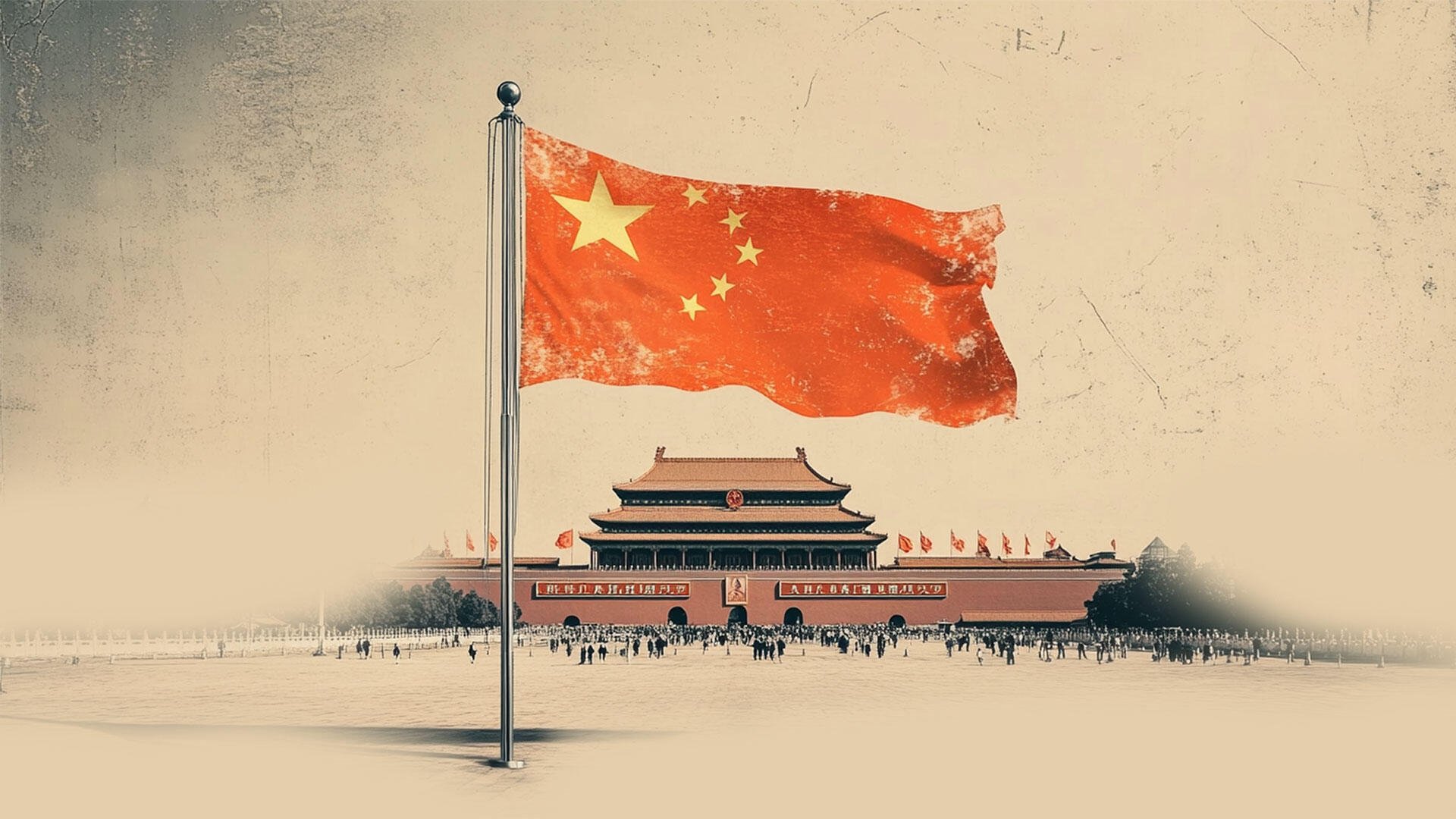
China saw it coming
There are moments in markets when price stops reacting to the present and starts discounting a different future entirely. This feels like one of those moments.
The Iran shock has not just repriced oil. It has reframed the energy narrative. What started as a geopolitical premium is now bleeding into something more structural, something slower but potentially more powerful. The market is no longer just asking how high oil goes. It is asking what replaces it.
And in that transition trade, China is quietly sitting in pole position.
It is almost as if Beijing had already gamed this scenario. Not in the sense of predicting conflict, but in building an industrial base designed for exactly this kind of world. A world where energy security is no longer about barrels in the ground, but about electrons in motion.
While US oil majors grind higher in line with crude, the real leadership has been elsewhere. Chinese battery and electric vehicle names have surged, not because oil is expensive today, but because the market is starting to price a world where oil becomes structurally less relevant tomorrow. That is a very different trade.
The signal is not subtle. When capital rotates toward storage, grids, and electrification during an oil shock, it tells you the market is not chasing the spike. It is hedging the regime.
And the regime is shifting.
The Strait of Hormuz is still not flowing cleanly. Even if a ceasefire materializes, the plumbing takes time to normalize. Shipping lanes do not reset overnight. Insurance premia do not collapse on command. The physical market lags the headline cycle, and that lag keeps the pressure on prices.
That matters because high energy costs are not just inflationary. They are behavioral. They change decision-making at the margin. They accelerate substitution. Every sustained move higher in fuel prices nudges consumers and policymakers toward alternatives, not out of ideology, but out of necessity.
That is where China’s positioning becomes critical.
It has scale in batteries. It has dominance in supply chains. It has manufacturing depth in electric vehicles that the rest of the world is still trying to replicate. So when oil shocks push the system, China does not just absorb the impact. It monetizes the transition.
You can see it in Europe, where Chinese automakers are already regaining traction. Higher fuel costs are doing what subsidies struggled to achieve on their own. They are making the economics of electric vehicles more compelling in real time. Not as a long term aspiration, but as an immediate alternative.
This is how structural shifts begin. Not with policy announcements, but with price signals that force behavior.
At the same time, there is another layer unfolding beneath the surface. China’s long deflationary stretch may be nearing an inflection point.
Rising commodity prices, driven in part by the same geopolitical tensions, are feeding into producer costs. That is starting to ripple through the system. For an economy that has been trapped in a race to the bottom on pricing, even a modest pickup in inflation changes the equation.
It restores a degree of pricing power. It stabilizes margins. It gives corporates room to breathe after years of relentless competition.
You are already seeing early signs. Companies that were bleeding on volume are beginning to talk about narrowing losses. Markets are responding accordingly, because earnings are not just about demand, they are about the ability to defend price.
If China can pivot from deflation to even a mild reflationary backdrop, that is a powerful tailwind for equities. Not because growth suddenly explodes, but because the earnings engine starts to function again.
But this is not a clean story.
Running alongside the reflation narrative is a reminder of the political overlay that still defines China’s risk premium. The recent move to restrict key figures in a high profile technology company from leaving the country is not just a regulatory footnote. It is a signal.
A signal that control remains paramount. That capital, talent, and ownership structures are still subject to intervention when national interest is perceived to be at stake.
For global investors, this creates a tension.
On one hand, China is positioning itself at the center of the next energy cycle. On the other, it continues to remind markets that access comes with conditions.
That duality is what makes this trade both compelling and complicated.
The market, for now, is choosing to lean into the opportunity. It is looking at the energy shock and seeing not just disruption, but acceleration. Acceleration of electrification. Acceleration of supply chain realignment. Acceleration of a world less dependent on fossil fuels.
And in that world, China is not playing catch up. It is setting the pace.
The risk, as always, is that markets extrapolate too quickly. Transitions take time. Infrastructure needs to be built. Grids need to be upgraded. Storage needs to scale. Oil does not disappear overnight.
But markets do not wait for completion. They price direction.
Right now, direction is everything.
The barrel is still holding the wheel in the near term, dictating inflation, shaping rate expectations, and testing the resilience of global growth. But the market is beginning to look beyond the barrel, toward the system that eventually replaces its dominance.
That is a longer game. And increasingly, it looks like China is already several moves ahead.
Author

Stephen Innes
SPI Asset Management
With more than 25 years of experience, Stephen has a deep-seated knowledge of G10 and Asian currency markets as well as precious metal and oil markets.