China economic update: Growth slowing, not slumping


Summary
China's Q2 GDP growth printed lower than we expected and, as a result, we are making another downward revision to our 2021 annual GDP forecast. Despite the downward revision, June activity indicators revealed China's economy is still resilient as retail sales and industrial production beat consensus expectations. Going forward, we are constructive on Chinese growth in the second half of this year, although some softening in data is expected. As far as monetary policy, we believe authorities will maintain their "semi-hawkish" stance and any further cuts to the Reserve Requirement Ratio to be operational in nature rather than a shift to an easier monetary policy stance.
China Growth Slows, but Still Resilient Economy
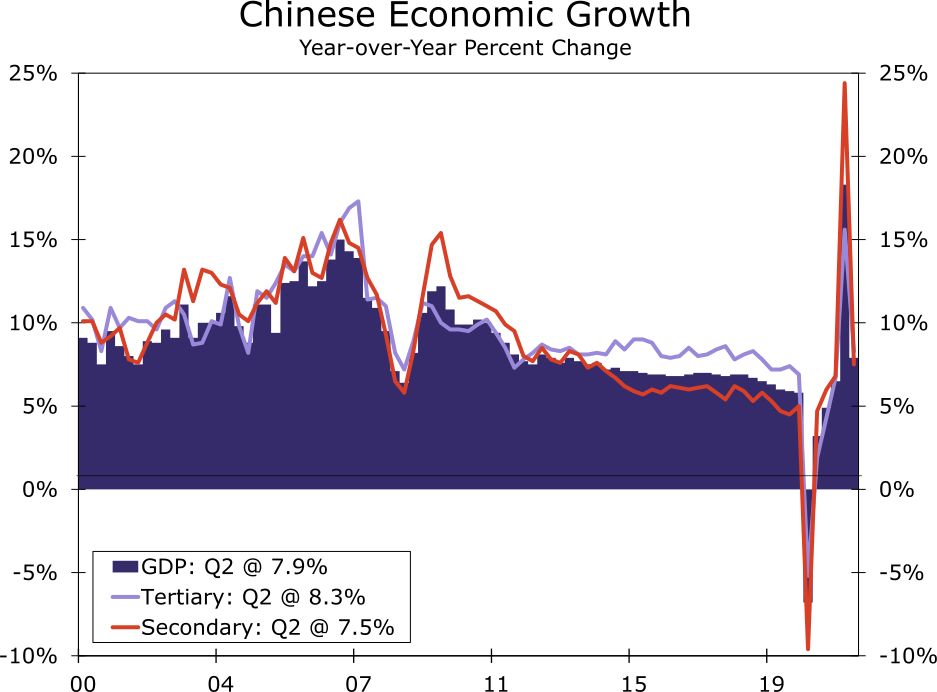
Last week, Q2-2021 GDP data were released, with numbers coming in slightly below our estimates, but in-line with consensus forecasts. In Q2, the Chinese economy grew 7.9% year-over-year, a noticeable slowdown compared to Q1 GDP growth of over 18% (Figure 1). Q1 GDP growth figures largely reflected base effects due to the pandemic; however, the deceleration in the Chinese economy is apparent. To that point, China's economy slowed more than we had forecast, as we expected the economy to grow over 8% on a year-over-year basis in the second quarter. A softer GDP print than we expected means we are adjusting our 2021 annual GDP forecast. Including Q2 data, along with minor adjustments to future growth, we now forecast the Chinese economy to grow 8.5% this year, a modest downward revision compared to our previous forecast of 8.7% annual growth.
Despite actual GDP coming in below what we expected our takeaway of the Chinese economy is that, while slowing, the economy is also demonstrating some signs of resiliency. In the lead-up to the GDP release, there was some concern among market participants that China's economy could be in worsening shape given the People's Bank of China (PBoC) unexpectedly cut the Reserve Requirement Ratio for most local banks. The surprise cut to the reserve ratio led markets to believe the Chinese economy could be experiencing a sharper deceleration than expected, and that China's central bank could be starting a monetary easing cycle in an effort to offset slower growth. The fact Q2 GDP came out in-line with consensus estimates could offer market participants some relief that China's economy is holding steady for the time being and the PBoC is not too worried about the overall health of the economy. If anything, the cut to the Reserve Requirement Ratio should be interpreted as a liquidity operation and technical adjustment, rather than the start of an easing cycle.
Author
Wells Fargo Research Team
Wells Fargo