CFTC Report: Bearish FX extremes deepen as cross-asset signals diverge

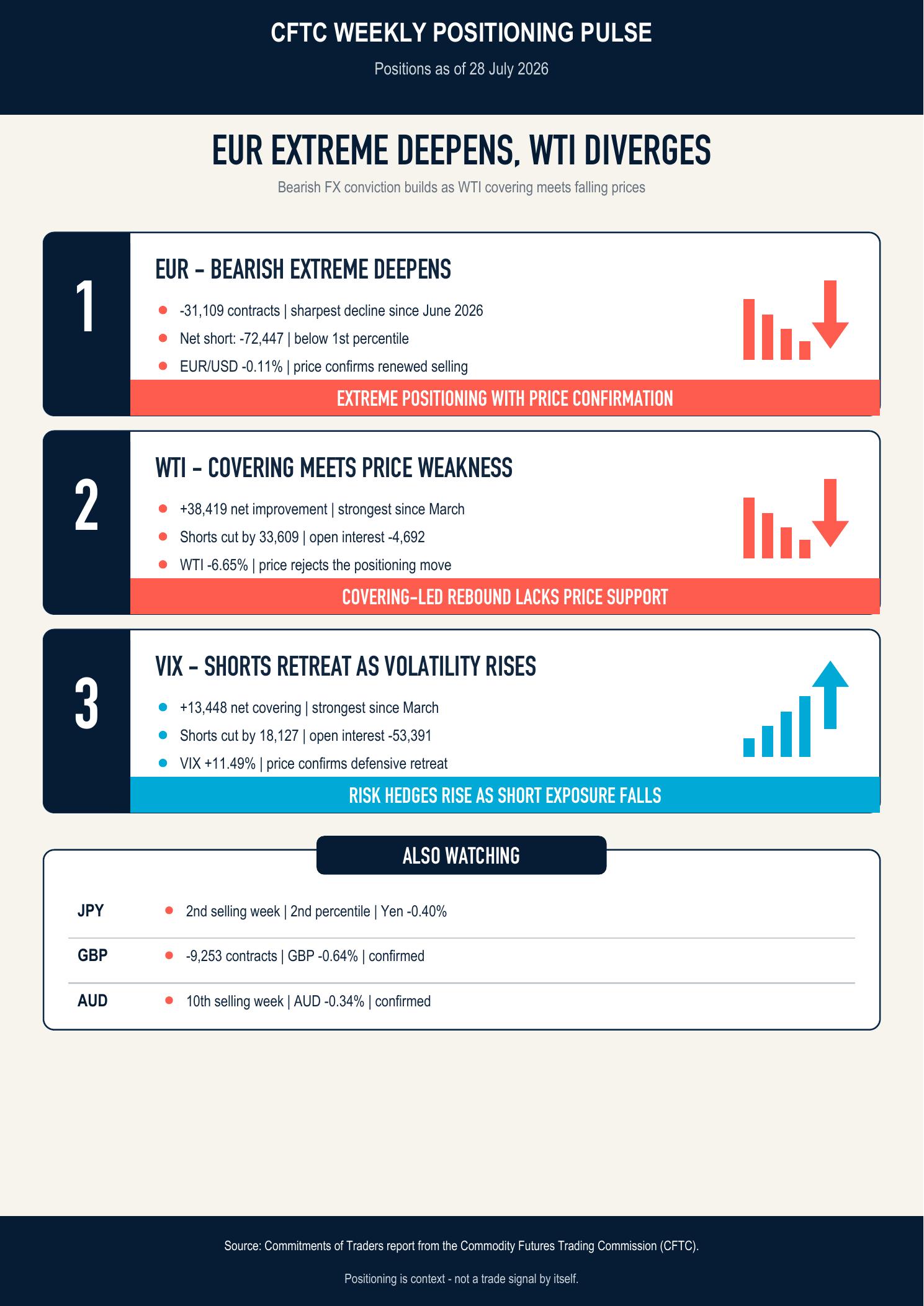
The week in one sentence: EUR and JPY selling pushed positioning toward fresh bearish extremes, WTI improved through short covering despite a sharp price decline, and VIX shorts retreated as volatility moved higher.
FX: Bearish extremes deepen
The Euro (EUR) delivered the week's clearest bearish signal. Speculators cut net positioning by 31,109 contracts, the sharpest decline since June, extending the selloff into a second week. The net short reached 72,447 contracts and is now below the 1st historical percentile. In addition, EUR/USD fell modestly, so the price continued to confirm the flow rather than resist an increasingly extreme position.
The Japanese Yen (JPY) also deteriorated for a second week, with net positioning falling by another 11,287 contracts to a 163,412-contract short, near the 2nd percentile, while USD/JPY trades with decent gains following the Yen's depreciation.
The British Pound (GBP) joined the defensive reset after four covering weeks: positioning fell by 9,253 contracts, and the Cable declined markedly, restoring price confirmation to the bearish move.
The Australian Dollar (AUD) selling extended for a tenth consecutive week, and AUD/USD posted decent losses, ending the recent price divergence.
The Canadian Dollar (CAD) remained deeply short with a modest weekly decline of 1,862 contracts, although USD/CAD was effectively unchanged.
Positioning in the US Dollar (USD) improved for a second week, with the US Dollar Index (DXY) clinching decent gains and completing a broadly defensive cross-currency picture.
WTI: Covering, not confirmation
Prices of the West Texas Intermediate (WTI) recorded the largest positive positioning move of the week, as net exposure rose by 38,419 contracts, the strongest improvement since March and the second increase after an eight-week selling sequence. The non-commercial net longs climbed to 120,108 contracts but are still lightly held near the 11th historical percentile. The composition is less bullish than the headline suggests. Shorts fell by 33,609 contracts while longs rose by only 4,810, and total open interest contracted. Prices of WTI also fell more than 6%. The rebound therefore looks primarily driven by covering and lacks price confirmation. A durable bullish turn now requires stabilising prices and a broader return of fresh long participation.
VIX and secondary signals
VIX net positioning improved by 13,448 contracts as shorts shrunk by 18,127 and volatility rose 11.49%. Yet open interest dropped by 53,391, framing the move as broad de-risking rather than aggressive new hedging. Gold selling extended for a third week, with spot falling nearly 1.20% and confirming the softer flow. Coffee positioning was little changed, while the price of futures (KC1) gained more than 2%.
What matters next
First, EUR and JPY now combine extreme bearish positioning with price confirmation, so persistence matters more than magnitude. Second, WTI needs price stabilisation and fresh longs before the covering rebound can become a bullish regime. Third, the VIX move should be read through participation: rising volatility alongside collapsing open interest signals retreat, not yet a broad hedging build.
Author

Pablo Piovano
FXStreet
Born and bred in Argentina, Pablo has been carrying on with his passion for FX markets and trading since his first college years.