CEE unaffected by turmoil in Turkey
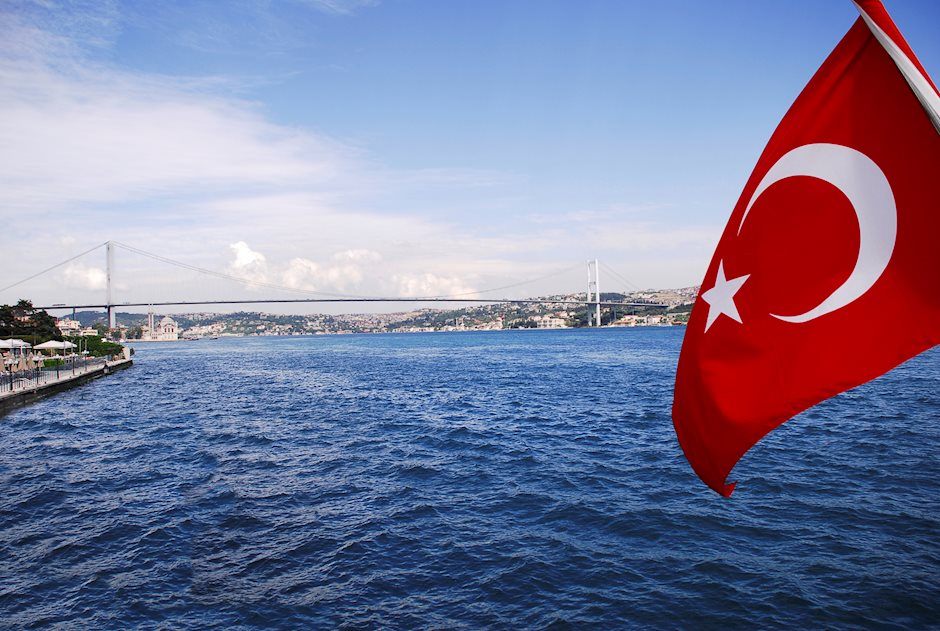

Markets in CEE have not reacted to the escalation of the situation in Turkey; economic linkages between CEE and Turkey are quite small.
‘How does the turmoil in Turkey affect CEE?’
Croatia: Although Turkey is one of the smallest trade partners for Croatia (around 1% of total exports), exports to that country increased by around 30% y/y, so this could spill over into trade relations and slow this robust growth. In addition, Turkish FDI inflows in banking (KentBank) and tourism (Dogus group) have increased in the last couple of years. In a recent interview, the Turkish ambassador stated that Croatia is one of the most interesting EU countries and that investors are monitoring the energy and wood manufacturing sectors, as well as keeping an eye on the portfolio of State Property Management Administration (DUUDI). Bottom line, although the effects of a potential economic slowdown in Turkey would not be strong, it could disrupt the ascendant financial-economic relations.
Czech Republic: We do not expect that recent political developments in Turkey will have any significant effects on the Czech economy. The Czech economy is mainly linked to Germany and the Eurozone. Thus, real economic activity and price development in the Czech Republic would be affected only indirectly in the event that the situation in Turkey were to negatively spill over into the Eurozone. Moreover, as Czech exporters have a high volume of new orders, we see only minor risks for the coming months, even if the situation in Europe slightly worsens. The same also holds true for the exchange rate and bond yields.
Hungary: So far, we have not seen any spillover from the Turkish turmoil into the domestic Hungarian market, as both LCY and FCY bond yields remained stable. In addition, thanks to the improving international market sentiment, the forint started to appreciate against the euro. Furthermore, there were no visible movements in the CDS either since the Brexit fallout. Hungary’s direct economic and trade relations with Turkey are marginal. We therefore see no impact of the events on Hungarian economic dynamics.
Poland: Trade links between Poland and Turkey are rather small (the share of exports and imports stands at 1.5%). Thus, the direct economic impact from the turmoil in Turkey is likely to be limited and would post a downside risk for the outlook only in the case that the Eurozone and Germany are affected. Events in Turkey have not affected the FX and bond market, either. Quite to the contrary, the zloty strengthened, backed by the Fitch decision to affirm the rating and outlook, alongside strong economic data, while 10Y yields have remained stable. Our forecasts thus remain unaffected at this point.
Romania: We maintain our economic forecasts, but see direct risks for the Romanian economy stemming from the political crisis in Turkey. In 2015, Turkey ranked sixth among Romania’s export destinations, with delivery of Romanian goods of EUR 2.2bn (1.3% of GDP). The stock of Turkish FDI was EUR 508mn in 2014, but business relations are stronger than those implied by this number because some Turkish companies are incorporated in EU countries. The market turmoil has not been felt on the local markets, and we think that investors will continue to differentiate among countries in the future.
Slovakia: The recent coup attempt in Turkey and the resulting uncertainty present negative risks for Slovakia, but mostly from a geopolitical perspective, rather than a direct economic one. The euro has strengthened against the Turkish lira, presenting positive news for imports from Turkey and negative news for our exports there. However, foreign trade with Turkey is relatively small, as only 1.3% of total Slovak exports and 0.8% of all imports are traded with the country (2016 data). Slovak government bond yields remain low, predominantly due to the continuing QE, but also partly acting as a safe haven in riskier environments (though less so than Bunds). Overall, the attempted coup will have its largest effect in the political arena, straining relations between Turkey and the EU on numerous fronts. Slovakia will have to deal with such questions as well, given its current presidency of the EU.
Slovenia: After signing a strategic partnership with Turkey in 2012, Slovenian-Turkish economic relations are getting firmer and Turkish investors are present and/or interested in various sectors such as tourism, telecommunications, food and the chemical industry; while the share of total exports is at a relatively low 1-1.5%, it is steadily increasing. Thus, a potential economic crisis in Turkey could lead to a decline in both export and investment potential, but given the relatively small share in trade and FDI, Slovenia would not be strongly affected.
Serbia: As one of the emerging European markets, Serbia could profit form the turmoil in Turkey, as investors (especially US-based) could shift their portfolios toward the Serbian bond market. We have already seen compression of the USD 2021 Eurobond by approx. 20bp in the last 10 days. On the other hand, Turkish investors are present in the agriculture, transport and energy sectors in Serbia. Although exports to Turkey are at a relatively modest 2%, it is important to note that Serbia and Turkey signed a free-trade agreement, so the goods trade share is steadily increasing. While Serbian markets could benefit from this situation, trade relations could take a hit.
Author
Erste Bank Research Team
Erste Bank
At Erste Group we greatly value transparency. Our Investor Relations team strives to provide comprehensive information with frequent updates to ensure that the details on these pages are always current.
















