Can the RBI save the Indian Rupee? It’s complicated
The Reserve Bank of India has intervened decisively to cushion the Indian Rupee’s decline to successive record lows. It is a bold move, reflecting the central bank's urgency to curb bets against Asia’s worst-performing currency this year. But will it work?
The RBI announced a new directive to cap banks' net open positions in the foreign exchange market to $100 million at the end of each business day. The Indian Rupee saw a sharp, albeit temporary, rise on Monday following the rule. The move, however, might do little to ease the INR bearish pressure as it targets market mechanics rather than long-term economic fundamentals.
A temporary relief…and that’s it?
By imposing strict limits on net open positions, the central bank is effectively forcing banks to reduce short INR exposure and constraining the ability of institutions to build large bearish positions. This would result in consistent, automated demand for the INR, especially near daily market closes. The market implication, however, has been limited as it does not address underlying pressures stemming from higher oil import costs.
Economic concerns pose additional threats
As a major oil importer, India faces structurally higher US Dollar demand as energy prices remain elevated due to factors linked to the Iran conflict. Moreover, hedging costs against the INR depreciation have also jumped since the start of the Iran war. This, along with concerns about the war-driven pickup in inflation and economic growth outlook, continues to erode the appeal of Indian bonds and equities for foreign investors.
Foreign outflows amplify depreciation pressure
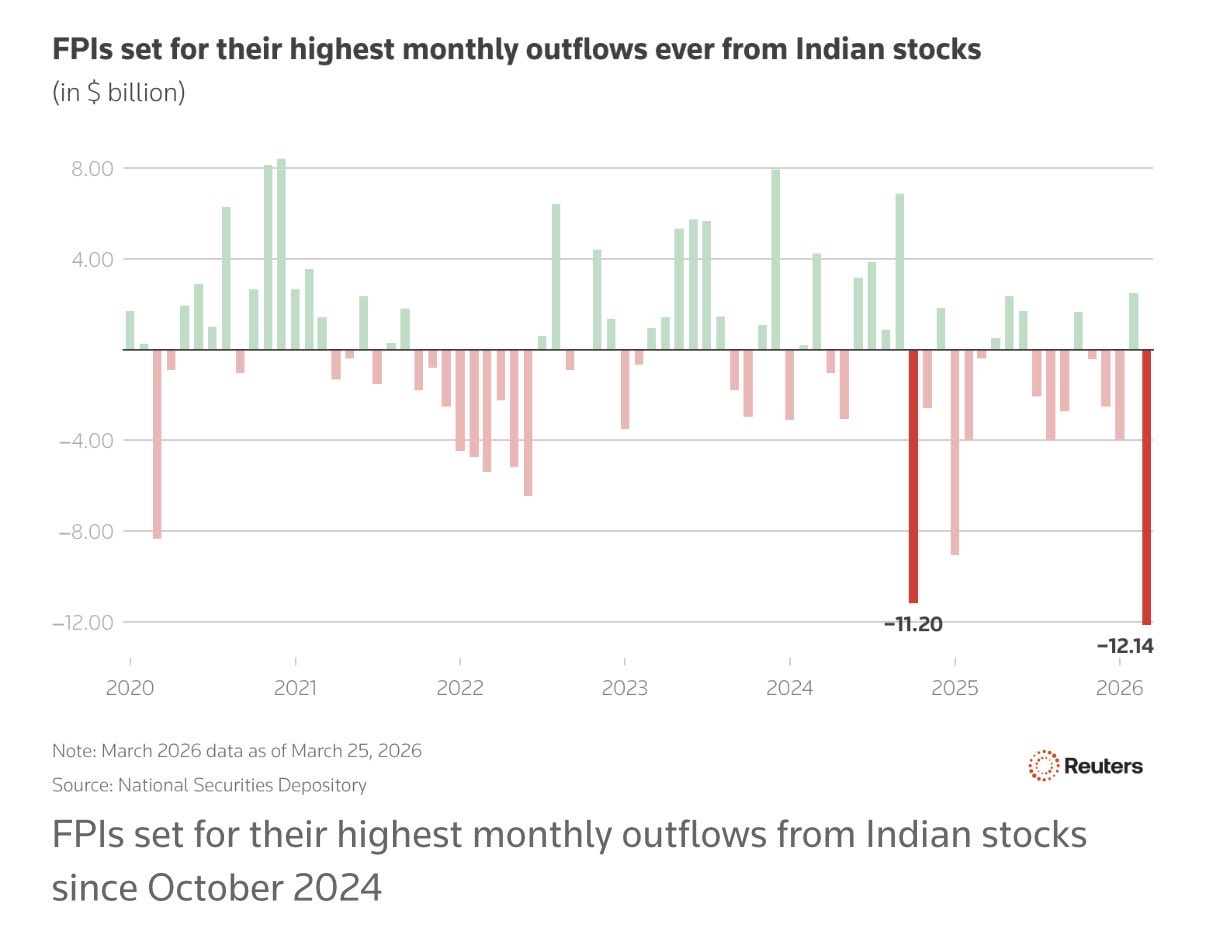
Foreign portfolio investors have sold Indian bonds at a record pace in March, with net sales reaching $1.61 billion, the highest since the Fully Accessible Route (FAR) was introduced six years ago. Moreover, foreign investors have sold a net $12.14 billion worth of Indian shares since February 28, marking the biggest monthly outflow on record. This contributed to the INR's nearly 11% year-to-date fall, to a fresh all-time low on Friday.
USD/INR Technical Analysis: No turnaround in sight
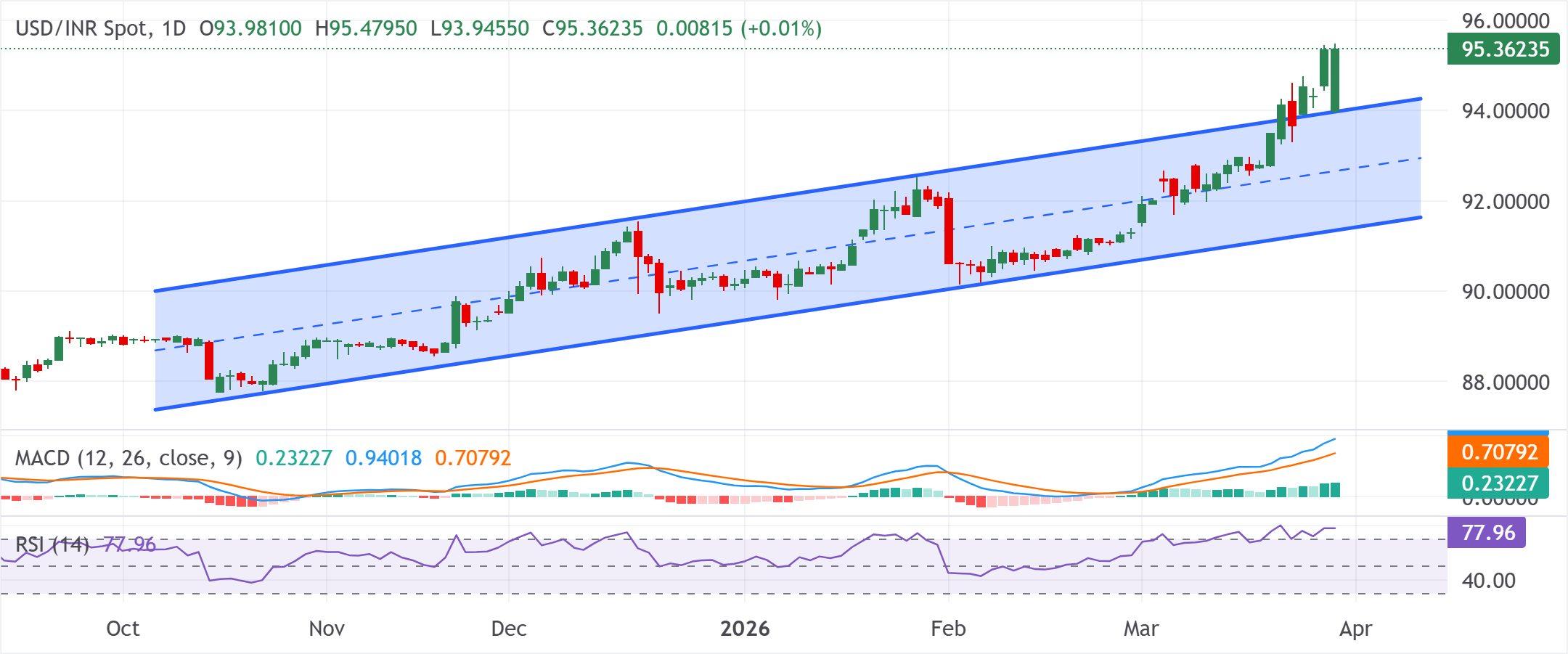
The USD/INR pair fills the weekly bearish gap opening to sub-94.00 levels, and the subsequent strength back above the 95.00 psychological mark validate the recent breakout through over a five-month-old ascending channel. Adding to this, the Moving Average Convergence Divergence (MACD) indicator stays in positive territory with the line above its signal and a still-positive histogram, supporting firm upward momentum.
Meanwhile, the Relative Strength Index (RSI) near 78 sits in overbought territory, yet its sustained position above 70 points to persistent buying pressure rather than an imminent reversal signal. This backs the case for an extension of the recent well-established uptrend rather than simple range trading.
To sum up: Temporary cushion, yes, but not much more
The Reserve Bank of India has made its stance clear that it is willing to step in when speculation threatens to spiral the Rupee’s downtrend. That’s a clear sign for traders as it helps them gauge which are the RBI’s limits and how powerful its moves are.
While these measures may slow the pace of depreciation, they do not change the broader narrative. As long as Oil prices remain high and foreign outflows persist, the Indian Rupee’s path will continue to be downwards.
Author

Haresh Menghani
FXStreet
Haresh Menghani is a detail-oriented professional with 10+ years of extensive experience in analysing the global financial markets.

















