Brent crude just pulled back. Sigmanomics data likes buying the dip

Crude oil has been volatile, but the pattern has been fairly clear: when brent crude has dipped during the iran-war cycle, buyers have stepped back in.
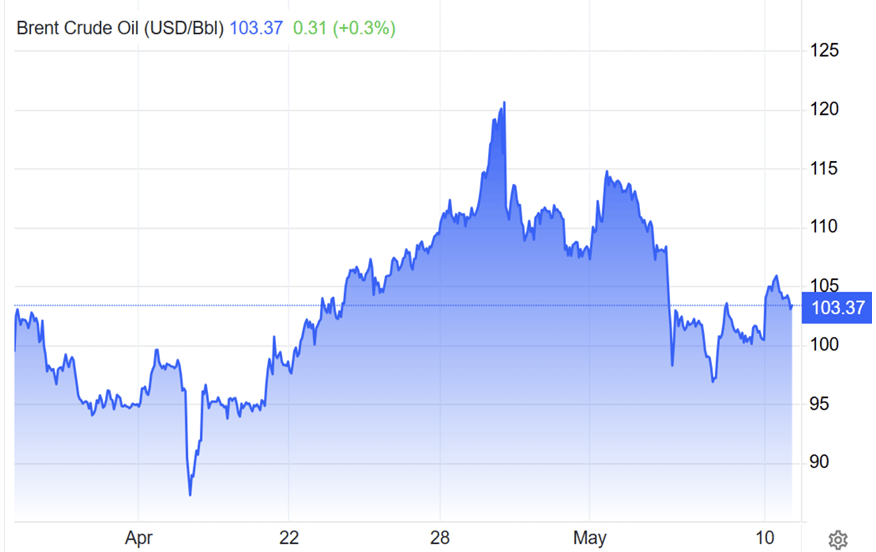
Brent recently traded near $103/barrel, down from a prior spike above $120/barrel and well off the war-driven high near the mid-$120s. the latest pullback appears tied less to collapsing fundamentals and more to renewed optimism that a diplomatic resolution between the u.s. and iran could reduce the risk of prolonged disruption.
Now, with brent back near $103, another dip-buying setup may be forming.
The case still depends heavily on the diplomatic timeline. if a credible resolution emerges quickly, crude could lose more of its geopolitical premium. but if talks stall, drag on, or fail to reduce the disruption risk around iranian exports and regional shipping, the recent decline may prove to be another tactical reset.
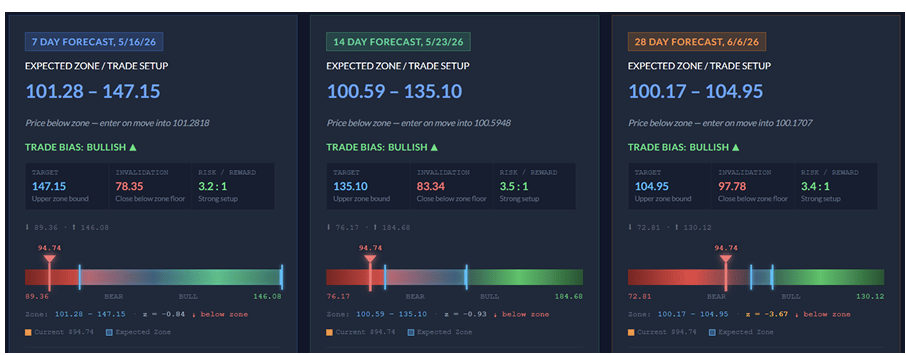
That view is supported by sigmanomics, which currently shows a bullish bias across the 7-day, 14-day, and 28-day timeframes.
Geopolitics continue to drive the oil tape
The crude oil market is still being shaped by the same core issue: whether geopolitical risk in the middle east turns into a sustained supply shock, or whether diplomacy can de-escalate the situation before the disruption gets worse.
Brent crude fell more than 6% on a weekly basis as optimism around a possible u.s.-iran agreement outweighed persistent Middle East supply risks. the international benchmark recently traded near $103/barrel, down from roughly $110/barrel a week earlier, while wti remained lower at around $96/barrel.
But the geopolitical backdrop has not exactly calmed down.
U.S. forces reportedly struck two empty iranian-flagged oil tankers in the gulf of oman, with central command saying the vessels were attempting to breach a u.s. blockade around iranian ports. a third iranian-flagged vessel had already been disabled earlier in the week, according to the same reporting.
That suggests the market is not simply reacting to rhetoric. the conflict is still affecting shipping, logistics, and the movement of oil-related vessels. even if no cargo was lost in the latest tanker strikes, the broader message is that enforcement pressure around iranian shipping remains high.
At the same time, diplomacy is still alive. that combination has made the market unstable. the downside case is tied to a potential resolution. the upside case is tied to the risk that talks stall, shipping remains disrupted, and traders are forced to rebuild supply-risk premium.
The pullback has not broken the bullish pattern
Brent’s recent decline looks sharp in isolation, but it fits the broader trading pattern that has developed since the iran-war premium entered the market.
Brent rallied into the mid-$120s as the conflict intensified, fell back toward the high-$80s when a resolution appeared more likely, then rebounded toward roughly $115–$117 as uncertainty returned. the latest decline toward $103 has the same feel: a market pricing in a better diplomatic outcome before that outcome has actually been secured.
That creates a potentially interesting risk/reward setup if a deal is reached quickly, the pullback could extend. that is the main risk to the dip-buying thesis. a credible resolution that restores confidence in shipping flows would likely reduce the geopolitical premium embedded in crude prices.
But if talks drag on, fail, or produce only a temporary pause, the market may have to rebuild that premium quickly. that is especially true if the strait of hormuz remains a focus, tanker traffic stays disrupted, or u.s.-iran military activity continues.
Citibank’s current oil forecast also leans bullish. based on a recent report , the bank maintains a $120 three-month price target for wti. since brent currently trades at a roughly $6–$7 premium to wti, that would translate to an implied brent target of about $126–$127/barrel, assuming the spread holds near current levels.
That makes the drop toward $103 potentially important. it may be another test of the same pattern that has defined the recent oil trade: dips have been bought when geopolitical risk remained unresolved.
Sigmanomics forecasts support the dip-buying case
Sigmanomics data adds a quantitative layer to the bullish brent crude setup. across the 7-day, 14-day, and 28-day forecasts, the model currently shows a bullish bias.
The 7-day forecast points to an expected trade zone of roughly $101 to $147, with a target near $147. with brent recently trading around $103, crude is already inside that expected zone, supporting the idea that the current pullback may offer a valid long setup. the invalidation level is near $78, and the risk/reward is listed at roughly 3.2-to-1.
The 14-day forecast is also bullish, with an expected zone of roughly $101 to $135 and a target near $135. brent is also inside that zone, suggesting the medium-term setup remains constructive as long as crude holds above the lower end of the expected range. the invalidation level is near $83, with risk/reward around 3.5-to-1.
Bottom line
Crude oil is not a clean one-directional trade right now. it is a headline-driven market caught between competing narratives.
The latest pullback toward $103 reflects optimism that the u.s. and iran may be moving closer to a resolution. but the conflict has not fully de-escalated, tanker-related incidents are still occurring, and the strait of hormuz remains central to the supply-risk narrative.
That makes the dip-buying case interesting. so far, buying weakness in brent crude has worked when geopolitical risk stayed active. with brent now sitting inside the sigmanomics expected zones across all three timeframes, the trade is less about chasing a breakout and more about whether crude can hold this zone and begin to firm.
The risk is straightforward: if a credible resolution arrives quickly, crude could lose more of its war premium. but absent that kind of breakthrough, the recent dip may offer another opportunity for traders looking to position for renewed upside in brent crude.
For now, the setup remains constructive. the market has pulled back, but the bullish case has not gone away.
Author

Sigmanomics
Sigmanomics
Sigmanomics is a financial intelligence platform that delivers expert insights, data-driven analysis, and real-time trading signals across global markets.