Week ahead – RBNZ and BoC decide on rates ahead of all-important US NFP
- Dollar rebounds ahead of ISM PMI and NFP data.
- RBNZ is expected to raise rates; focus to fall on forward guidance.
- BoC is set to remain on hold; will it raise rates in 2027?
- Eurozone CPI, China PMIs and AU GDP also on the agenda.

Dollar recovers some ground after "debasement trade"
The US dollar staged a modest recovery this week, perhaps as traders decided to cover some of their short positions amid slightly stickier or in-line US PCE inflation numbers for July, confounding expectations of softer prints amid the softness revealed in the CPI data for the month.
The greenback has been on the back foot amid weak US data, with last month’s NFPs revealing contraction in job creation, while the US Treasury’s announcement about doubling the buybacks of long-dated bonds and using their own Treasury General Account (TGA), has done little to ease concerns about the US debt, leading to a so-called dollar debasement trade.
This week’s rebound in the greenback is far from suggesting that the outlook has changed. After all, investors continued assigning only a 35% chance of a rate hike at the September Fed gathering, while they are penciling in only 40bps worth of rate hikes by the end of 2027.
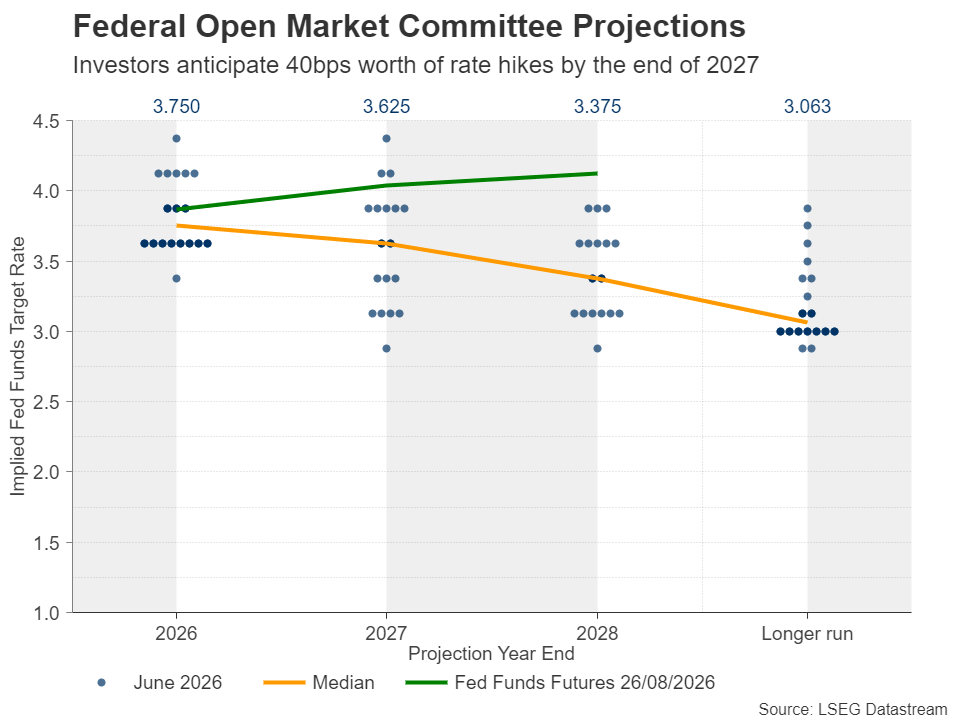
The slide in oil prices amid renewed hopes about peace in the Middle East may have also further eased inflation fears, allowing the Fed’s implied rate path to remain relatively flat. Reports hit the wires this week that the US and Iran are very close to agreeing on a ceasefire deal, while other headlines noted that Iran and Oman are resuming discussions about reopening the Strait of Hormuz.
ISM PMIs and NFP report enter the spotlight
Having said all that though, the dollar’s fate could be altered next week, as the agenda includes the ISM PMIs for August, and most importantly the non-farm payrolls for the month. The weekly ADP prints, which represent a four-week moving average of the change in private sector employment have been in a recovery mode in August, tilting the risks to Friday’s NFP report to the upside.
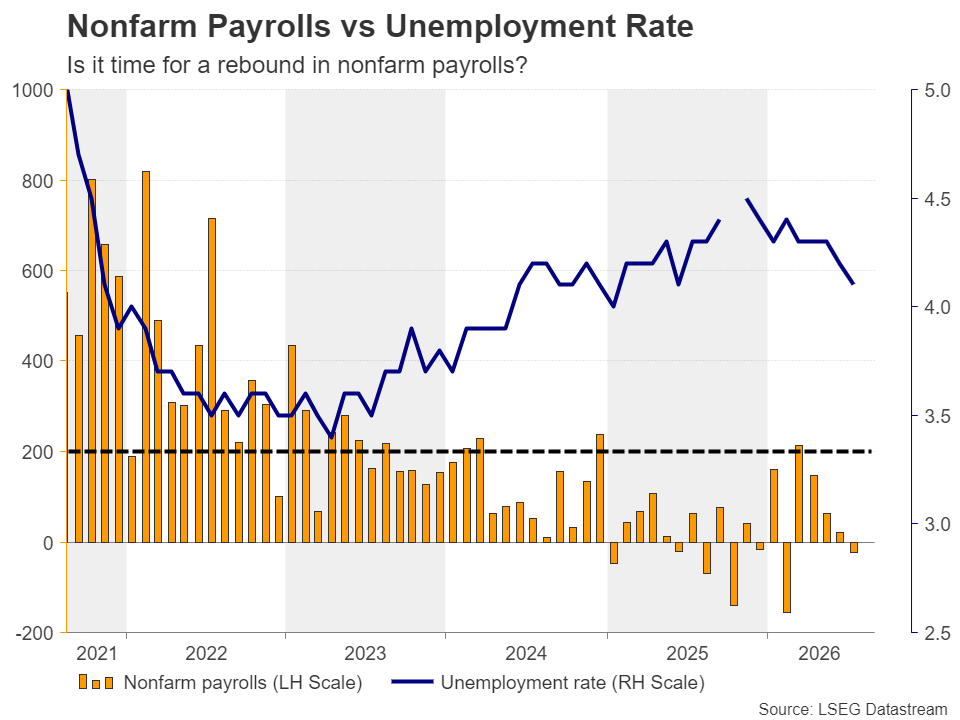
Initial jobless claims have been coming higher than expected, but this maybe due to more Americans, who have been out of the labor force, being encouraged to start actively looking for a job.
Following July’s 23k job loss, the bar for a rebound may not be that high. The question is whether the number will be strong enough to prompt investors to bring forward their Fed hike bets. The ISM employment subindices and the monthly ADP private employment report could give an early glimpse of where the US labor market stood in August. That said, solid ISM headline PMIs and perhaps some stickiness in their prices charged subindices may be needed for the dollar to start flexing its muscles again.
Will the RBNZ deliver a hawkish hike?
As for central bank decisions, the torch will be passed next week to the Reserve Bank of New Zealand and the Bank of Canada.
Getting the ball rolling with the RBNZ, at its latest gathering on July 8, the Bank decided to raise interest rates for the first time since 2023. The decision was made amid growing concerns that inflation could prove more persistent than previously expected, with the Bank making it clear that more increases are in the chamber.
Since then, the CPI data for Q2 revealed hotter-than-expected inflation, with the year-on-year rate jumping to 4.1% from 3.1%, further distancing itself from the 3% upper bound of the RBNZ’s target range. As for the labor market, the unemployment rate jumped to 5.6% from 5.4%, but the employment change accelerated and the labor cost index ticked higher.
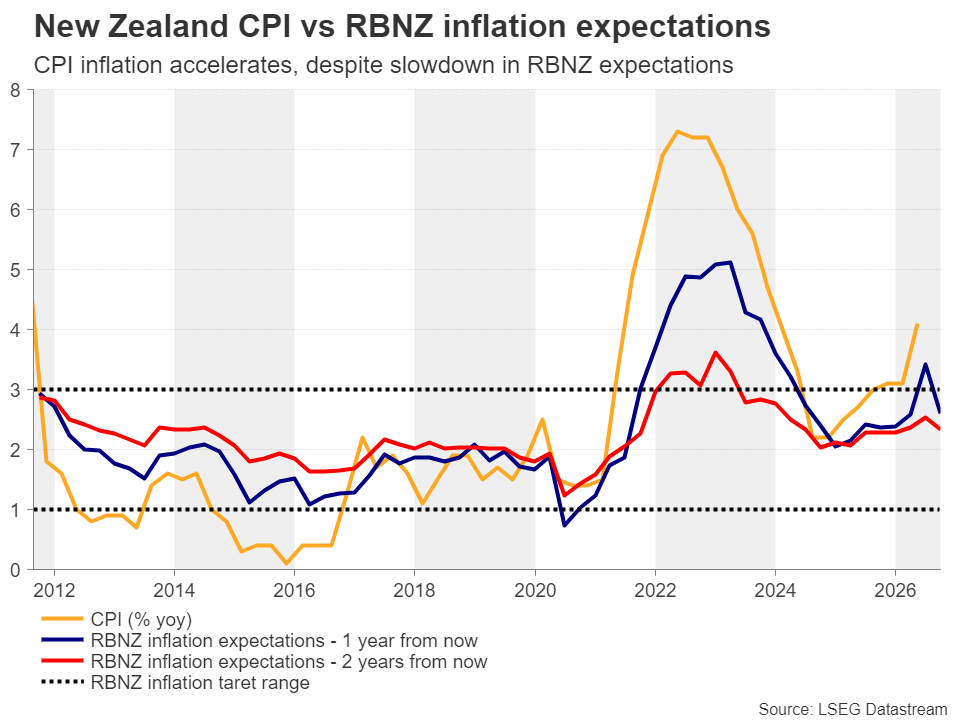
This convinced investors that a back-to-back 25bps rate hike will be the base case next week, and that another 75bps worth if increases may be needed by the end of 2027. Therefore, should the Bank deliver a hawkish hike, the kiwi is likely to continue outperforming its US counterpart amid the wide divergence in monetary policy expectations between the RBNZ and the Fed.
Further optimism regarding the Middle East conflict could also help the kiwi, through its risk-linked characteristics, even if that prompts traders to scale some rate hike bets back.
BoC set to stand pat – Are rate hikes on its agenda?
On the other hand, the BoC remained on hold on July 15, with officials finding themselves between a rock and a hard place amid weak economic growth but elevated inflation risks. However, the Bank said that inflation expectations remained broadly anchored, suggesting that the current level of interest rates may be restrictive enough to contain inflation. Perhaps policymakers were reluctant to further raise interest rates while growth remains weak.
Since then, GDP data for Q2 came in much stronger than the BoC’s forecast, with the CPI rates for July rising to the top of the Bank’s 1-3% target range. What’s more, the Canadian economy added a very strong 75k jobs in July, with the unemployment rate falling to its lowest since July 2024.
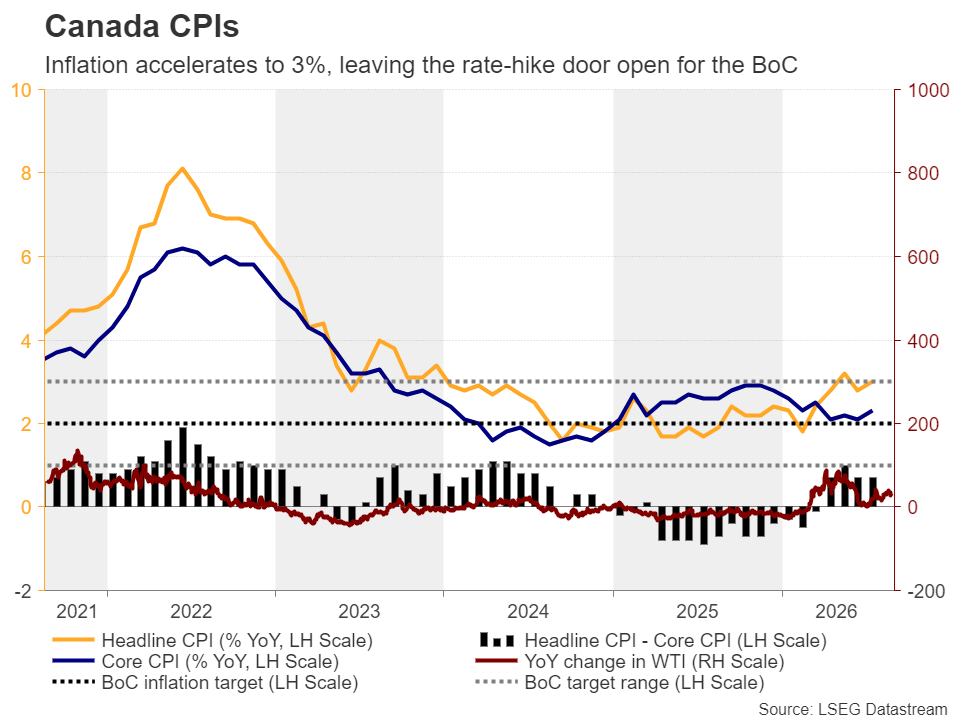
With all that in mind, although investors do not expect any action at this gathering or the rest of the year, they are penciling in around 75bps worth of hikes for 2027. With the loonie on the back foot amid collapsing trade talks with the US and the latest slide in oil prices, the Bank needs to clearly communicate that the rate-hike door remains wide open, for the currency to stage a rebound. Otherwise, it may be destined to suffer more.
Canada’s jobs data on Friday could also impact BoC rate expectations.
Eurozone CPI, China PMIs and Australia GDP also on tap
Elsewhere, Eurozone’s preliminary CPI numbers will be released on Tuesday amid strong expectations that the ECB will hike again at the September gathering and deliver another 25bps increase by February. A data set suggesting that inflation remained close to 3%, well above the Bank’s objective of 2%, could solidify the notion of more and faster rate hikes by the ECB, thereby helping the euro gain more ground against the greenback.
China’s official PMIs will be released on Monday, while Australia’s GDP for Q2 is scheduled for Wednesday. Following Australia’s CPI data revealed that inflation is running hotter than expected, solid Chinese PMIs and a healthy GDP print could intensify speculation of another RBA rate hike before the end of the year.
Author

Charalampos joined Trading Point in August 2022 as a senior market analyst. He has extensive experience in analyzing financial markets, gained through a decade-long career, with his primary focus being on the currency market.