Big tests ahead for Trump and May
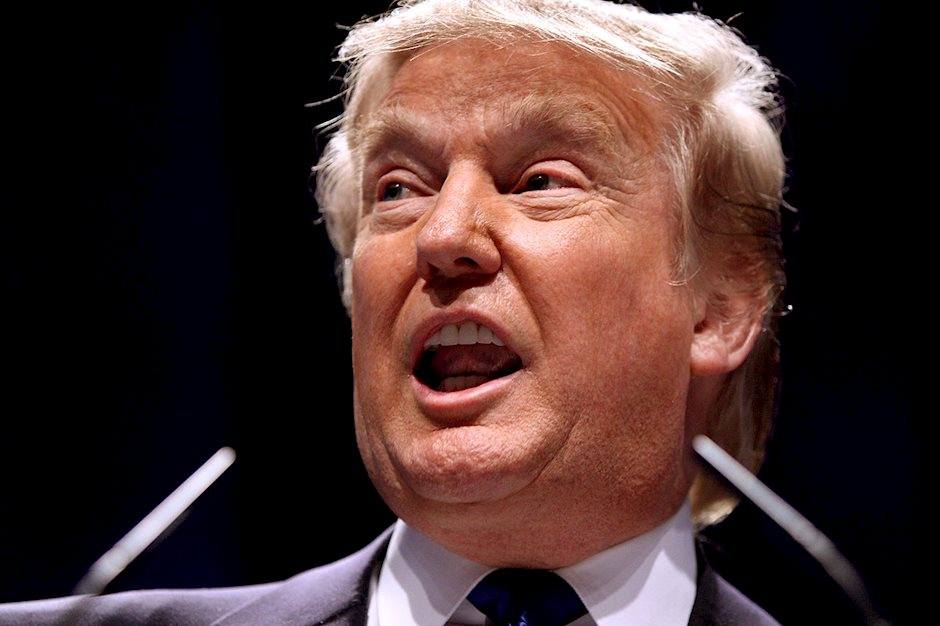

The initial reaction to the first few days of Donald Trump’s Presidency suggests that investors may be losing patience with the new occupant of the White House. US stock futures point to a lower open, and the dollar is weaker across the board. Even Treasury yields are down some 7 basis points, as investors worry about protectionism and what a deeply unpopular President will mean for national unity and international diplomacy over the next four years.
POTUS takes over at the West Wing
The most interesting will be Trump’s first week as POTUS. After the “joyless rant” of Trump’s inauguration speech on Friday (to paraphrase Simon Schama, writing in the FT at the weekend), the world is watching to see what will be included in the rush of executive orders that are forecast to come in the coming days. This will hopefully give us an idea if Trump has a coherent set of views that could be considered a plausible economic policy. If his team use “alternative facts” about the size of the much-anticipated infrastructure spending programme, for instance, or if he walks away from rolling back years of financial market regulation, two key drivers of the stock market rally since Trump’s election in November, then the stock market rally could whither and die.
Clinton king of stock market returns
Another excellent analysis in the FT at the weekend, looked at the stock market performance under various Presidents. Bill Clinton wins the top prize, with the best returns for investors under his two terms in office, with Obama a close second. Also interesting was the sectors that did well under recent Democratic and Republican Presidents. Under Clinton, big tech companies and General Electric saw their market caps expand the most. Under George W. Bush, defence and oil companies did the best. Under Obama it was Apple, Microsoft, Google and Amazon. If history is to repeat itself, then Silicon Valley could struggle under Trump. However, Trump’s unconventional style has already been bad news for the defence sector, which he has said overcharges the US government for its products and services.
Letting the small guy steal the limelight
Perhaps it will be a whole stock market, rather than just one sector, that will thrive under Trump. After Friday’s speech, we could see the Russell 2000, a domestic-focussed US stock market; start to outperform the larger, more international Dow Jones and S&P 500, as investors react to Trump’s protectionist “America First” promise during his inauguration speech. However, Trump is at a massive historical disadvantage when it comes to stock market returns, because equities today are deemed expensive. The P/E ratio of US stocks when Regan took office was 9, this compares to nearly more than 30 today, on a cyclically adjusted basis.
China highlights Trump’s anti-trade position
In an ironic turn of events, it was China’s Xi Jinping who made an eloquent defence of global free trade at Davos, while Trump struck a protectionist tone on Friday. But maybe all is not lost. There have been questions raised about Trump’s attention to detail, and he seems to be oblivious to his own cabinet actively opposing his views. The new Commerce Secretary, Wilbur Ross, who has responsibility for trade, shot down any chance of the US imposing trade tariffs in his recent confirmation hearing to the Senate.
Supreme Court Ruling: it’s all about the Sewell Convention
Theresa May is also in the firing line this week. On Tuesday we are set to get the Supreme Court’s decision on whether MPs need to vote before May can trigger Article 50. May said last week that she would let MPs vote on any Brexit deal, however, this ruling is still significant because of something called the Sewell Convention. This limits what Westminster can decide for the devolved parliaments of Scotland, Wales and Northern Ireland. The worst outcome for May would be a ruling that curbed Westminster’s power over the devolved administrations, that could make Brexit very hard to achieve without breaking up the UK, something May has said that she doesn’t want to see happen.
Supreme Court decision and the pound
So, there could be two outcomes for the pound from Tuesday’s decision: the government loses the case, but the Sewell Convention is not upheld: this could be good news for the pound, as parliament gets to debate and vote on Article 50, and the threat of UK breakup is avoided. Parliamentary votes on Brexit have been greeted by warm enthusiasm from pound traders in recent months. However, if the government lose the vote, but the Sewell Convention is upheld, then the threat of an end to the UK, all in the name of Brexit, is likely to send GBP/USD hurtling back towards 1.20, once the market has digested exactly what this may mean for the UK.
Can Turkey’s central bank stop the carnage in the lira?
This is an awfully long note, but I need to add one more paragraph on Turkey, which is also worth watching this week. At 1100 GMT on Tuesday, its central bank is expected to raise interest rates to stem the sharp decline in the Lira in recent months, it is the worst performing currency so far in 2017, down more than 4% vs. the USD. A rate rise of 0.5% is expected in the benchmark repo rate (a 0.75% increase is expected in the overnight lending rate, and a 0.25% rise in the overnight borrowing rate). A rate rise would be significant, as it would reinforce the Turkish central bank’s independence, after recent pressure from the government to cut rates to boost the economy. Although a 0.5% rate rise would be welcome by investors, it is likely to only have a short-term positive impact on the Lira. Ahead of the referendum on constitutional reform, which will take place in Turkey on April 2, it is hard to see the currency rallying in any meaningful way. In our view, if President Erdogan loses this referendum, this could be a powerful driver of Lira strength in the medium-term, and the only lifeline in sight for this beleaguered currency.
Author
Kathleen Brooks
XTB UK
Kathleen has nearly 15 years’ experience working with some of the leading retail trading and investment companies in the City of London.
















