Bessent steps in on bonds — Yields fall, Gold and Bitcoin rally

The week of August 17–21 was a game changer for Gold and Bitcoin, and the trigger was the Treasury bonds market as Scott Bessent had tried to stop a long-end selloff that had already pushed the Nasdaq through five red sessions.
The core of the week was simple. After the 30-year yield touched a 19-year high near 5.34%, the Treasury said it would at least double liquidity-support buybacks of 10- to 30-year debt — from $2 billion to at least $4 billion per operation, starting September 9. In response, the 30-year yield dropped about 10 basis points toward 5.19% immediately weakening the US dollar and lifting Gold.
The absolute winner of the week was Bitcoin which had grown to $79000, soaring for 20% to 25% within a single week.
Equities were slower to join: they needed Friday’s rebound to stop the Nasdaq bleed.
The Bessent put, and why yields still matter
Bessent framed the move as market-making in a thin August’s market, not as real quantitative easing. The extra buybacks are small versus the stock of outstanding debt. The market did not care about the size. It cared about the signal: if the long end yields rise again, the Treasury is willing to lean against it. A day later Bessent told CNBC the operations “could be more than $4 billion per issue.” That is what traders started calling a “Bessent put.”
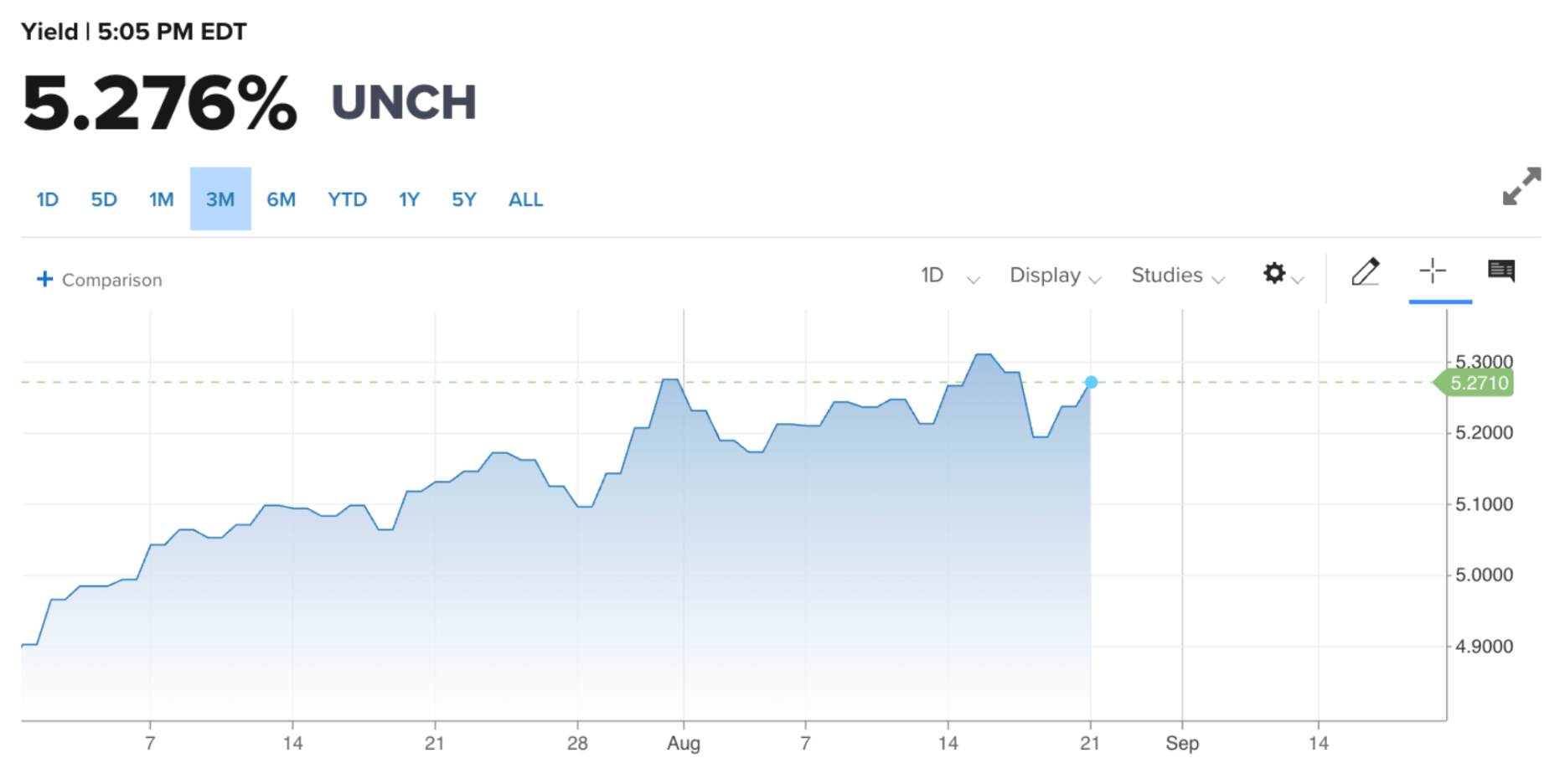
Despite the initial sharp decline of yields of long-end bonds, they have retraced back on Thursday and Friday.
The market is still concerned about the situation in the Hormuz strait and the sticky inflation. Probabilities of interest rate change in September and October haven’t changed significantly throughout the week.
Global stocks
US stocks rose on Friday, attempting to trim losses in a shaky week as the bond market remained jumpy and continued to exert pressure on risk assets. The S&P 500 gained 0.4% to 7,674 — marking only its second positive session in six days since hitting the August 13 record. The Dow jumped 518 points (+1%) to 53,277, while the Nasdaq added 0.4% to 26,180, finally snapping its five-day slump. Market breadth was positive across the board, though it wasn't enough to save the weekly performance.
Upcoming catalysts put market consolidation to the test
Weekend futures opened little changed to slightly lower, reflecting a market that has managed to stop the bleeding but hasn't yet found a strong bullish bid. The setup now shifts toward a dense cluster of high-impact events: July PCE and Nvidia earnings on Wednesday, Marvell on Thursday, and Warsh speaking at Jackson Hole.
Nvidia price hikes and capex dynamics
As Bloomberg reported over the weekend, Nvidia has informed clients that servers featuring Vera Rubin and Blackwell chips will see price increases of over 15% for early-2027 shipments, driven by surging memory costs.
This development presents two potential scenarios into the earnings print:
- The bullish take: Strong pricing power that protects corporate margins.
- The bearish take: Elevated costs for hyperscalers that could slow the broader capex cycle.
Either way, equities have moved past last week’s CPI calm. Markets are now hyper-focused on whether Bessent can prevent the long end of the yield curve from driving equity price action.
News in focus this week
August 26: Nvidia earnings — first real test of whether the Nasdaq rebound can last.
August 27–29: Jackson Hole — Warsh’s first symposium speech as chair. Still no forward guidance.
Now let’s shift to potential scenarios and trading ideas for the week ahead.
XAU/USD
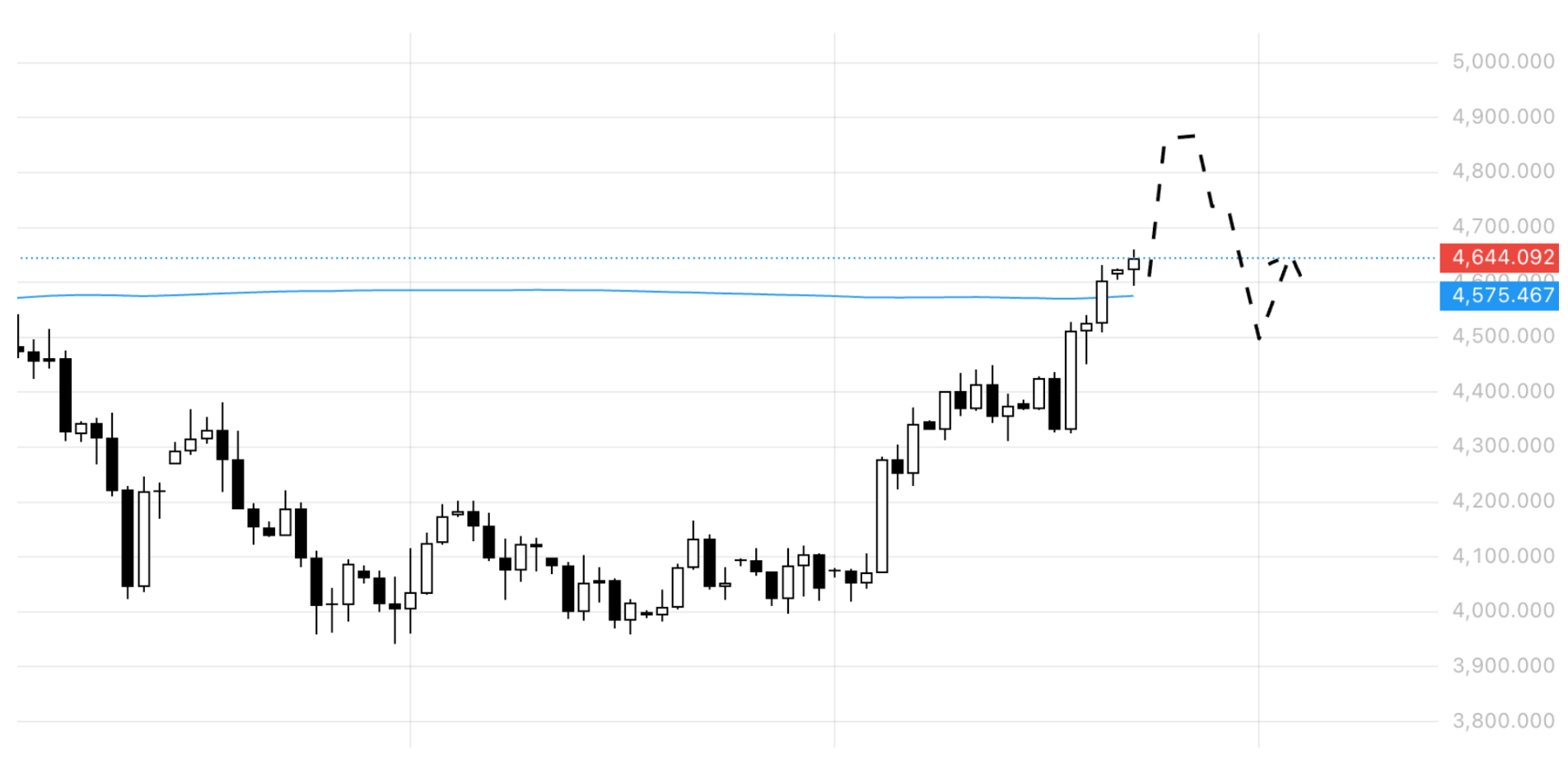
XAU/USD has emerged from the sideways range and reached the 200-day moving average from below. The Bessent announcement broke it higher, and the metal is now working the $4,500–4,600 area after a three-month high. From the historical studies, we know that after acceptance of the area above 200-day moving average, Gold tends to sustain momentum for several days, after which it may retrace back to the area and start rotating.
Given the changing narrative in the bond market and a short-term paradigm shift for metals, we may expect Gold to continue climbing higher until reaching $4800-4900, after which it may rebound to $4550 area.
The risk is that Jackson Hole or a rebound in the 30-year back above 5.30% fades the “Treasury backstop” trade. In that case gold can slip back toward $4,400–4,450, last week’s ceiling and this week’s first support.
Natural Gas
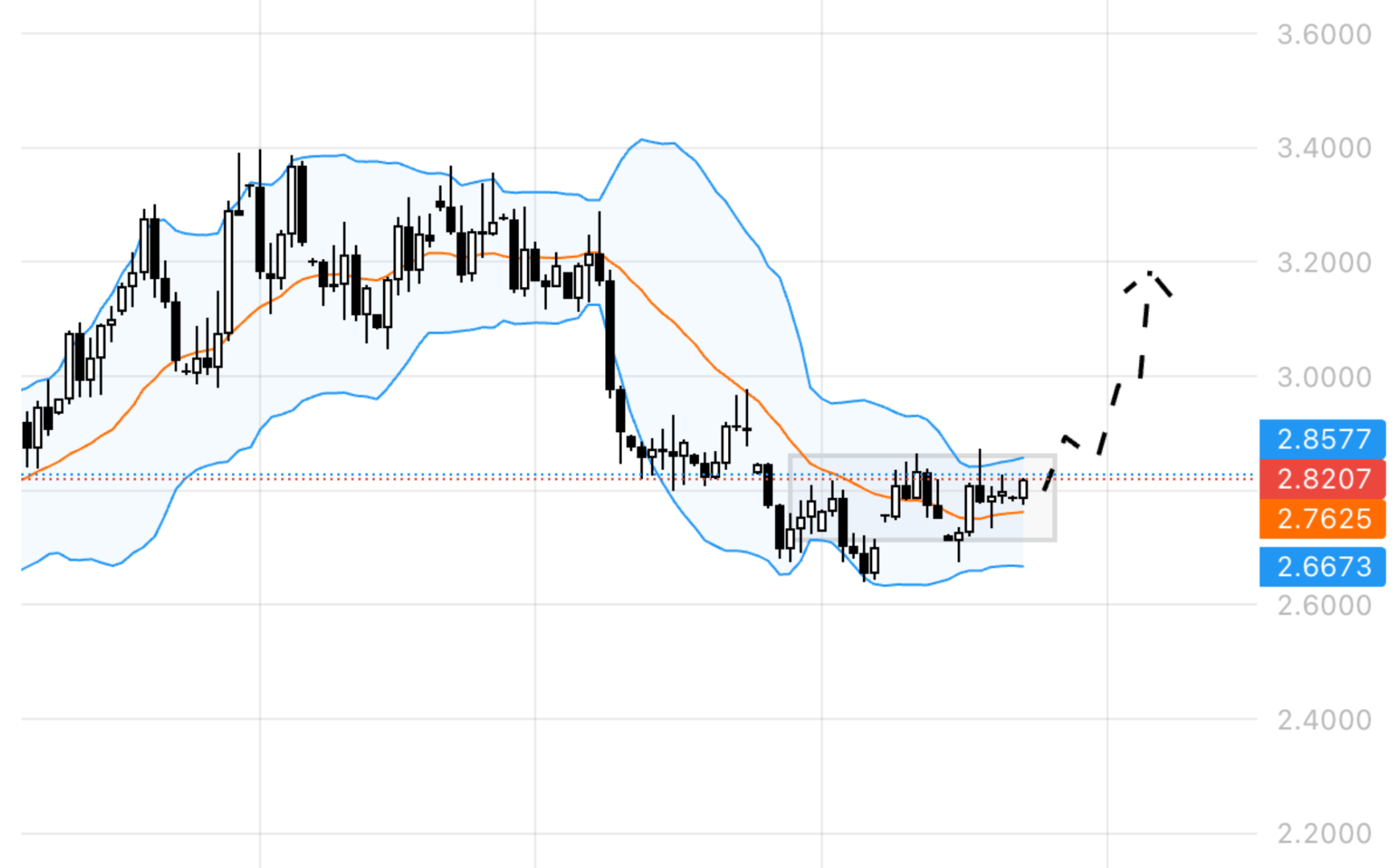
XNG/USD is consolidating in a very narrow range, having shown the bottom for historical volatility: daily ATR(14) has declined towards the low of 2024, showing the possible end of a low volatility cycle. Commodity markets and natural gas in particular have repeatable cycles of decline and growth. As Crude oil was in a spotlight due to the situation in the Hormuz Strait, Natural gas has moved out of the scope of attention of energy traders, and the situation might flip in the near futures.
First off, the net position of commercial traders from COT reports has reached a new peak pointing to a possible start of a new bullish cycle. From seasonal studies we know that the end of August often corresponds to a beginning of seasonal trends for Natural gas futures.
If the price breaks the short-term bracket, it may escalate the move towards the area of $3 - 3.5.
Author

Stanislav Bernukhov
Exness
Born in 1980, Stanislav graduated from the university in 2003. He worked in the music industry and ran his own business ventures before being introduced to trading in 2004.

















