Benign inflation outlook reinforces Swiss National Bank’s dovish stance
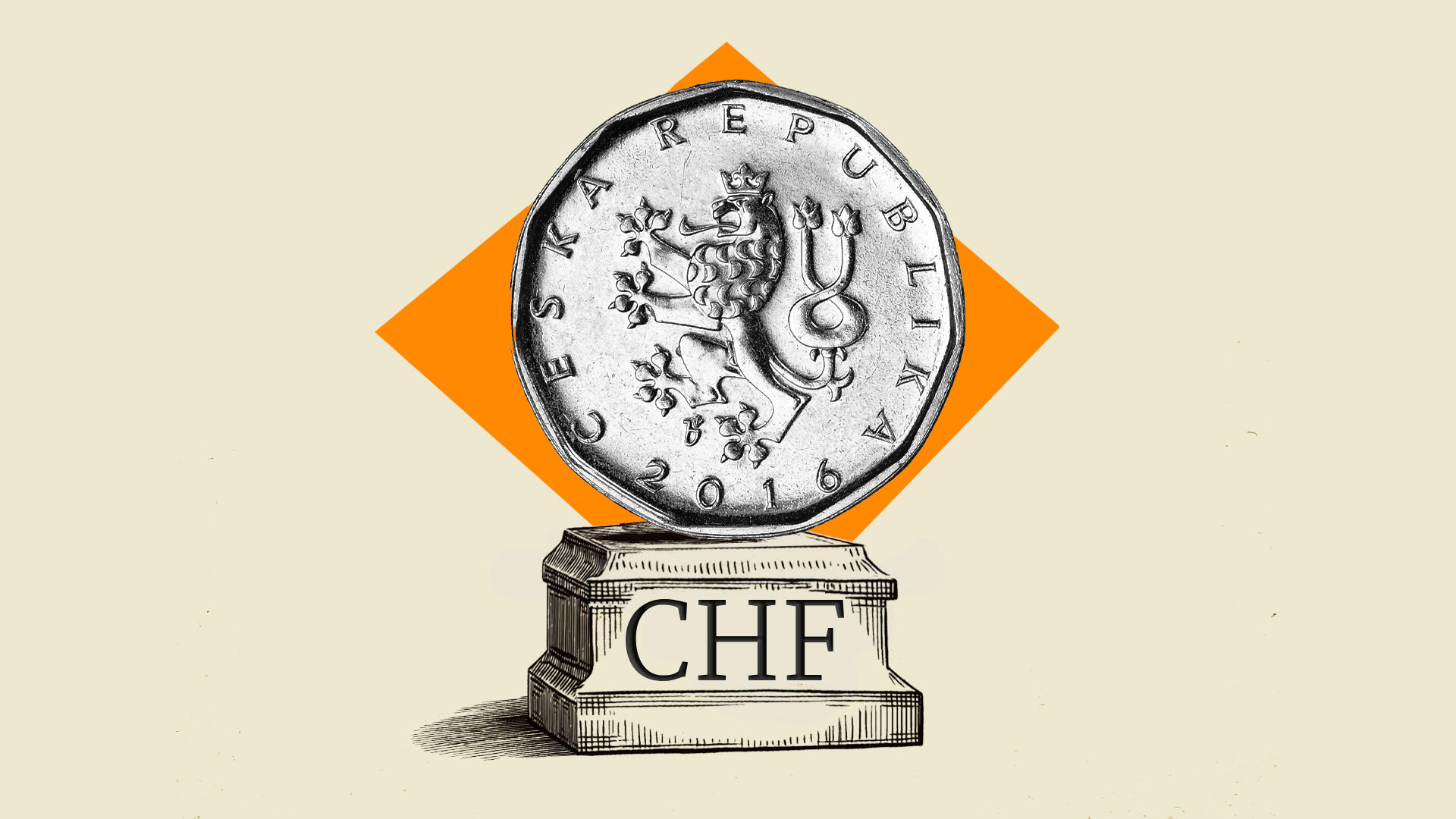
With a benign inflation outlook due to a strong Swiss franc, the Swiss National Bank (SNB) sees little need to change rates, reinforcing a dovish stance despite higher energy prices.
Inflation prospects remain very weak
As expected, the Swiss National Bank decided to keep its policy rate unchanged at 0% at its March meeting. The low inflation environment, with year‑on‑year growth of the consumer price index of 0.1% in February, allows the SNB to be more relaxed regarding inflationary risks generated by rising energy prices.
In fact, an energy shock is structurally a less acute problem for inflation in Switzerland than in the euro area, for two main reasons. On the one hand, the direct weight of energy in the Swiss consumer price index (CPI) is relatively limited (5% versus 9% on average in the euro area), which mechanically reduces the impact of a rise in energy prices on headline inflation.
On the other hand – and above all – the appreciation of the Swiss franc in periods of uncertainty, due to its role as a safe haven, plays a central cushioning role. First, on energy prices themselves. The increase in Brent prices in dollars or gas prices in euros is less pronounced once converted into Swiss francs. But also because, as a small open economy, Switzerland is very sensitive to the imported price channel: imports represent 22% of the consumer price basket, meaning that a strong franc exerts significant downward pressure on imported inflation, well beyond energy prices. This mechanism was particularly visible during the 2022 energy shock, when the appreciation of the Swiss franc offset part of the rise in global inflationary pressures. As a result, headline inflation in Switzerland did not rise above 3.4% in 2022, whereas headline inflation reached a peak of 10.6% in the euro area and 9% in the United States.
These mechanisms are very visible in the new inflation forecasts published today by the SNB. Short‑term inflation prospects have been revised only slightly upwards, while long‑term prospects have been revised slightly downwards. The SNB now expects average inflation of 0.5% in 2026 (compared with 0.3% expected at the December meeting), 0.5% in 2026 (compared with 0.6% previously expected) and 0.6% in 2027. The SNB therefore seems to consider that the risk of the appreciation of the franc leading to a sharp decline in imported inflation is more persistent than the risk that rising energy prices generate an inflationary surge.
These extremely benign inflation prospects are, in our view, a rather “dovish” signal. With such inflation forecasts, the SNB is very clearly not considering having to raise rates in the coming months. This strongly confirms our forecast of unchanged rates over the coming quarters and indicates that the rate hike expected by the market by the end of the year appears very unlikely at this stage.
Fighting the appreciation of the Franc
Moreover, as expected, the SNB mentioned that its “willingness to intervene in the foreign exchange market has increased”, a statement similar to the one it made on 2 March. But, interestingly, it explicitly mentioned the direction of its intervention. By stating that “The SNB thereby counters a rapid and excessive appreciation of the Swiss franc, which would jeopardise price stability in Switzerland”, it stresses that it is fighting against appreciation, and that it is not prepared to act in the opposite direction, i.e. to buy Swiss francs, as it did in 2022 to limit the inflation wave by pushing the Swiss franc to appreciate.
We see this as a sign that the SNB’s concerns currently focus more on the deflationary effect of the conflict in the Middle East (via an excessive appreciation of the Swiss franc) than on the inflationary effects of rising global energy prices.
That said, the SNB once again stressed that foreign exchange market interventions are intended to be used in the event of “rapid and excessive” appreciation, i.e. a tool it uses more when volatility in global markets strongly impacts the Swiss franc. During the press conference, the SNB also emphasised that it is the real evolution of the Swiss franc that matters, not the nominal one.
In the coming months, we believe that the inflation differential between Switzerland and its trading partners will widen, as inflation is likely to rise much more in other countries following higher energy prices than in Switzerland. As a result, even if global uncertainty keeps the nominal value of the Swiss franc elevated in the coming months, real appreciation is likely to be more limited. This could allow the SNB to be more relaxed about exchange rate developments going forward.
Read the original analysis: Benign inflation outlook reinforces Swiss National Bank’s dovish stance
Author

ING Global Economics Team
ING Economic and Financial Analysis
From Trump to trade, FX to Brexit, ING’s global economists have it covered. Go to ING.com/THINK to stay a step ahead.