Bank of England Preview: Sell Sterling? Why Bailey may break the Pound, even with a bigger hike
- Economists expect the Bank of England to raise rates by 25 bps to 5.25%.
- Markets flirt with the option of a larger hike to 5.50%.
- BoE Governor Bailey may dampen expectations for further moves with a gloomy outlook, sinking Pound Sterling.

Buy the rumor, sell the fact? The Pound may plunge even if the Bank of England (BoE) opts for bulls' best hope – a double-dose hike. Markets lean on data to provide a hawkish outcome, and there are good reasons to see them as misguided.
Here are three reasons to expect Sterling to suffer in response to the Bank of England"Super Thursday" decision due on August 3, at 11:00 GMT.
Why the BoE is set to raise interest rates
The highest inflation rate in the G-7 – holding that record is not part of Britain's national pride, but a fact that officials in London have to work with. Despite the recent welcome drop, a headline Consumer Price Index (CPI) rate of 7.9% YoY is alarming.
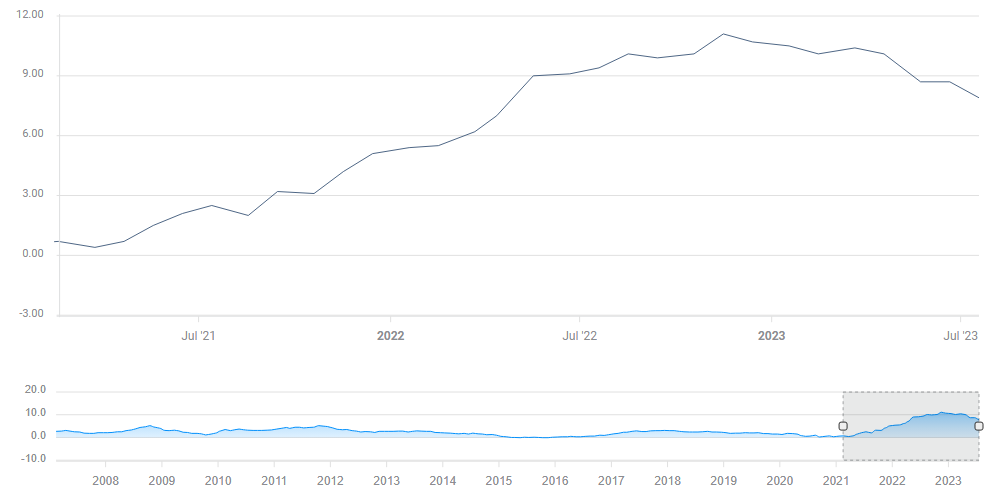
UK CPI. Source: FXStreet
For comparison, headline US inflation is 3% and it is 5.5% in the Eurozone. Core CPI, which excludes volatile energy and food prices, also outpaces Britain's peers. It is 6.9% in the UK, vs. 5.5% in the Eurozone and 4.8% in America.
The bank's target is a range between 1% and 3%.
While inflation is off the peak, wages are still rising. Labor shortages have reaccelerated salary gains, resulting in 6.9% when including bonuses and 7.3% when excluding them.
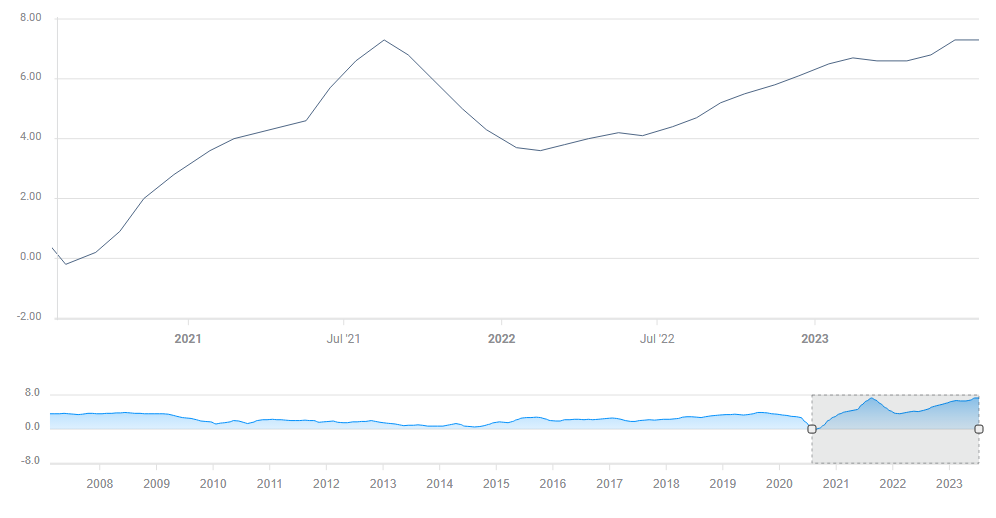
UK Earnings, excluding bonuses. Source: FXStreet
Higher inflation and prospects of price rises remaining stubbornly elevated point to further rate hikes. Why do I expect Pound Sterling to eventually turn south?
Why the BoE is set to down Pound Sterling
High expectations: Markets are pricing more than a 25 bps hike. UK bonds reflect price rates to rise by over 35 basis points. The BoE modifies borrowing costs at increments of 25 bps, which means that settling from this basic unit would already serve fall short of estimates.
Brits are already struggling: What if the "Old Lady" opts for a 50 bps move? A large hike would boost the Pound – but only in the short term. Why? Britain is suffering from a cost-of-living crisis" – wage growth is falling behind price rises, and higher mortgage rates are set to hit consumers hard.
Potential dissent: Some members of the Monetary Policy Committee (MPC) may vote against a larger move, showing it does not have full support. The BoE releases the Meeting Minutes from the decision, and not all nine MPC members are hawkish – dissents are common.
Gloomy Governor: Worried headlines in the British press do not stay there – Andrew Bailey, Governor of the BoE, also tends to have a negative mood. He may show reluctance to raise interest rates further in the press conference due after the release.
Downbeat forecasts: There are other reasons for Bailey to signal the end of the tightening cycle is near. The BoE publishes fresh inflation forecasts in its quarterly Monetary Policy Report (MPR) released this time – this publication makes the event a "Super Thursday" one.
Previous forecasts showed a substantial drop in inflation, driven mostly by a significant slowdown in energy prices compared with last year. Other factors, such as mortgage costs mentioned earlier, will likely appear there as well.
A look across the pond: Last but not least – the BoE is not alone. Peers in the US and Europe refrained from committing to further rate hikes. The Federal Reserve's main rate hit a range of 5.25-5.50%, – where Andrew Bailey and co are shortly expected to land now. The bar is high for further moves.
The European Central Bank's main lending rate rose to 4.25%, and only German hawks foresee another increase. The BoE is unlikely to considerably distance itself from colleagues across the channel.
Conclusion
All in all, while the BoE is set to raise rates – perhaps by a double-dose 50 bps – there are good reasons to expect the Pound to fall. These include high market expectations, already elevated rates, potential dissent from MPC members, downbeat forecasts, a gloomy governor and a look at peers abroad.
Author

Yohay Elam
FXStreet
Yohay is in Forex since 2008 when he founded Forex Crunch, a blog crafted in his free time that turned into a fully-fledged currency website later sold to Finixio.