Bank of England: A very dovish hold
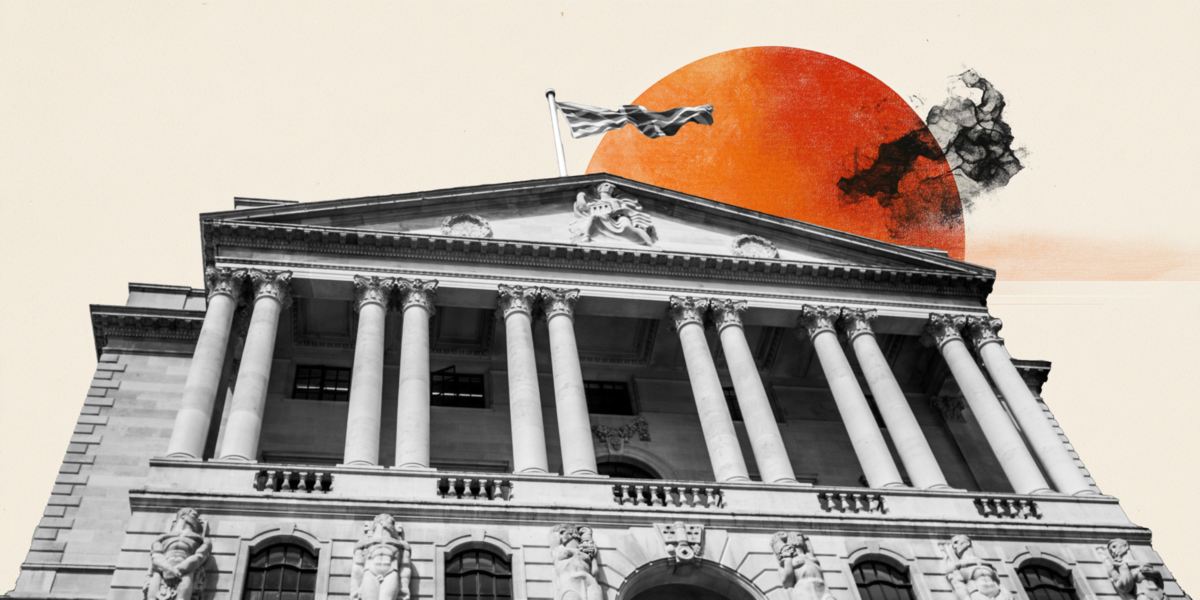

The BoE held interest rates as expected last month, but they did deliver a shock vote split. Three members of the vote-setting committee voted to cut rates by 0.25%, which was more than expected, with 6 voting to keep rates on hold.
The BOE’s statement that accompanied the decision also stressed the disinflation in the UK’s economy in recent years, and the weakness in the economy, along with the loosening in the labour market. The Bank noted the ‘two-sided risks to inflation’ but continued to say that a ‘gradual and careful approach’ to rate cuts remains appropriate.
The Bank did not sound too worried about the uncertainty over energy prices due to the escalation of the conflict between Iran and Israel. It also stated that the uptick in inflation in May was largely due to a rise in regulated price increases. So, why is the BOE not more worried about inflation?
Growth fears dominate at BoE compared to inflation
The first reason is that the some of the upside pressure is down to the structure of our energy pricing system, which has been deeply problematic for the UK economy this decade. Secondly, the loosening of the labour market is ‘leading to clearer signs that a margin of slack has opened up’ in the UK economy. That margin of slack could have a dampening effect on inflation down the line. Thus, even though the BOE’s only mandate is to maintain price growth at 2%, the Bank sounds more worried about the growth outlook than the inflation outlook.
August rate cut now on the cards for BoE
The market has digested this meeting and sees it as a green flag for an August rate cut from the BOE. The UK’s overnight swaps market is now pricing in an 84% chance of a cut on August 7th, up from 76% on Thursday. The OIS market is also expecting interest rates to end 2025 at 3.71%, 10bps lower than yesterday.
Unsurprisingly, UK Gilt yields are lower, especially at the shorter end of the curve, and Gilts are currently outperforming other European markets. The US Treasury market is closed for a federal holiday today.
Initially the pound sold off, however, GBP/USD has since moved back to the highs of the day above $1.3440. This does not mean that the FX market does not view the BOE meeting as less dovish than the interest rate futures market, instead there are better currencies to sell on Thursday. For example, the Norwegian Krone, after the Norges bank surprised financial markets and cut rates earlier today.
The SNB cannot contain the Swissie
The Swiss National Bank also cut rates to 0% this morning and hinted at further cuts to stop haven inflows into the Swissie. However, the FX market has not listened, and like a truculent child has pushed the Swiss franc higher today, and it is the best performing currency in the G10 FX space on Thursday. If the SNB wants a weaker currency it is going to have to intervene directly in the FX market and sell francs, or it will have to reinstall a peg and defend the level it wants to achieve.
Stocks down, Oil up on US intervention fears in Iran
The backdrop to today’s central bank decision is the ongoing conflict in the Middle East, and the threat of US intervention. The market reaction to this is stocks down and oil up. Brent crude is higher by 1.1% so far on Thursday and has broken to its highest level since January above $77.50 per barrel. It seems like it is only a matter of time before Brent tests $80, and it could spike higher than this if the US does strike Iran’s nuclear facilities.
The jump in the Brent price is boosting the FTSE 100’s oil companies, which are helping to prop up the index. BP is higher by 1.15% today and is up 6% in the past month. This explains the FTSE 100’s outperformance in the past week compared to its European counterparts.
Author
Kathleen Brooks
XTB UK
Kathleen has nearly 15 years’ experience working with some of the leading retail trading and investment companies in the City of London.