Australian Employment Preview: Could another positive report help the Aussie?
- Australia is expected to have added 20,000 jobs in March.
- Employment figures to influence market expectations regarding the RBA.
- AUD/USD could suffer from weak numbers, exposing YTD lows.

Australia will report its March employment data on Thursday, April 13, at 01:30 GMT. After gaining 64,600 jobs in February, surpassing expectations, the country is expected to have added 20,000 new positions this time. The Unemployment Rate is forecast to have risen from 3.5% to 3.6%, while the Participation Rate is seen unchanged at 66.6%. Alongside monthly employment numbers, the country will publish the April Consumer Inflation Expectations, foreseen at 5.3%.
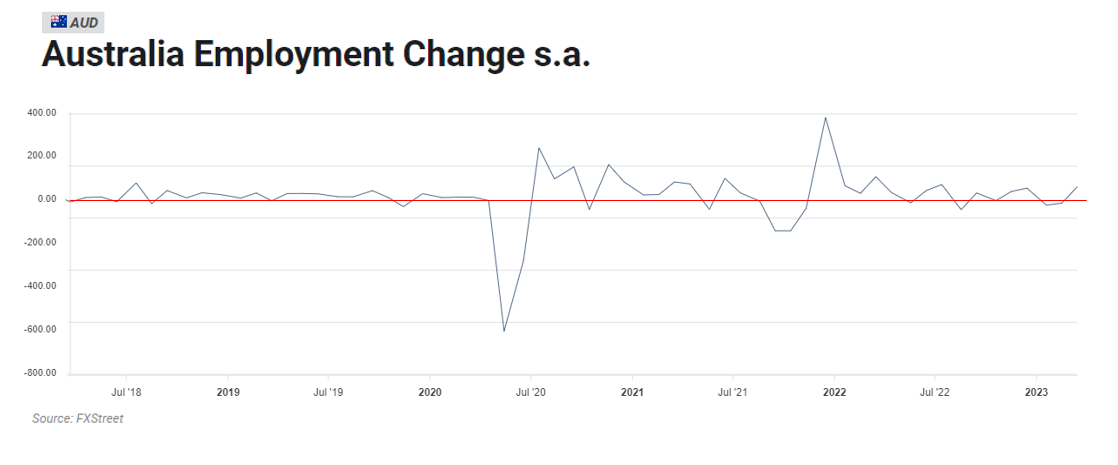
Back in March, Australia reported that the economy created 64,600 jobs in February, surpassing the 48,500 gain of market consensus. The numbers helped the Aussie but only momentarily as markets were dealing with banking concerns. Those numbers boosted expectations of another interest rate hike from the Reserve Bank of Australia (RBA). However, the central bank stayed on hold last week as the Board considered that inflation had peaked and it was time for a pause, not the end of the tightening cycle.
The RBA pause last week came after ten consecutive rises. Governor Philip Lowe said that the “Board expects that some further tightening of monetary policy may well be needed to ensure that inflation returns to target.” The day after, he added that the pause does not mean they are done rising rates. Most analysts expect the RBA will keep rates unchanged again in May and a terminal rate lower than previously forecast. Can this report move the RBA from the current pause? It seems unlikely; however, it could change future expectations.
The latest Australian data came in mixed, suggesting that the economy remains healthy but not hot. Inflation expectations have come down. Before the RBA May 2 meeting, consumer inflation data will be released on April 26.
Implications for the Aussie
Bond markets around the globe seem to be pointing at rate cuts from central banks starting in the third quarter. Good economic data from Australia, more than increasing the odds of another rate hike, could help the Aussie by delaying the expected timing of such a rate cut.
Good news for the Australian economy are good news for the Aussie. A reading in line with expectations could be seen as positive as it would signal that the labor market remains healthy. On the contrary, a negative reading could weigh on the currency, cementing another hold from the RBA at the next meeting.
AUD/USD has been trading sideways during the last weeks, and now risks are tilted to the downside. The pair could not break above 0.6800, and lately, it has failed to keep the 0.6700 mark. Still, the downside remains contained while above 0.6600. Weak employment numbers could push AUD/USD toward YTD lows around 0.6560, a medium-term solid support level. It would require extraordinary positive numbers to push the pair toward 0.6800 as current price action appears to be more influenced by the USD dynamics and risk sentiment. A big surprise from the Australian employment numbers might change that.
-638168428764586728.png)
Author

Matías Salord
FXStreet
Matías started in financial markets in 2008, after graduating in Economics. He was trained in chart analysis and then became an educator. He also studied Journalism. He started writing analyses for specialized websites before joining FXStreet.