August US CPI inflation rises – Fed still likely to move next week


Following the softer-than-anticipated US August PPI inflation print earlier this week, the August CPI inflation numbers landed yesterday and largely matched forecasts. Headline YY inflation rose by 2.9%, from 2.7% in July, with core YY inflation remaining steady at 3.1%. MM headline inflation rose more-than-expected by 0.4% from 0.2%, while MM core inflation remained unchanged at 0.3%.
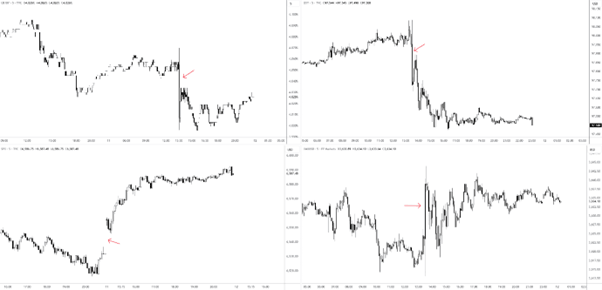
As shown in the charts below, the CPI announcement triggered an immediate decline in US Treasury yields and the USD, with Gold rallying and the S&P 500 gapping higher at the open.
Fed rate cut expected next week
So, with headline CPI inflation rising and core inflation remaining elevated, both remain comfortably north of the Fed’s 2.0% inflation target. Despite this, it is unlikely to stop the central bank from cutting rates next week. Although some market commentators were discussing a potential 50-bp move, I believe this CPI report removes this firmly off the table. Investors are still fully pricing in a 25-bp rate cut (-27 bps), with another 25-bp reduction likely in October and a further 25-bp reduction in December. This would lower the current target rate to 3.50% - 3.75%, from 4.25% - 4.50%, which would be rather aggressive and provide Stocks and Gold with an additional bid (both markets remain at all-time highs) while weighing further on the USD and US yields.
Why cut rates when inflation is rising?
Why is the Fed lowering rates while inflation is increasing? It comes down to Fed Chairman Jerome Powell's observation that inflation is likely to be temporary, or 'transitory’, and the weakening job market.
On the jobs front, the labour market has not been a pretty picture by any stretch. You will recall that the BLS recently announced its preliminary numbers for the annual benchmark revision, revealing a downward adjustment of approximately 911,000 jobs from April 2024 to March 2025. While we will not know until February next year what the final revisions are, this reveals the most substantial revision on record and indicates that the labour market is potentially more precarious than initially thought.
Reinforcing the narrative of a cooling labour market, the US weekly unemployment claims number was released yesterday: 263,000 people in the US filed for jobless claims (for the week ending 6 September). This marked the highest weekly employment claims since late 2021 and represented a rise from 236,000 the previous week.
A 25-bp rate cut next week, then, will unlikely raise many eyebrows; attention will be focussed on the pace of policy easing. As such, all eyes will be on the language in the rate statement and press conference.
Day ahead
July UK GDP data were released earlier this morning, showing modest but slowing economic growth. GDP increased by 0.2% in the three months to July, compared to April, down from stronger growth earlier in the year. MM GDP flatlined in July, following a 0.4% increase in June. As of writing, the GBP is moderately lower against G10 peers.
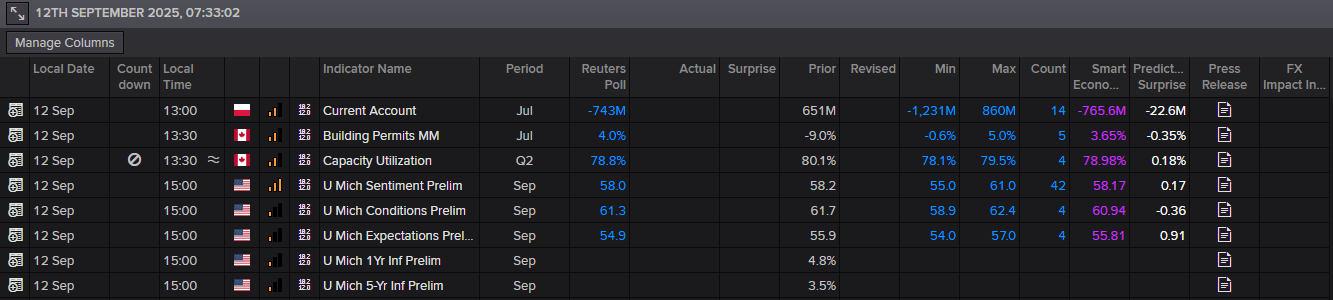
Wrapping up the week today, we will receive the September preliminary US consumer sentiment data from the University of Michigan (UoM) at 2:00 am GMT. As shown on the calendar below, the UoM print is expected to come in modestly lower at 58.0, from 58.2 in August.
LSEG data
That’s it from me this morning. Next week will welcome a busy data docket, including updates from the BoC, BoE, BoJ, and, of course, the Fed. Until then, have a wonderful weekend!
Author
Aaron Hill
FP Markets
After completing his Bachelor’s degree in English and Creative Writing in the UK, and subsequently spending a handful of years teaching English as a foreign language teacher around Asia, Aaron was introduced to financial trading,