|

Aluminium: Set for ongoing demand

Aluminium is a metal worth considering for a medium-term buy. Here are the positive reasons for that:

Global aluminium demand growth is set to grow moved by energy transition-related sectors like transportation and renewable energy from China, the US and Europe. Many major economies have a real push now to try and reach ‘net-zero’ carbon emissions and there is a big political drive for renewable energy and electric power.

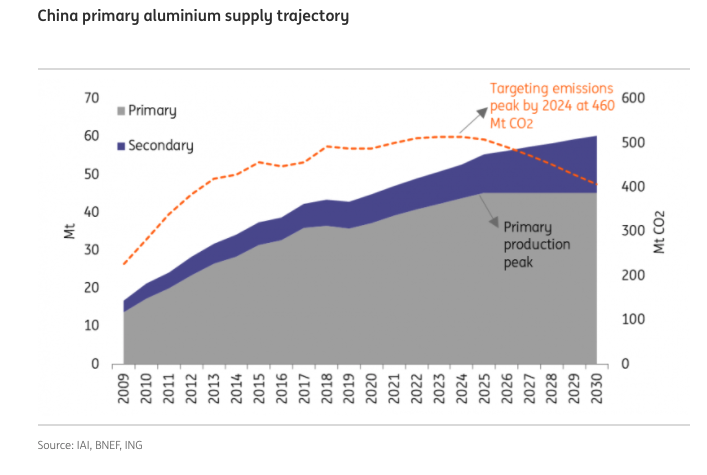
China’s primary supply growth is set to plateau. China is under pressure to bring down carbon dioxide emissions from primary aluminium smelting and ING thinks capacity could be capped under 45 million tonnes. The upshot is that secondary aluminium capacity has to take up the slack.
Chart
  • Emission concerns in Inner Mongolia and Yunnan due to hydroelectric water shortages have meant smelters here have had to dial back production.

  • Aluminium is, according to Bloomberg, the least vulnerable to China’s state reserve sale.

Aluminium seasonals

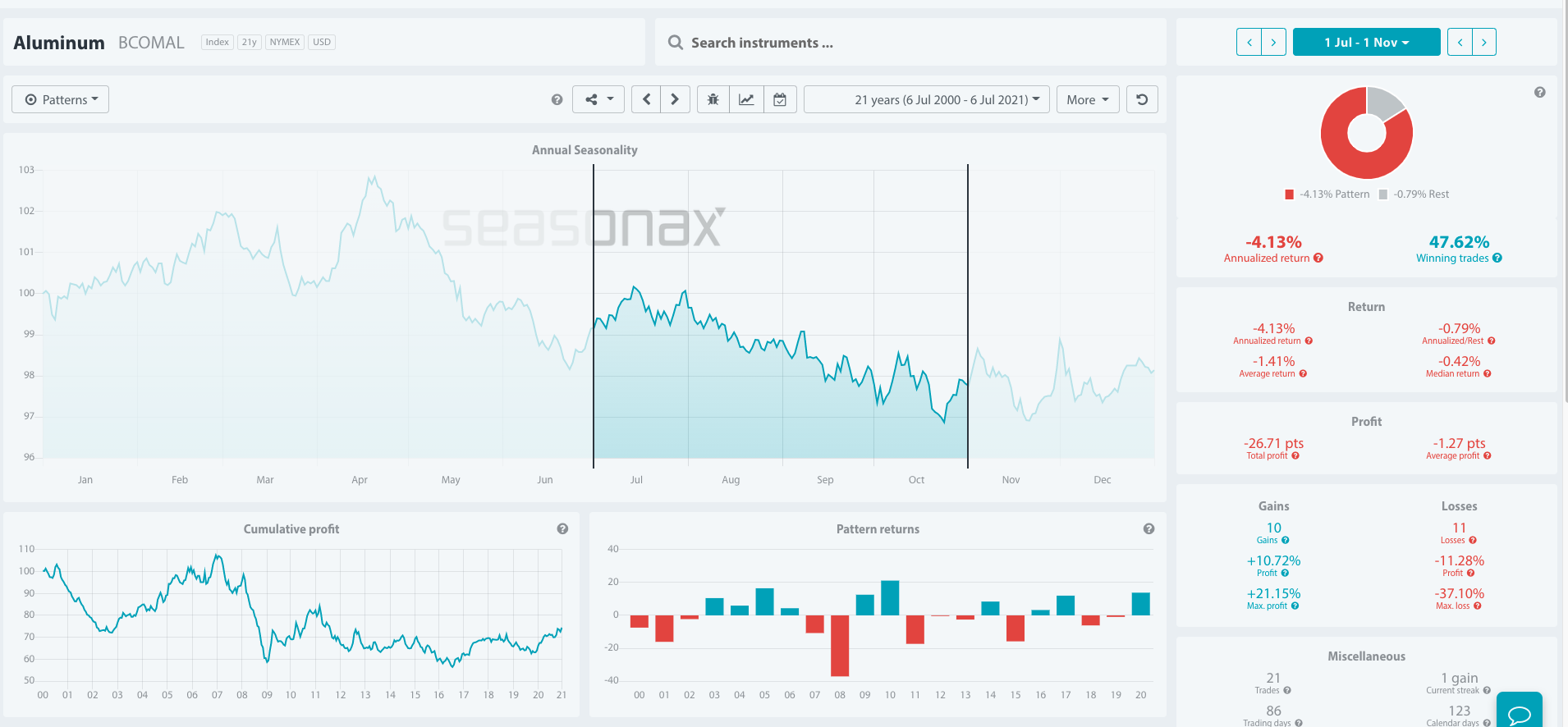
The seasonal buying and selling of aluminium do not provide much helpful information apart from revealing that in the last 21 years between July and November prices have fallen 11 times and gained 10 times. The largest gain was in 2010 with a 21.15% gain and the largest loss was in the global financial crisis of 2008 with a -37.10% loss. This shows a balanced picture overall and means that supply and demand issues should take precedence over driving prices.
Chart

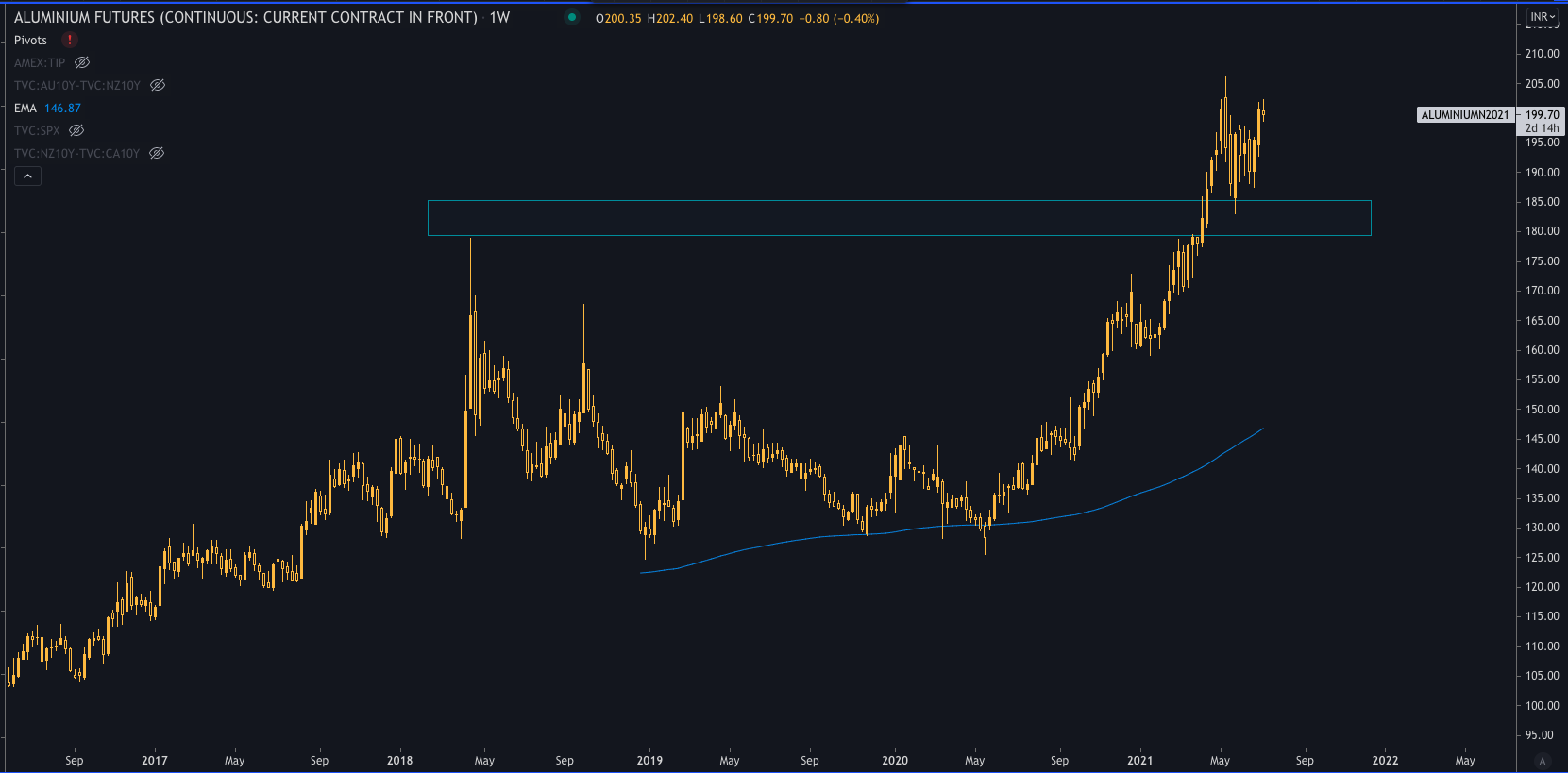
The zone marked on the chart looks like a good area to expect buyers as long as the demand/supply imbalance remains.
Chart

Learn more about HYCM

Author

Giles Coghlan LLB, Lth, MA

Giles is the chief market analyst for Financial Source. His goal is to help you find simple, high-conviction fundamental trade opportunities. He has regular media presentations being featured in National and International Press.


More from Giles Coghlan LLB, Lth, MA
Share:

Editor's Picks

GBP/USD appears well offered near 1.3160

GBP/USD builds on Tuesday’s losses, although it now manages to pick up some pace and bounce off earlier multi-month troughs near 1.3140. The Greenback’s solid performance and continued political turmoil in the UK are keeping Cable under persistent pressure, with little sign of a meaningful recovery.

EUR/USD rebounds from lows, back to 1.1360

After bottoming out near 1.1320, EUR/USD gathers some traction and reclaims the 1.1350-1.1360 band as the NA session draws to a close on Wednesday. The pair’s drop to multi-month lows comes in response to the continuous leg higher in the US Dollar, which remains propped up by hawkish Fed expectations and uncertainty over the outcome of US-Iran peace negotiations.

Gold pressured near fresh 2026 lows

Gold accelerates its decline and gyrates around the key $4,000 mark per troy ounce on Wednesday, its lowest level since November 2025. In the meantime, tighter-for-longer Fed expectations and a broadly firmer US Dollar continue to weigh on the yellow metal, while uncertainty surrounding a potential US-Iran peace agreement has done little to revive demand for the safe haven space.

XRP nears key support as Fed hike risks suppress demand
Ripple (XRP) continues to face significant selling pressure, trading around $1.05 at the time of writing on Wednesday. This decline mirrors the broader weakness in the crypto market, exacerbated by mounting macroeconomic headwinds and persistent geopolitical uncertainties.
US-Iran talks: The next 60 days will decide where Oil prices go next
Oil markets received some encouraging news after weeks of rising tensions in the Middle East. But let’s not get ahead of ourselves: we’re far from victory, and markets just seem to have priced out the worst-case scenario. The US and Iran have reportedly made "substantive progress" in talks in Switzerland and agreed on a framework for working toward a broader deal within 60 days.
Regime change: Inside Kevin Warsh's first move to make the Fed unreadable on purpose

The rate did not move. That was the least interesting thing about Kevin Warsh's first meeting in charge of the Fed. The FOMC held its benchmark at 3.50%-3.75% for the fourth straight meeting, exactly as priced, and then the new chair used his first press conference to dismantle the machinery the market has leaned on for a decade.














