25 or 50 bps? Fed cut odds rise as institutions shift to Gold

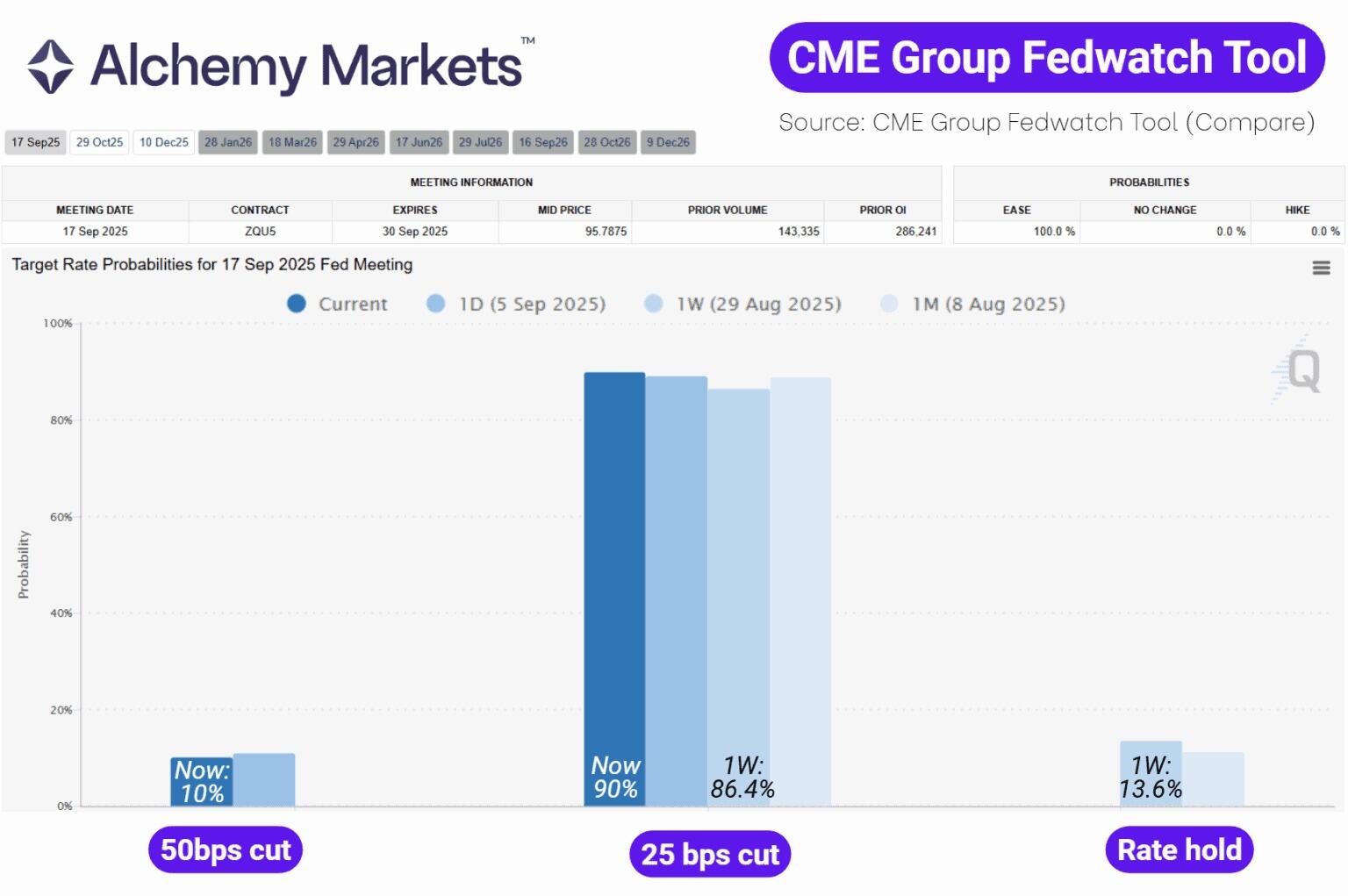
The CME Fedwatch tool jumped from a 86% rate cut decision last week, to a 90% expectation. This comes after an underwhelming ISM report and NFP report, and has even catapulted the 50bps rate cut expectation up by 10%.
- ISM Manufacturing: Contractionary again, signalling weakening industrial activity.
- NFP jobs report: Major miss, with payrolls stalling and unemployment edging higher.
Now the question is, is the Fed too late? With U.S. government bonds maturing this month, rate cuts could be key to saving potentially trillions in refinancing costs.
Institutional rotation and hedge demand
Institutions are clearly rotating into gold as a defensive hedge. Global gold ETFs just notched their third straight monthly inflow, as per the World Gold Council, totaling $5.5bn in August.
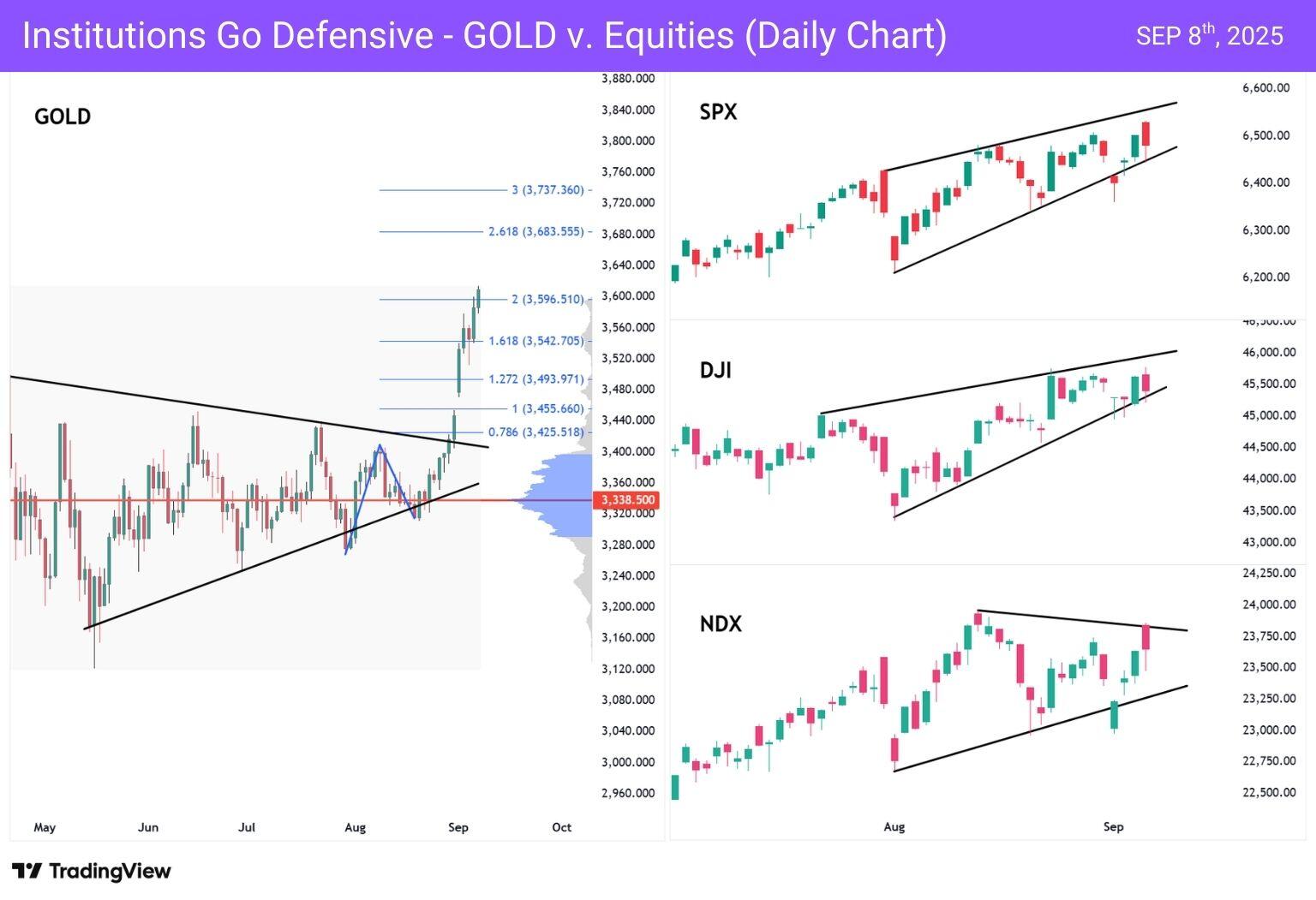
Rotation signal: Gold vs. equities
Price action underscores the rotation: gold is breaking out, while SPX and DJI grind into rising wedges and NDX is range-bound. Gold’s impulsive breakout from its own symmetrical triangle hints at a shift from growth into safety.
Implications and outlook
If the cut is perceived as too late, it’s viewed as a “hail mary”. This means equities may rally momentarily, but gold likely continues its run. If well-timed, rate cuts may support equities more broadly — but that isn’t shaping up to be the likely case (in this author’s opinion).
Job numbers have simply plummeted too hard, and the shock revisions don’t help either. Beyond the data:
- Gold ETFs keep dominating: Gold-backed funds pulled in over US$5.5 billion in August, extending a three-month inflow streak. GLD alone netted US$2.6 billion last week.
- Gold outperformance is broadening: Gold funds jumped 20.7% in August, bringing their 2025 gains to nearly 80% — a performance far outpacing stock or bond equivalents.
- Macro concerns are growing: Analysts (including Goldman Sachs) warn that threats to Fed independence and sticky inflation could see gold soar past $4,000 — even to $5,000 in extreme fears.
In short: A late Fed cut hands defender’s advantage to gold. Institutions are reallocating defensively, not just against slow growth—but also against policy credibility risks.
Author

Zorrays Junaid
Alchemy Markets
Zorrays Junaid has extensive combined experience in the financial markets as a portfolio manager and trading coach. More recently, he is an Analyst with Alchemy Markets, and has contributed to DailyFX and Elliott Wave Forecast in the past.