160 is still the Yen's red line
Japan's Finance Ministry has spent ¥27.13 trillion in 2026 buying Japanese Yen after the US Dollar rose above 160.00 Yen. The Bank of Japan isn't expected to raise rates again before December, so that level will test Tokyo's willingness to spend next.
USD/JPY remains stuck near 158.00, two Yen below the line Tokyo has twice paid to protect in 2026. With the Bank of Japan (BoJ) expected to hold at 1.25% on Friday, the Finance Ministry will likely be the next to stop a run at 160.00. The Ministry's officials have never named 160.00 as a target, and every round of buying since April 2024 has started above that level.
The Federal Reserve (Fed) kept its rate at 3.75%-4.00% on Wednesday, with two officials voting for a hike. Nothing scheduled before December narrows the gap between US and Japanese interest rates that has pushed the pair up all year.
The line held in April and bent in July
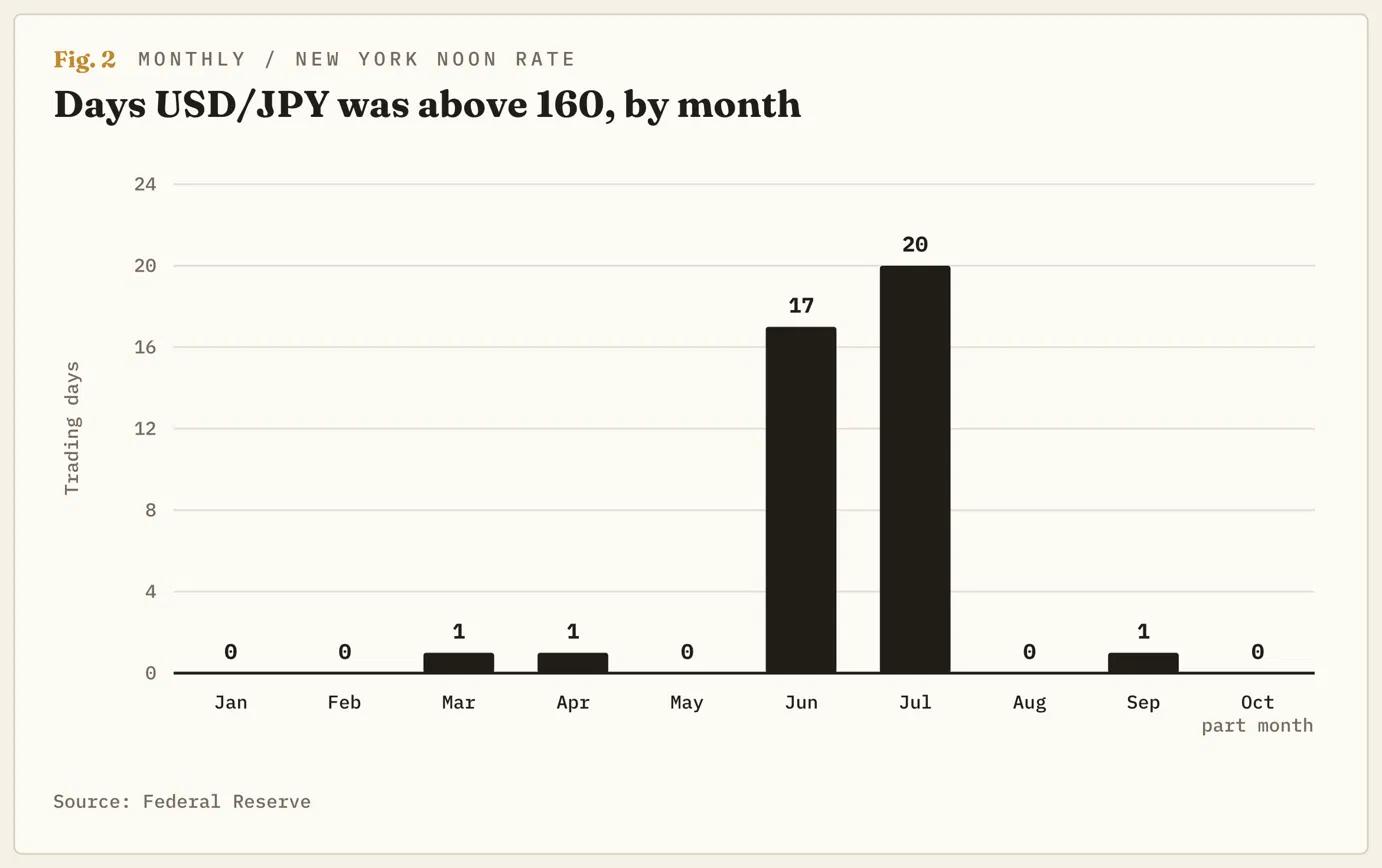
The pair first went through 160.00 in late March, when the Iran war pushed up Oil prices for a country that imports almost all of it, and officials responded with warnings. In late April, it rose above 160.50. On April 30, the same day Finance Minister Satsuki Katayama said decisive action was close, the ministry bought ¥6.28 trillion of Yen, and the pair fell 3% from its high. More buying in early May brought the round's total to ¥11.73 trillion.
The pair crossed 160.00 again in early June as bets on US rate hikes grew, and this time it stayed above the level for almost eight weeks, reaching 164.00 at the end of July. The ministry's report for the month to July 29 showed it had spent nothing. The next report showed ¥15.40 trillion by August 26, a single-month record, including a day when the US Treasury bought Yen alongside it. The pair fell about 4% in the first two sessions of that round.
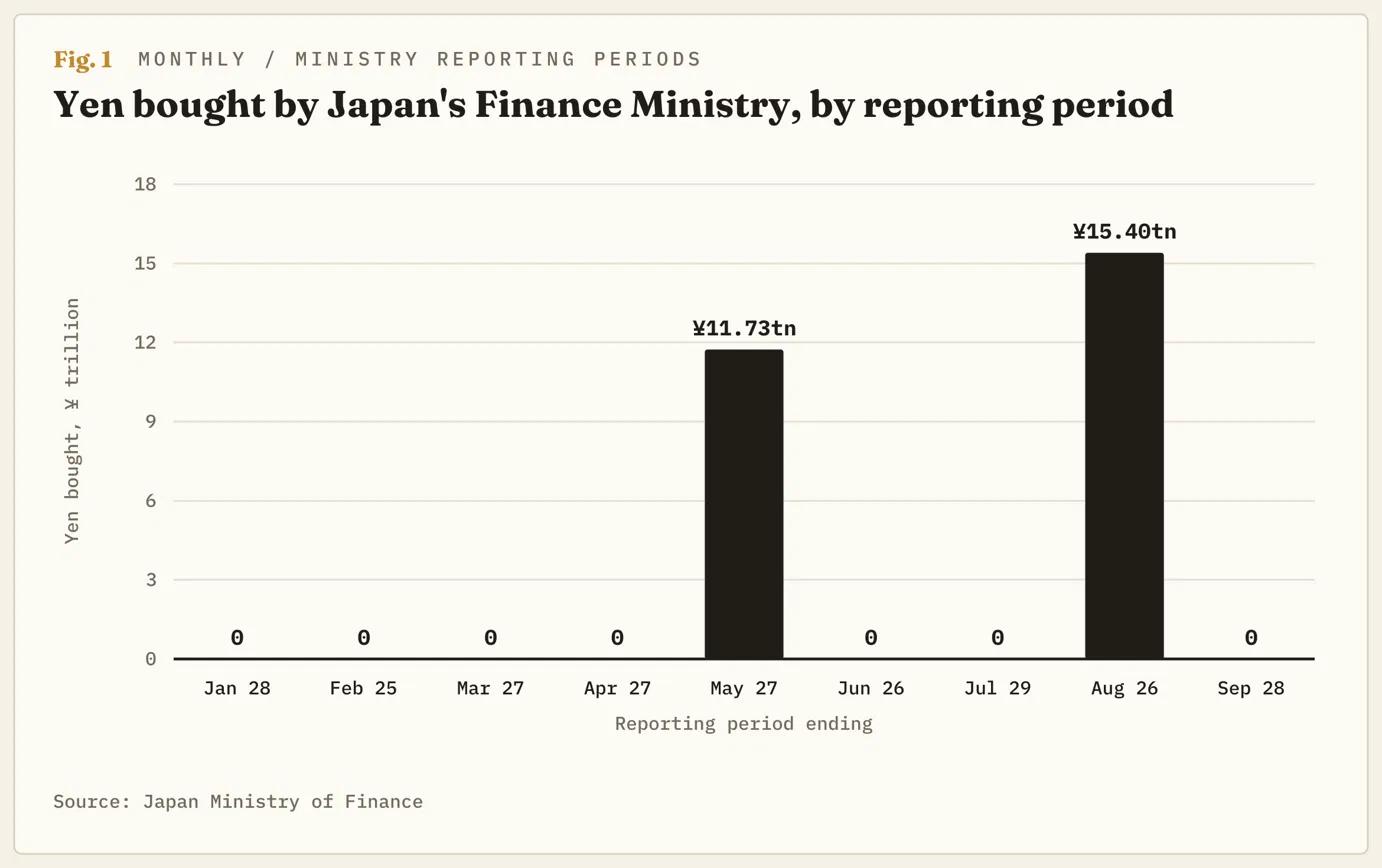
So the line is real, but it isn't automatic. A fast jump through 160.00 in April got a response within a day, while a slow climb in June went unaddressed for almost eight weeks before Tokyo stepped in with a bigger bill. Officials say how fast the Yen falls matters as much as how far. For anyone holding Dollars against the Yen, 160.00 is where the risk of losing 3%-4% in a day begins, not where it becomes certain.
Three runs at 160.00 since August, and none of them stuck
Since the record August round, USD/JPY has made three runs at 160.00. The first reached the level at the start of September and fell to 153.00 within a week as traders bet on a BoJ rate hike on September 18. The next two, in late September and mid-October, stopped near 159.00. September's defence of the line was the cheapest of the year, because bets on a BoJ hike pushed the pair down and the ministry paid nothing.
Each stop near 159.00 came with a warning from Tokyo. On September 24, Katayama said the approach Japan and the US agreed on when they bought Yen together in July still applied, and four days later Vice Minister of Finance for International Affairs Atsushi Mimura said he wasn't satisfied with the Yen's moves. On October 15, after hotter US inflation data pushed the pair toward 159.00, Katayama renewed her warnings, and she repeated them on Tuesday.
The daily Stochastic Relative Strength Index (Stoch RSI), a momentum gauge, peaked in early October and has since fallen, so the bounce from near 156.00 on October 23 has come on fading momentum. Since September, the pair has kept topping out below 160.00 and bouncing near 156.00, and only a move above 160.00 would break that pattern.
The rate gap isn't expected to shrink before mid-2027
The pair keeps returning to 160.00 because of the interest-rate gap. Borrowing Yen costs about 1.25% a year and holding Dollars pays close to 4%, so a trader who borrows Yen to buy Dollar assets earns about 2.75% a year for as long as both rates stay where they are.
Friday isn't expected to change that. Swaps, the contracts traders use to bet on where interest rates are going, put the odds of a BoJ hike on December 18 at about 75%-80%, and the CME FedWatch tool, which reads the same kind of bets for the Fed, puts a Fed hike on December 9 at about 83%. Traders expect both central banks to raise rates about three more times over the next year or so, which leaves the gap close to where it is now.
That's also why the ministry doesn't need to publish a target. A trader earning about 2.75% a year from the gap can lose more than that in a single day if the ministry steps in, as the 3% drop on April 30 showed. If BoJ Governor Kazuo Ueda uses Friday's press conference to signal a December hike, the pair has one more reason to stay below 160.00. If he sounds in no hurry, the pull toward 160.00 resumes and the ministry is next in line.
Ten more Augusts in the bank
Japan had $977 billion in foreign currency reserves at the end of September. The August round cost about $96 billion, so what's left would pay for about ten more like it. Vice Minister Mimura brushed off questions about funding in late September, and the numbers backed him up.
The limit is patience, not money. July showed the Ministry will let a slow climb run before it acts, and that it acts harder with the US Treasury alongside. Its day-by-day record of the July and August buying comes out in early November and will show the exact levels where it bought, the closest thing to a published line the market is likely to get.
Where the lean on USD/JPY flips
The lean is to sell the pair in the 159.00-160.00 zone, where Tokyo's warnings have started each time. A daily close above 160.00 that the ministry leaves alone into the following week would mean it is giving a slow climb room again, as it did in June, and that would signal this view is wrong. Above there, 164.00, the July high, is the only reference.
On the downside, a daily close below 156.00 takes the pair out of its October range and puts 153.00, the September low, back in play. Getting there needs Governor Ueda to sound set on a December hike, or US data soft enough to make traders give up on the Fed's next hike.
The calendar from here runs Friday's BoJ decision, the ministry's day-by-day record in early November, the Fed on December 9 and the BoJ on December 18. None of it requires Tokyo to say 160.00 out loud, and it hasn't needed to since April 2024.
Author

Joshua Gibson
FXStreet
Joshua joins the FXStreet team as an Economics and Finance double major from Vancouver Island University with twelve years' experience as an independent trader focusing on technical analysis.