What’s behind the latest surge in GameStop (GME)?

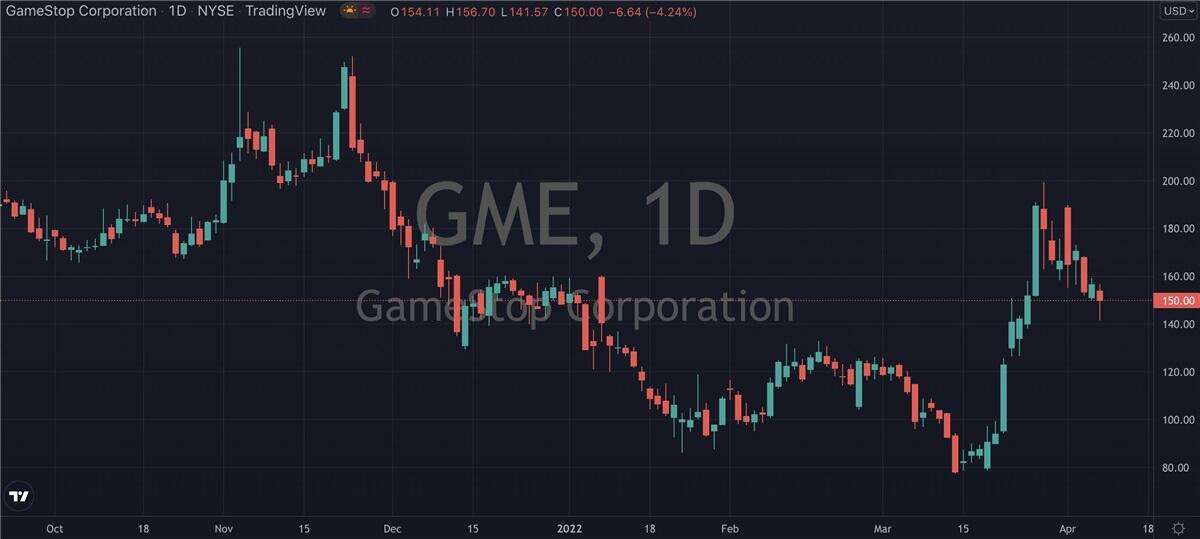
The 150% rally in GameStop (NYSE:GME) shares through the back end of March was one of the hottest topics on Wall Street coming into Q2. With meme stocks having dominated headlines at various points over the past 18 months, investors were wondering if we were at the start of a fresh eye-watering rally. Considering that GameStop stock jumped nearly 3,000% at the start of last year, you can’t blame them.
But what’s interesting about the Texas headquartered video game retailer is that they refused to give back all of those short-squeeze-inspired gains, something that’s happened after pretty much every other infamous short squeeze in recent years. Though they had dipped during the start of this year, it could be said that was driven in large part to the risk-off sentiment and increasing interest rate cycle. It remains to be seen if shares can hold onto their gains from last month, so let’s take a look at what’s driving them this time and what might be in store next.
Fundamental headwinds
For starters, the fundamentals could definitely be better for investors who are eyeing a return to prices over $200. The company’s Q4 earnings, released last month, registered a bad miss on EPS and showed revenue growing only 6% year on year. The release coincided with an industry update on video game sales, which had that number dropping for the fourth month in a row. No investor wants their company to have headwinds at the best of times, but a combination like these, company and industry-specific, are among the least desirable.
Still, shares didn’t drop like many might have expected. Like so often before GameStop shares defied gravity and instead, within a week of the earnings release, they were up 20% from their March lows for no clearly discernible reason. The social media forum Reddit reported a surge in GameStop-related chatter which may have been indicative of coordinated attempts by retail traders to spark a fresh short-squeeze. Astute market watchers also noted a pickup in out-of-the-money call buying, which can lead to a gamma squeeze effect. In a gamma squeeze, call writers have to buy the underlying shares, which increases demand and boosts the price.
Whatever it was, it was helped along by the news on March 23 when it was announced that GameStop chairman Ryan Cohen had increased his stake in the company. This added fuel to the fire and in less than a week the stock was up a full 150% from its pre-earnings lows. The bid surged again on March 31, after the company said it will ask shareholders to “approve an increase in the number of authorized shares at its upcoming annual meeting so it can implement a stock split. GameStop said the split would help "provide flexibility for future corporate needs."
Getting involved
For all that though, over the past week, the stock has cooled somewhat and is currently down 25% from last week’s high. Investors considering getting involved should exercise extreme caution and stick to a plan if doing so. Unless a fresh catalyst appears, the recent action suggests we could be looking at a slow retrace towards the levels where GameStop spent much of the first quarter. This will be compounded by any fresh weakness seen across the equities in general, as more risky stocks like GameStop will be among the first to be dumped in any flight to safety.
But if a risk-on sentiment can return and stick around for a few weeks, it could get interesting. Of all the meme stocks out there, GameStop is by far the most well-known and in many ways is a barometer for the rest of them. On the upside, investors should aim for the stock to top the high from late March and start testing November’s $250 resistance level. On the downside, anything below $130 might get ugly. A dip below that level of support might be the final straw for many investors who bought in on the latest surge, and a wave of stop-loss orders could be sitting just under it, ready to send the stock back down to double digits once again.
Author

Jacob Wolinsky
ValueWalk
Jacob Wolinsky is the founder of ValueWalk, a popular investment site. Prior to founding ValueWalk, Jacob worked as an equity analyst for value research firm and as a freelance writer. He lives in Passaic New Jersey with his wife and four children.