What are the long-term implications of the Nvidia scandal for AI and markets

The main question for investors today is whether or not Jensen Huang will leave the role of CEO at Nvidia after a crucial board meeting that was held to discuss his fate late on Wednesday. There has been no official announcement on the outcome so far on Thursday.
A leadership scandal at one of the world’s biggest companies is enough to bring the tech stock rally to a halt, and the Nasdaq is pointing to a lower open later today, along with the S&P 500.
Abrupt nature of scandal is roiling Nvidia share price
Huang is the only CEO Nvidia has ever had, so his potential departure is obviously going to roil the stock price. No one had Jensen Huang leaving Nvidia on their bingo card for this year, and so the abrupt nature of this scandal and the fact that there is no public successor, justified the decline in the stock price. Nvidia is set to open down another 7% later today, and the stock price has fallen by a quarter in the past month.
Why bargain hunters are avoiding Nvidia, for now
Corporate governance issues are hard to price, and they are hard for companies to sort out without mass executive exits. This is why bargain hunters are not coming back into the market, even though Nvidia’s 12-month forward price to earnings ratio is approximately 11 times future earnings and the company is set to report revenues of $108 bn for last quarter.
Nvidia’s problems are an index problem
This issue is also weighing heavily on the Nasdaq, which has been on a rollercoaster ride this week. The company makes up approx 8% of the Nasdaq and 7% of the S&P 500, due to its giant market capitalisation, which is still over $4 trillion. The risk is that the company falls below this level and drops further down the top 10 largest companies list later today if the stock price continues to slide.
Winners and losers from the Nvidia scandal
While Huang’s future is integral to the price of the Nasdaq today, below the index level, the impact is more nuanced. For example, AMD, Nvidia’s biggest rival, is rallying and its share price is higher by nearly 4%.
In contrast, companies that have been backed by Nvuidia, including CoreWeave, SpaceX, Intel, Nebius and Synopsis are struggling. Nvidia has acted like an unofficial and unregulated central bank to the AI industry. This is mostly down to Huang’s leadership. If he goes, this could bring an end to the circular financing that has been a controversial part of the AI expansion in recent months.
AMD is soaring, since if there is any threat to national security from Huang’s liaisons with a potential spy, then Nvidia could get slapped with extra export restrictions and regulations. This could stymie their future innovation and boost demand for AMD chips. Alphabet and Broadcom are also gaining, as their chip businesses could also benefit.
How Huang’s departure could impact the AI trade
At this stage, this is not a universal threat to the AI trade, but it does suggest that the AI trade will be different going forward. It makes for an interesting earnings call next week, if Huang is ousted, then we expect an interim CEO to be in place. If Huang goes then the long term ramifications include no single oracle like Jensen to inspire confidence in the AI trade when there are periods of volatility, no financial backstop for smaller AI companies in need of financing, the $1 trillion revenue forecast for Nvidia for 2028 could also be called into question, if onerous regulations are put in place.
Is Nvidia’s $1 trillion revenue forecast under threat?
While the $1 trillion revenue forecast does not include direct data centre revenue from China, it does include indirect sales via conduits like Singapore. Sales to these countries will likely attract greater scrutiny, and could be the focus of regulators going forward. The integrity of the $1 trillion forecast, in the wake of this scandal, is likely to be a key question on Nvidia’s earnings call next week.
Rotation into Europe continues
The slump in Nvidia that is dragging down US indices is helping to spur a rotation into European markets that are traditionally low-tech. European indices like the Eurostoxx and the Dax, which both made record highs this week, along with the Cac and the FTSE 100 are all outperforming tech heavy indices in the US and Asia this week, and this outperformance may continue.
The key lesson from this week is that corporate news still matters, even for mega trends like the AI trade, and concentration risk is real. As investors have piled into AI in recent years, opportunities elsewhere have gone unnoticed, one of the consequences is that European indices could outperform their US counterparts this year.
Elsewhere, robust UK GDP that was driven by services, including business investments in AI, is not impacting the Gilt market, although the pound has stabilised. GBP/USD is down 1.5% this week, as the dollar made a comeback after stronger CPI for October.
Overall, Thursday is all about tech and the outcome of the Nvidia board meeting. The market is pricing in a change at the helm of Nvidia. If this does not come to pass, expect more volatility.
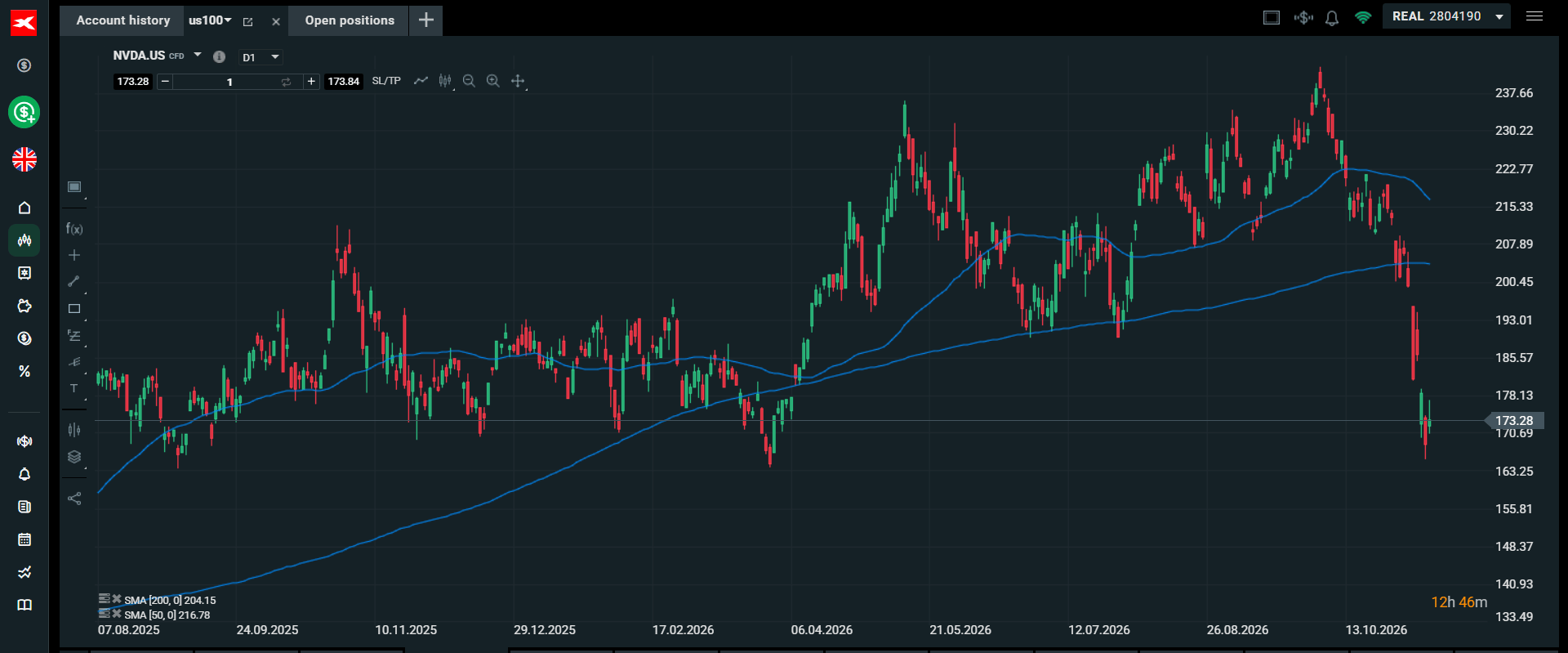
Chart 1: Nvidia, nothing good happens below the 200-day SMA
Author

Kathleen Brooks
XTB UK
Kathleen has nearly 15 years’ experience working with some of the leading retail trading and investment companies in the City of London.