USD/INR loses traction as Indian Rupee surges on oil prices, bond yields pullback
- Indian Rupee gains ground on a decline in oil prices and US bond yields.
- The Middle East tension might exert selling pressure on the Indian Rupee.
- US Q3 Gross Domestic Product (GDP), will be closely monitored by traders.
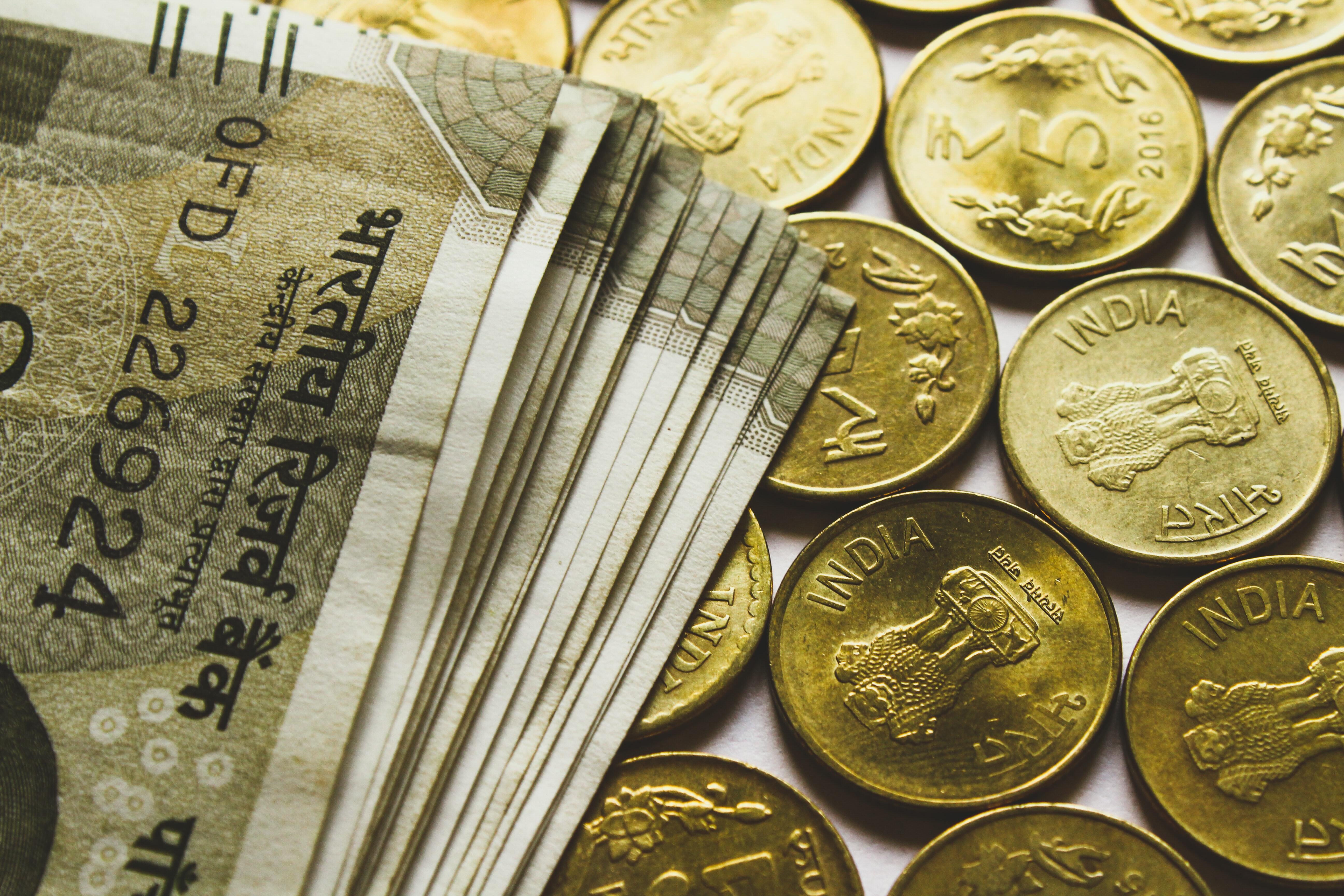
Indian Rupee (INR) gains traction against the US Dollar (USD) on Wednesday, supported by retreating oil prices and US Treasury bond yields. However, investors remained worried about the higher-for-longer rate narrative as Federal Reserve (Fed) Chair Jerome Powell said that the economy's resilience and tight labor markets may require tighter conditions.
Meanwhile, the geopolitical conflicts in the Middle East continue to hang over the market. Any sign of escalating tension might exert selling pressure on the Indian Rupee. Traders will monitor India's Balance of Payments for the second quarter (Q2) and the preliminary estimate of the US Q3 Gross Domestic Product (GDP) on Thursday. Fed officials will not deliver any speeches this week due to the blackout period ahead of the FOMC meeting on November 1.
Daily Digest Market Movers: Indian Rupee edges higher amid the uncertainty
- A spot trader at a private bank said "It's hardly surprising that the opening move lower (on USD/INR) did not sustain. Just think that 83 is a sustainable bottom for now,”, per Reuters.
- RBI has provided support for the Indian Rupee for several sessions, with recent days witnessing an aggressive level of intervention.
- US S&P Global Manufacturing PMI for October surged to 50, better than the market expectation of 49.5. The Services PMI rose to 50.9, above the consensus.
- US S&P Global Composite PMI came in at 51 versus 50.2 prior.
- The US Richmond Manufacturing Index for October fell to 3.0 from 5.0 in the previous reading, below the market expectation.
- RBI's monetary policy committee stated the central bank would continue to focus on maintaining inflation at the target of 4%.
- RBI member Varma is a ‘little more’ positive about India's economic development than a few months ago, but worries persist since the economy is now ‘disproportionately’ reliant on household spending and other challenges.
- India’s GDP is likely to grow at 6.5% in the current fiscal year, according to the Reserve Bank of India’s projections.
- RBI Chief Das said the central bank will monitor the evolving inflation dynamic amid the uncertainty surrounding food inflation.
- India's Finance Minister will closely watch the supply chain impact resulting from the ongoing conflicts in the Middle East.
- Growth in India is likely to gain momentum for the rest of 2023 according to the RBI's October bulletin.
- The International Monetary Fund (IMF) raised its growth forecast for India by 20 basis points (bps) to 6.3% in October.
- The Wholesale Price Index (WPI) in India fell -0.26% YoY in September, from 0.52% in August, falling short of the market expectation of 0.50%.
Technical Analysis: Indian Rupee strengthens above the key support level
The Indian Rupee trades strongly on the day. The USD/INR pair holds above the 83.00 psychological mark. That being said, a breach of the level would see a drop to 82.82 (low of September 12), followed by 82.65 (low of August 4). On the flip side, the immediate upside barrier to watch is 83.15. The additional upside filter is seen at 83.30 (high of October 4), and the all-time high around 83.45. It’s worth noting that the pair holds above the key 200-day Exponential Moving Average (EMA) on the daily chart, indicating the path of least resistance for the USD/INR pair is to the upside in the short-term.
US Dollar price in the last 7 days
The table below shows the percentage change of US Dollar (USD) against listed major currencies in the last 7 days. US Dollar was the strongest against the New Zealand Dollar.
| USD | EUR | GBP | CAD | AUD | JPY | NZD | CHF | |
| USD | -0.14% | 0.17% | 0.77% | -0.06% | 0.08% | 0.87% | -0.68% | |
| EUR | 0.13% | 0.29% | 0.90% | 0.07% | 0.22% | 1.00% | -0.55% | |
| GBP | -0.18% | -0.30% | 0.62% | -0.23% | -0.09% | 0.69% | -0.85% | |
| CAD | -0.78% | -0.90% | -0.62% | -0.85% | -0.70% | 0.09% | -1.47% | |
| AUD | 0.06% | -0.08% | 0.22% | 0.84% | 0.13% | 0.91% | -0.63% | |
| JPY | -0.08% | -0.20% | 0.09% | 0.70% | -0.12% | 0.80% | -0.76% | |
| NZD | -0.89% | -1.00% | -0.71% | -0.09% | -0.94% | -0.79% | -1.57% | |
| CHF | 0.67% | 0.55% | 0.84% | 1.44% | 0.61% | 0.76% | 1.54% |
The heat map shows percentage changes of major currencies against each other. The base currency is picked from the left column, while the quote currency is picked from the top row. For example, if you pick the Euro from the left column and move along the horizontal line to the Japanese Yen, the percentage change displayed in the box will represent EUR (base)/JPY (quote).
Indian Rupee FAQs
What are the key factors driving the Indian Rupee?
The Indian Rupee (INR) is one of the most sensitive currencies to external factors. The price of Crude Oil (the country is highly dependent on imported Oil), the value of the US Dollar – most trade is conducted in USD – and the level of foreign investment, are all influential. Direct intervention by the Reserve Bank of India (RBI) in FX markets to keep the exchange rate stable, as well as the level of interest rates set by the RBI, are further major influencing factors on the Rupee.
How do the decisions of the Reserve Bank of India impact the Indian Rupee?
The Reserve Bank of India (RBI) actively intervenes in forex markets to maintain a stable exchange rate, to help facilitate trade. In addition, the RBI tries to maintain the inflation rate at its 4% target by adjusting interest rates. Higher interest rates usually strengthen the Rupee. This is due to the role of the ‘carry trade’ in which investors borrow in countries with lower interest rates so as to place their money in countries’ offering relatively higher interest rates and profit from the difference.
What macroeconomic factors influence the value of the Indian Rupee?
Macroeconomic factors that influence the value of the Rupee include inflation, interest rates, the economic growth rate (GDP), the balance of trade, and inflows from foreign investment. A higher growth rate can lead to more overseas investment, pushing up demand for the Rupee. A less negative balance of trade will eventually lead to a stronger Rupee. Higher interest rates, especially real rates (interest rates less inflation) are also positive for the Rupee. A risk-on environment can lead to greater inflows of Foreign Direct and Indirect Investment (FDI and FII), which also benefit the Rupee.
How does inflation impact the Indian Rupee?
Higher inflation, particularly, if it is comparatively higher than India’s peers, is generally negative for the currency as it reflects devaluation through oversupply. Inflation also increases the cost of exports, leading to more Rupees being sold to purchase foreign imports, which is Rupee-negative. At the same time, higher inflation usually leads to the Reserve Bank of India (RBI) raising interest rates and this can be positive for the Rupee, due to increased demand from international investors. The opposite effect is true of lower inflation.
Author

Lallalit Srijandorn
FXStreet
Lallalit Srijandorn is a Parisian at heart. She has lived in France since 2019 and now becomes a digital entrepreneur based in Paris and Bangkok.

















