US President Donald Trump wants a deal with Iran but chance of deal unlikely
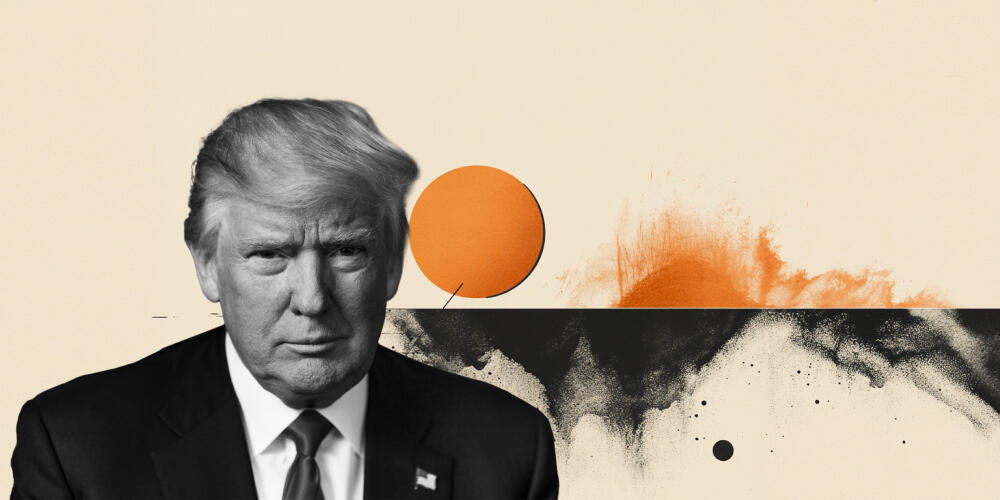
US President Donald Trump appears to be determined to reach a deal with Iran aimed at ending hostilities in the Middle East, Reuters reported on Tuesday.
Iran signalled a preference to engage with US Vice President JD Vance in any renewed diplomatic talks, rather than special envoy Steve Witkoff or Jared Kushner, highlighting trust issues amid already fragile ceasefire talks.
An Israeli official stated that they viewed it is unlikely that Iran would agree to US demands in any new round of negotiations, which broke down on February 28 with the launch of the US-Israeli war on Iran.
Key US Demands on Iran
1. Iran must dismantle its existing nuclear capabilities.
2. Iran must commit never to pursue nuclear weapons.
3. There will be no uranium enrichment on Iranian territory.
4. Iran must hand its stockpile of some 450 kilograms of uranium enriched to 60 percent to the International Atomic Energy Agency in the near future, in a timetable to be agreed.
5. The Natanz, Isfahan and Fordo nuclear facilities must be dismantled.
6. The IAEA, the UN’s nuclear watchdog, must be granted full access, transparency and oversight inside Iran.
7. Iran must abandon its regional proxy “paradigm.”
8. Iran must cease the funding, direction and arming of its regional proxies.
9. The Strait of Hormuz must remain open and function as a free maritime corridor.
10. Iran’s missile program must be limited in both range and quantity, with specific thresholds to be determined at a later stage.
11. Any future use of missiles would be restricted to self-defense.
12. Iran would receive a full lifting of sanctions imposed by the international community.
13. The US would assist Iran in advancing its civilian nuclear program, including electricity generation at the Bushehr nuclear plant.
14. The so-called “snapback” mechanism, which allows for the automatic reimposition of sanctions if Iran fails to comply, would be removed.
15. Establishment of a regional enrichment consortium involving Iran, the US, UAE, Qatar, and Saudi Arabia, with potential external management.
Risk sentiment FAQs
In the world of financial jargon the two widely used terms “risk-on” and “risk off'' refer to the level of risk that investors are willing to stomach during the period referenced. In a “risk-on” market, investors are optimistic about the future and more willing to buy risky assets. In a “risk-off” market investors start to ‘play it safe’ because they are worried about the future, and therefore buy less risky assets that are more certain of bringing a return, even if it is relatively modest.
Typically, during periods of “risk-on”, stock markets will rise, most commodities – except Gold – will also gain in value, since they benefit from a positive growth outlook. The currencies of nations that are heavy commodity exporters strengthen because of increased demand, and Cryptocurrencies rise. In a “risk-off” market, Bonds go up – especially major government Bonds – Gold shines, and safe-haven currencies such as the Japanese Yen, Swiss Franc and US Dollar all benefit.
The Australian Dollar (AUD), the Canadian Dollar (CAD), the New Zealand Dollar (NZD) and minor FX like the Ruble (RUB) and the South African Rand (ZAR), all tend to rise in markets that are “risk-on”. This is because the economies of these currencies are heavily reliant on commodity exports for growth, and commodities tend to rise in price during risk-on periods. This is because investors foresee greater demand for raw materials in the future due to heightened economic activity.
The major currencies that tend to rise during periods of “risk-off” are the US Dollar (USD), the Japanese Yen (JPY) and the Swiss Franc (CHF). The US Dollar, because it is the world’s reserve currency, and because in times of crisis investors buy US government debt, which is seen as safe because the largest economy in the world is unlikely to default. The Yen, from increased demand for Japanese government bonds, because a high proportion are held by domestic investors who are unlikely to dump them – even in a crisis. The Swiss Franc, because strict Swiss banking laws offer investors enhanced capital protection.
Author

Lallalit Srijandorn
FXStreet
Lallalit Srijandorn is a Parisian at heart. She has lived in France since 2019 and now becomes a digital entrepreneur based in Paris and Bangkok.