United States Dollar Index strengthens to near 102.50, Fed rate decision looms
- US Dollar Index drifts higher to around 102.40 in Wednesday’s early European session.
- Traders brace for Fed policy meeting on Wednesday, with no change in rates expected.
- Fed funds futures market points to a 92.8% chance of rate hold in October, but price in 84.4% probability of an increase in December.

The US Dollar Index (DXY), an index of the value of the US Dollar (USD) measured against a basket of six world currencies, currently trades near 102.40 in the early European trading hours on Wednesday. The DXY gathers strength near a two-week high ahead of the Federal Reserve (Fed) interest rate decision later on Wednesday.
The Fed raised its policy rate by 25 basis points (bps) last month to a range of 3.75%-4.00%. The US central bank is widely expected to leave its policy interest rate unchanged while signalling the probability of any December move.
Fed funds futures are pricing an implied 92.8% odds the Federal Open Market Committee (FOMC) will keep its policy interest rate on hold, according to the CME FedWatch tool. The probability of a US rate hike in December stands at 84.4%.
"The Fed doesn't need to hike today to move markets," said Chris Weston, head of research at Pepperstone Group in Melbourne. "It simply needs to change the perceived probability of hiking in December.”
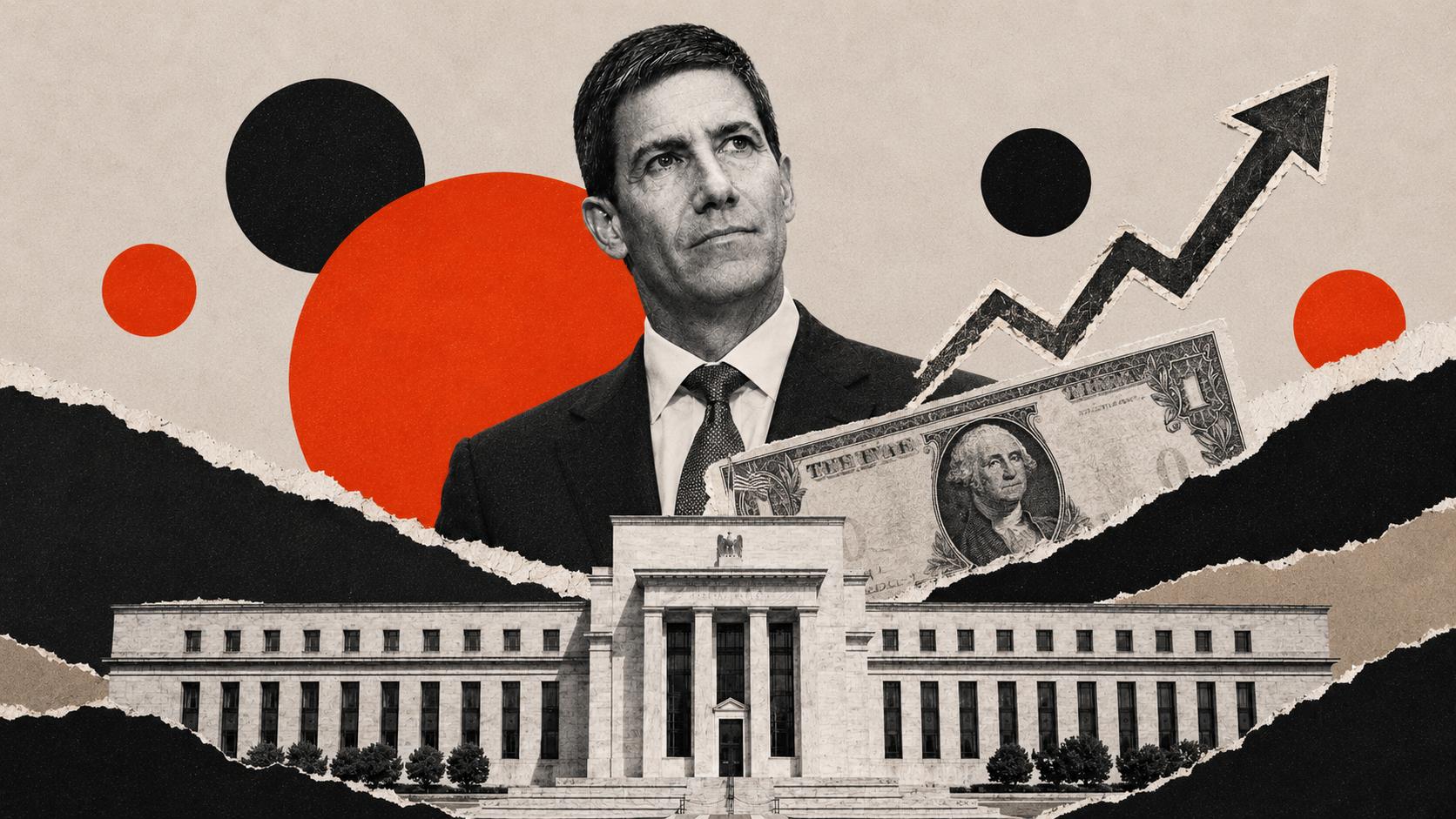
Traders will closely monitor more clues about future moves from Fed policymakers, and Chairman Kevin Warsh in particular. Any hawkish remarks from Fed officials could lift the US Dollar against its rivals. On the other hand, dovish comments from policymakers could undermine the DXY in the near term.
Dollar strength faces positioning drag as markets eye December FOMC
Strategists at Societe Generale note that among the four G10 central banks with policy decisions this week, “the Fed is the one whose currency has been strongest in recent weeks,” even as “the Canadian and New Zealand dollars have looked a little brighter in recent days (especially the NZD).” They argue that “the period from Fed Chair Kevin Warsh’s speech at Jackson Hole until the September FOMC, triggered a more positive backdrop for the dollar but gradually, the weight of long dollar positions has been felt,” tempering the earlier momentum. Looking ahead, Societe Generale says that “if the FOMC message (whatever that looks like in the brave new world) keeps December hike expectations alive, our bias is to remain dollar-positive,” while cautioning that “unless the ECB is very hawkish, European economic fundamentals will weigh.”
Warsh cautious on crisis scars but upbeat on investment surge and AI
Fed Chair Warsh’s latest remarks score slightly below the established baseline on the FXS Speechtracker (5.6 vs 6.1), signaling a marginally softer tone despite broadly steady guidance. The admission of being “over-scarred” by the Global Financial Crisis underscores a persistent bias toward guarding against downside and tail risks, even as Warsh highlights a structural growth phase and an investment surge driven by “good policies.” Emphasis on AI as a forthcoming demand shock and as a tool to strengthen data-driven policy, alongside a refusal to pre-commit on October and December decisions, keeps the policy stance cautious but not overtly dovish for the Dollar.
The FXS Fed Sentiment Index was unchanged on the speech, moving 0.00 points to remain at 127.51, firmly in hawkish territory despite the slightly softer FXS Speechtracker score. This stability suggests markets see Warsh’s crisis-scarred caution and focus on financial stability and AI-related upside risks as broadly consistent with an above-neutral policy bias for the Dollar.
Technical Analysis: US Dollar Index keeps a bullish vibe above the 100-day SMA
In the daily chart, Dollar Index Spot holds a constructive bullish bias as price remains above the Bollinger middle band and comfortably over the rising 100-day simple moving average. The immediate upside appears mildly capped by the upper Bollinger band, but with the 14-period Relative Strength Index hovering near 63, momentum still leans to the upside rather than signalling overbought exhaustion.
On the topside, a clear break above the upper Bollinger band at 102.60 would open the door to further gains in the near term. On the downside, initial support is located at the Bollinger middle band around 102.05, ahead of the lower band near 101.50, while deeper pullbacks would be expected to find more robust demand at the 100-day simple moving average around 100.65.
(The technical analysis of this story was written with the help of an AI tool. Know more.)
US Dollar FAQs
The US Dollar (USD) is the official currency of the United States of America, and the ‘de facto’ currency of a significant number of other countries where it is found in circulation alongside local notes. It is the most heavily traded currency in the world, accounting for over 88% of all global foreign exchange turnover, or an average of $6.6 trillion in transactions per day, according to data from 2022. Following the second world war, the USD took over from the British Pound as the world’s reserve currency. For most of its history, the US Dollar was backed by Gold, until the Bretton Woods Agreement in 1971 when the Gold Standard went away.
The most important single factor impacting on the value of the US Dollar is monetary policy, which is shaped by the Federal Reserve (Fed). The Fed has two mandates: to achieve price stability (control inflation) and foster full employment. Its primary tool to achieve these two goals is by adjusting interest rates. When prices are rising too quickly and inflation is above the Fed’s 2% target, the Fed will raise rates, which helps the USD value. When inflation falls below 2% or the Unemployment Rate is too high, the Fed may lower interest rates, which weighs on the Greenback.
In extreme situations, the Federal Reserve can also print more Dollars and enact quantitative easing (QE). QE is the process by which the Fed substantially increases the flow of credit in a stuck financial system. It is a non-standard policy measure used when credit has dried up because banks will not lend to each other (out of the fear of counterparty default). It is a last resort when simply lowering interest rates is unlikely to achieve the necessary result. It was the Fed’s weapon of choice to combat the credit crunch that occurred during the Great Financial Crisis in 2008. It involves the Fed printing more Dollars and using them to buy US government bonds predominantly from financial institutions. QE usually leads to a weaker US Dollar.
Quantitative tightening (QT) is the reverse process whereby the Federal Reserve stops buying bonds from financial institutions and does not reinvest the principal from the bonds it holds maturing in new purchases. It is usually positive for the US Dollar.
Author

Lallalit Srijandorn
FXStreet
Lallalit Srijandorn is a Parisian at heart. She has lived in France since 2019 and now becomes a digital entrepreneur based in Paris and Bangkok.