Two words could rewrite the Fed: What happens if "maximum employment" gets struck?
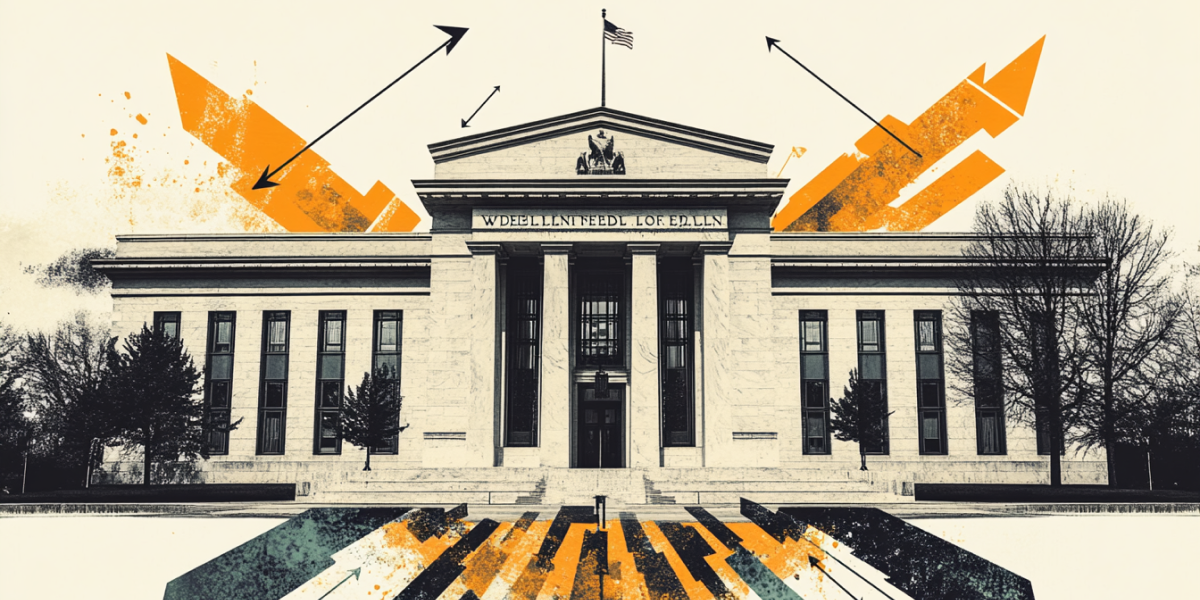
"Maximum employment" on the chopping block
The House Financial Services Committee (HFSC), chaired by Representative French Hill (R-AR), is the lower chamber's primary oversight body for banking, capital markets, housing finance, and monetary policy. It is now taking up H.R. 5396, the Price Stability Act of 2025, introduced by Hill in September 2025 with co-sponsors Byron Donalds (R-FL) and Marlin Stutzman (R-IN). The bill has already been the subject of a committee hearing titled "Less Mandates. More Independence," held by its Task Force on Monetary Policy, Treasury Market Resilience, and Economic Prosperity, and now sits with the full committee for further consideration.
The edit itself is surgical: H.R. 5396 would amend Section 2A of the Federal Reserve Act by striking "maximum employment, stable prices," and inserting "stable prices", removing the employment leg of what has been the Fed's dual mandate since the 1977 Federal Reserve Reform Act. The Federal Open Market Committee (FOMC) is currently required to balance maximum employment with stable prices, and supporters argue a single inflation focus would improve accountability, anchor expectations, and bring the US into line with single-mandate central banks like the European Central Bank (ECB) and the Bank of England (BoE).
Critics counter that stripping the employment mandate while payroll growth has effectively flatlined over the past 12 months and underemployment is creeping higher would remove the Fed's legal authority to act on a softening labor market. With Wednesday's Producer Price Index (PPI) for April surging to 6% YoY, the timing of the bill's revival has put the dual mandate debate squarely back on traders' radar.
Fed FAQs
Monetary policy in the US is shaped by the Federal Reserve (Fed). The Fed has two mandates: to achieve price stability and foster full employment. Its primary tool to achieve these goals is by adjusting interest rates. When prices are rising too quickly and inflation is above the Fed’s 2% target, it raises interest rates, increasing borrowing costs throughout the economy. This results in a stronger US Dollar (USD) as it makes the US a more attractive place for international investors to park their money. When inflation falls below 2% or the Unemployment Rate is too high, the Fed may lower interest rates to encourage borrowing, which weighs on the Greenback.
The Federal Reserve (Fed) holds eight policy meetings a year, where the Federal Open Market Committee (FOMC) assesses economic conditions and makes monetary policy decisions. The FOMC is attended by twelve Fed officials – the seven members of the Board of Governors, the president of the Federal Reserve Bank of New York, and four of the remaining eleven regional Reserve Bank presidents, who serve one-year terms on a rotating basis.
In extreme situations, the Federal Reserve may resort to a policy named Quantitative Easing (QE). QE is the process by which the Fed substantially increases the flow of credit in a stuck financial system. It is a non-standard policy measure used during crises or when inflation is extremely low. It was the Fed’s weapon of choice during the Great Financial Crisis in 2008. It involves the Fed printing more Dollars and using them to buy high grade bonds from financial institutions. QE usually weakens the US Dollar.
Quantitative tightening (QT) is the reverse process of QE, whereby the Federal Reserve stops buying bonds from financial institutions and does not reinvest the principal from the bonds it holds maturing, to purchase new bonds. It is usually positive for the value of the US Dollar.
Author

Joshua Gibson
FXStreet
Joshua joins the FXStreet team as an Economics and Finance double major from Vancouver Island University with twelve years' experience as an independent trader focusing on technical analysis.