The US Dollar holds the yield advantage: Why safe-haven demand still sank it against the Japanese Yen

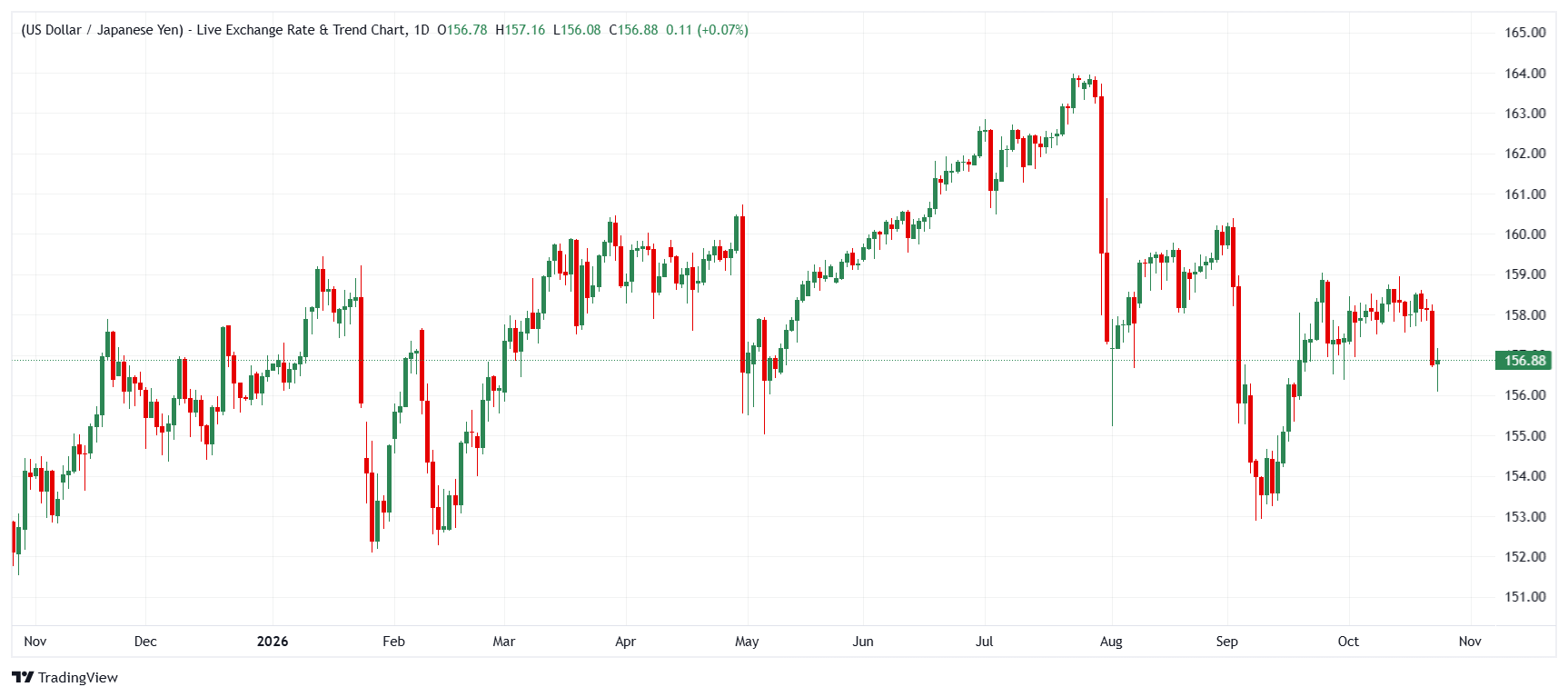
The US Dollar (USD) has experienced a sharp setback against the Japanese Yen (JPY), with USD/JPY plunging from the 158.20 area to intraday lows around 156.08 as falling US Treasury yields and a spike in geopolitical risk aversion triggered aggressive safe-haven demand for the Yen. While the US Dollar continues to hold broad-based yield advantages across most major currency pairs, its momentum against the JPY is facing headwinds from hotter Japanese inflation metrics and solid private sector growth. Institutional strategists at UOB and BBH are evaluating whether this steep oversold decline represents a temporary tactical pullback within a broader 155.00–160.00 trading range or the start of a deeper structural unwinding.
UOB sees downside momentum pushing USD/JPY toward 156.00 and 155.50
Quek Ser Leang and Lee Sue Ann at UOB highlight the sudden acceleration in USD/JPY downside momentum, which broke the pair out of its recent 157.70–158.80 consolidation zone down to 156.67. Although technical indicators are deeply oversold in the short term, they expect the USD/JPY to extend its decline toward 156.00 before stabilizing, with strong resistance now lowered to 157.30.
"In a sudden sharp move, USD plunged to a low of 156.67. The rapid increase in downward momentum suggests USD is likely to decline further. Support levels are 156.00 and 155.50. On the upside, a break above 157.80 would mean that USD is not declining further... While deeply oversold, the decline could extend to 156.00 before stabilisation can be expected."
BBH expects JPY safe-haven inflows to anchor USD/JPY within 155.00–160.00 range
Elias Haddad at Brown Brothers Harriman (BBH) highlights that the Japanese Yen is leading global currency gains as investors seek refuge during market volatility. While hotter Japanese inflation metrics (2.4% core CPI) and resilient PMI data (52.3) bolster the long-term case for BoJ rate hikes, low market expectations for an October rate move (2% odds) mean USD/JPY should hold inside a defined 155.00–160.00 range unless risk-off sentiment intensifies.
"JPY leads gains, underscoring its status as the ultimate refuge currency. Japan September CPI and October PMI back additional BOJ hikes... Nonetheless, the BOJ is unlikely to crank up the pace of tightening with headline and core CPI inflation tracking below its 2026 projection of 2.5%. The swaps curve price in just 2% odds of a 25bps BOJ rate hike to 1.50% on October 30, and 80% probability of a hike on December 18... That leaves USD/JPY likely to trade within a 155.00-160.00 range in the near term."
Key Takeaway
The sharp drop in USD/JPY toward 156.08 demonstrates that while the US Dollar retains overall macro dominance, it remains vulnerable to sudden surges in JPY safe-haven demand and lower US Treasury yields. While UOB warns that technical momentum could drive the USD/JPY lower toward 156.00 and 155.50 near term, BBH stresses that with Bank of Japan tightening expectations largely pushed back to December (80% probability), the pair should find solid structural support within a broader 155.00–160.00 trading corridor.
(This article was created with the help of an Artificial Intelligence tool and reviewed by an editor. Know more.)
Author

FXStreet Insights Team
FXStreet
The FXStreet Insights Team is a group of journalists that handpicks selected market observations published by renowned experts. The content includes notes by commercial as well as additional insights by internal and external analysts.