The Midterms: How will stock markets react?

We are at the final stage of the US Midterms race. The elections take place on Tuesday 3rd November, and so far the polls suggest that the Democrats will come out on top and could take the House and the Senate from the Republicans.
Turnout is expected to be high. Texas has already reported a record high voter turnout for mail in and early voting, with more than 7.1mn ballots cast. A high turnout is fueling the belief that the Midterms will be a bloodbath for the Republicans, as voters take a dim view of President Trump’s leadership as gas prices rise to records and inflation remains elevated.
Don’t rely on the polls
The polls are currently predicting a win in both the House of Representatives and the Senate for the Democrats.Prediction market Polymarket has a 71% chance that the Democrats win control of Congress, while the latest NBC News average poll of polls find that the American public prefer Congress to be controlled by Democrats rather than Republicans by 52% to 44%.
The polls have been wrong before, for example, they did not expect such a large win for Donald Trump two years ago. Polls and prediction markets are also becoming increasingly unreliable, for example, they did not expect President Lula to hold onto the presidency in Brazil two weeks ago.
As polls become unreliable and prediction markets give fickle signals, investors and traders should expect some surprises in Tuesday’s results.
The outcome, once we know it, will be crucial for many aspects of policy, but by far the most important driver of markets in the next 48 hours will be what happens to the oil price, which is falling sharply on Monday. The US President had hinted that there could be a restart of the war with Iran once the elections are out of the way. However, he has recently expressed interest in a diplomatic solution to the conflict. If the Democrats win Congress tomorrow, this could hasten a resolution to the conflict which may push the price of oil below $100 per barrel, and could bost investor sentiment on a broad basis.
The market reaction
As we lead up to polling day, markets are in an upbeat mood. Tech stocks are staging a decent recovery after last week’s sell off, and the oil price is sinking and Brent crude is down 6%, as President Trump rolls back on threats to strike Iran later this week.
What history tells us
It is worth looking back to 2022 to see how markets react to election results. Ahead of the 2022 Midterms, markets were expecting a red wave in Congress, with big wins expected for the Republicans. This did not happen, and the markets basically ignored the results and did not sell off as many had expected.
Bond market notices Midterms
Midterms typically do not generate as much interest for traders as the Presidential election. However, the bond market takes notice. These results come as the economic backdrop remains challenging. The US economy is strong, but inflation is elevated and further rate hikes from the Federal Reserve are expected. On top of this, the market has been reassessing the AI trade and some AI stocks have fallen sharply in recent months including Oracle, Intel, CoreWeave, SanDisk, Meta, Amazon and Alphabet.
Interestingly, bond yields have remained stable in the weeks leading up to these elections. The 10-year US Treasury yield is lower by 36 bps in the past 4 weeks. We think part of the reason for this decline in US Treasury yields is hopes for a divided government. If the Democrats win control of Congress tomorrow, then the US will be in a state of political gridlock for the next two years. Congress won’t support the President and the President will veto Congress’s proposed bills.
In many cases, bonds rise, and yields fall, when there is a divided US government. This happened during President Trump’s previous term. The 2018 Midterms saw Democrats win the Midterms and yields fell over the following months.
The Midterms and AI
A Democratic clean sweep on Tuesday may impact bonds and stocks in multiple ways. For example, many Democratic candidates have campaigned against AI data centres, if they win control of Congress this could potentially slow down the rate of the AI build out. While this may be seen as bad news for the AI trade, it could also slow the rate of AI-linked bond issuance, which could drive interest back into US Treasuries and other sovereign debt.
Why Midterm elections can kick off an early santa rally
Seasonally, November and December are strong months for stock market returns. However, election years can turbo charge this rally. Historically the US stock market reacts favourably to the aftermath of a midterm election. Going back to 1950, the S&P 500 has risen in the 12 months after the Midterms in every election year. The average 12 month gain is also strong at 15%.
This suggests two things: investors don’t like election uncertainty, and, from a stock market perspective, it does not necessarily matter who wins or loses tomorrow night, with the election out of the way, inventors have historically been happy to step back into the market
In the coming days, investors may put October’s volatility behind them and step back into risk seeking mode.
Nasdaq 100, ripe for recovery after finding support at the 200-day sma
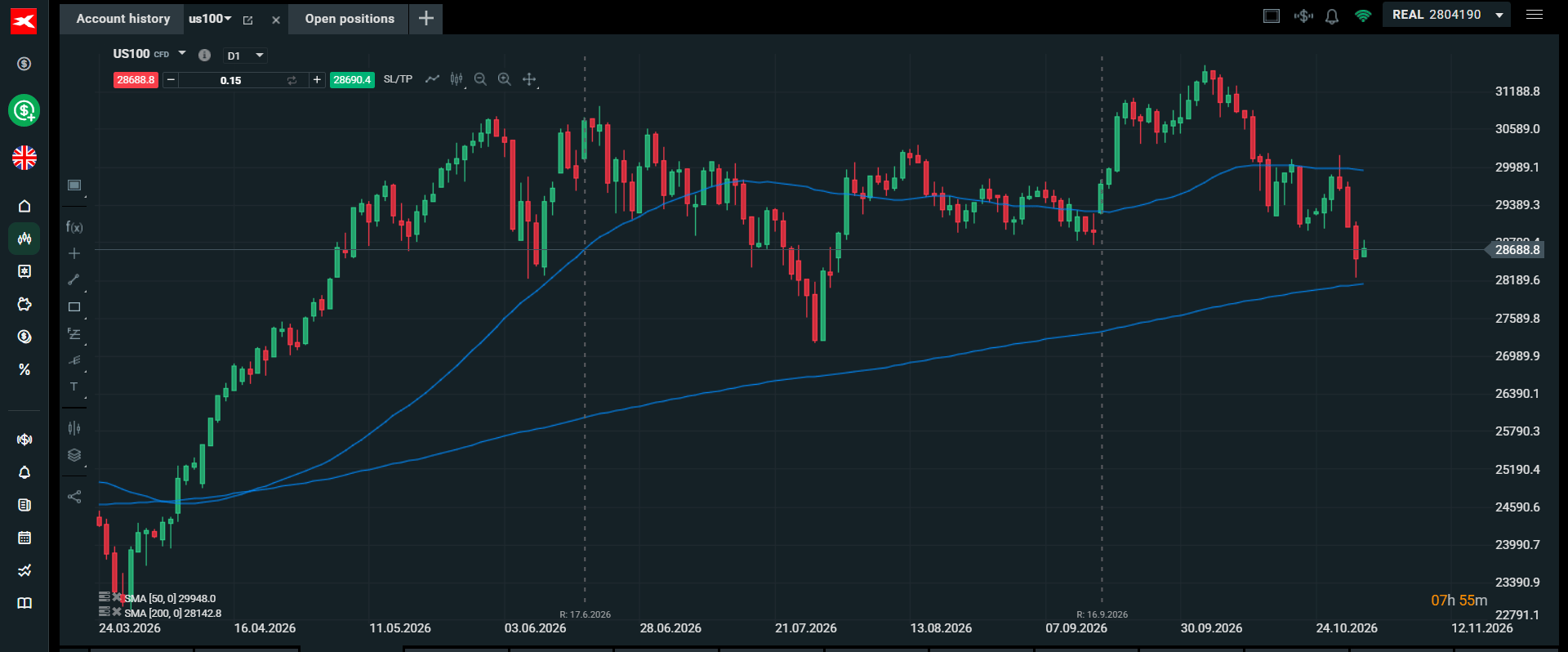
Source: XTB
The S&P 500 is a mere 2% away from its peak, even after recent tech stock volatility
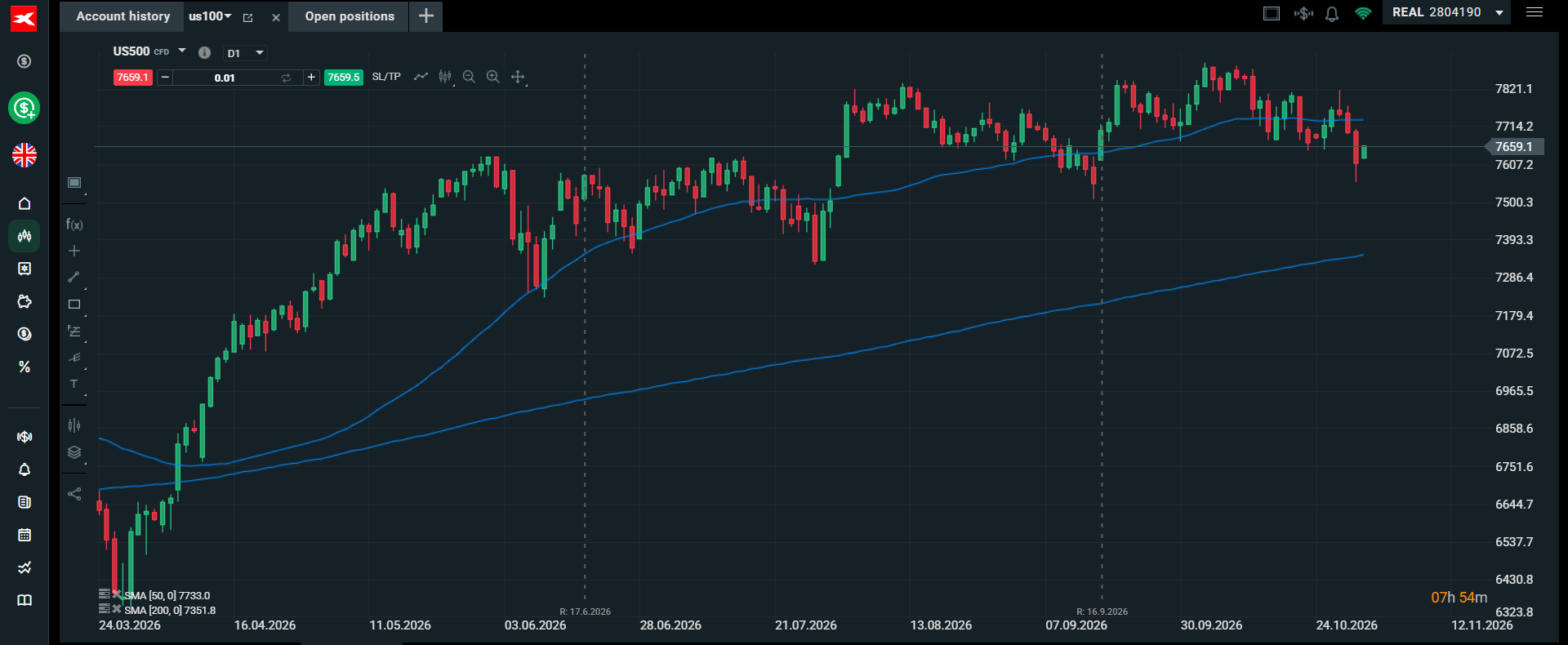
Source: XTB
Author

Kathleen Brooks
XTB UK
Kathleen has nearly 15 years’ experience working with some of the leading retail trading and investment companies in the City of London.

















