The BoC holds at 2.25% and removes hike language: Why the Canadian Dollar could remain stuck
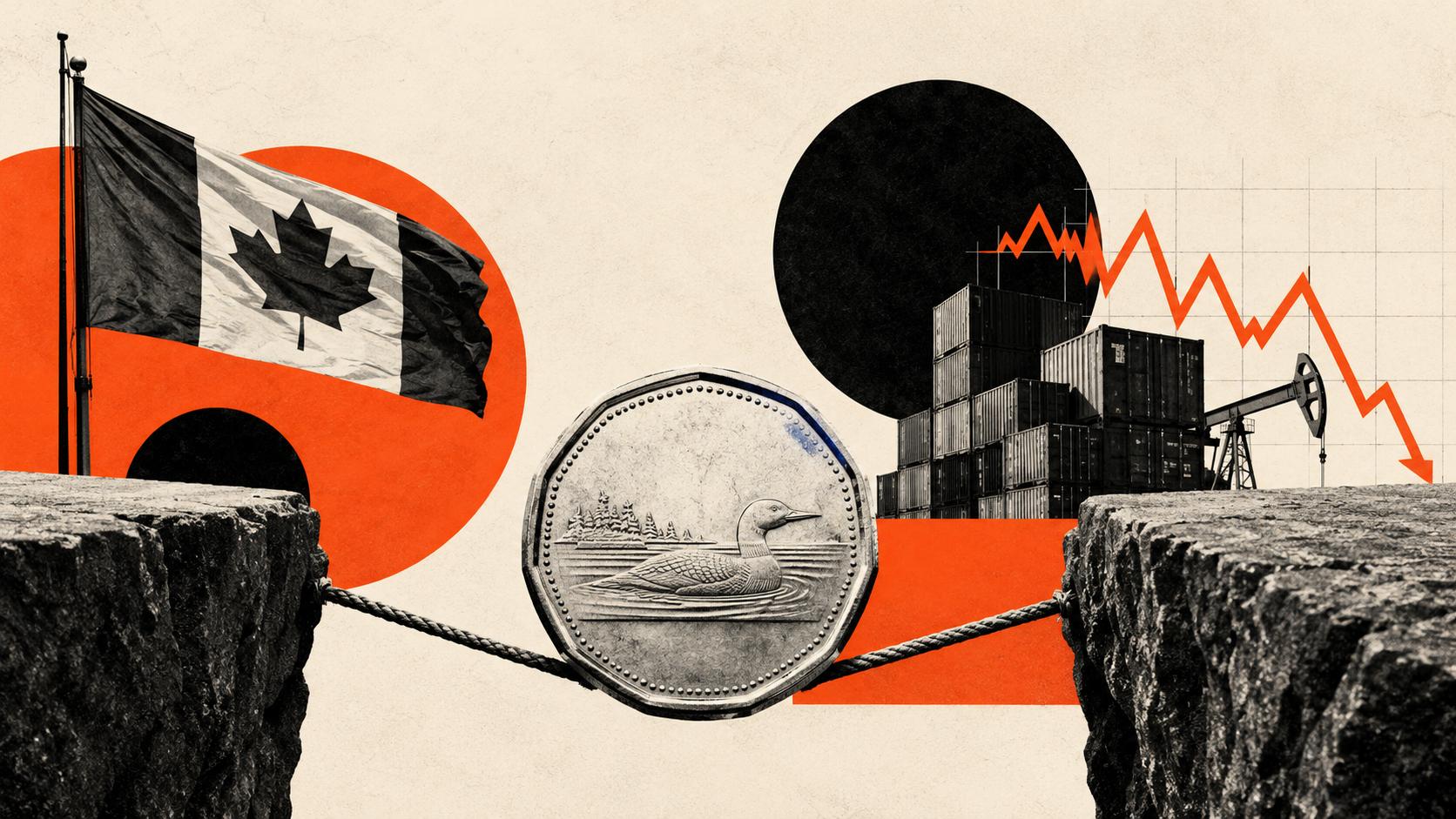
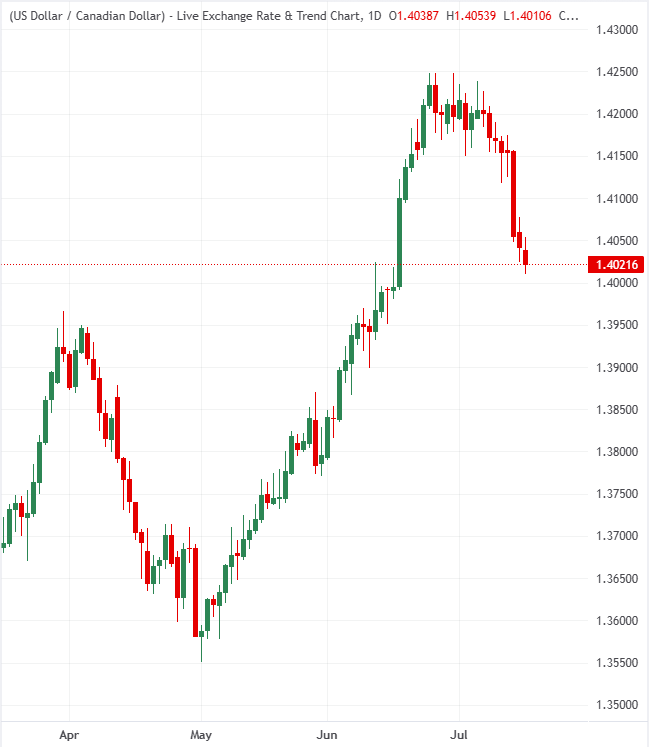
The Canadian Dollar (CAD) has entered a consolidation phase against the US Dollar (USD) following a volatile week. While a soft US inflation report initially put the Greenback on the back foot, the Bank of Canada's (BoC) decision to keep its interest rate at 2.25% for a sixth consecutive meeting has somewhat tamed the initial downward move in the USD/CAD pair.
Institutional analysts are closely examining the Canadian central bank's updated forecasts and shift in guidance to map out the next directional leg for USD/CAD.
Cooling growth and excess supply challenge aggressive hike pricing
BBH emphasizes that Canada’s cooling economic momentum suggests that the central bank is in no rush to pursue further interest rate hikes. Under updated projections, real GDP growth is expected to decelerate from an annualized 2.5% in the second quarter to a more modest 1.5% in the third quarter.
With core inflation comfortably hovering around 2%, current market expectations of 50 basis points of policy tightening over the next 12 months appear highly overextended.
There is room for BoC rate hikes bets (50bps in the next twelve months) to adjust lower against CAD as the Canadian economy remains in excess supply.
Softened BoC guidance limits immediate Loonie catalyst
The macro research team at TD Securities points out that the BoC’s newly watered-down forward guidance offers little spark to ignite a Canadian Dollar rally. By stripping out previous references to both rate-cut risks and back-to-back rate hikes, the central bank has presented a highly balanced neutral stance. While this balanced outlook prevents sudden currency swings, it leaves the Loonie lacking a clear domestic policy catalyst to push past its current boundaries.
The Bank of Canada held rates at 2.25% and watered down its guidance by removing the reference to both the risk of rate cuts and consecutive hikes going forward (...) A balanced BoC outlook does not do much for the CAD.
Near-term holding pattern close to 1.4000
The banks project a highly consolidated near-term trajectory for USD/CAD, with a gradual downward bias. Both institutions observe that the currency cross is stabilizing in the wake of benign US CPI and PPI reports, highlighting that a downward repricing of BoC rate hike bets will temporarily limit the CAD's relative yield advantage. However, TD Securities remains constructively optimistic over a wider horizon, concluding that as Canadian economic data begins to form a stable base, USD/CAD will eventually retrace below the psychologically important 1.4000 threshold.
(This article was created with the help of an Artificial Intelligence tool and reviewed by an editor. Know more.)
Author

FXStreet Insights Team
FXStreet
The FXStreet Insights Team is a group of journalists that handpicks selected market observations published by renowned experts. The content includes notes by commercial as well as additional insights by internal and external analysts.