Swiss Franc rises as US Dollar declines on easing Fed rate hike bets
- USD/CHF falls as June Nonfarm Payrolls added just 57,000 jobs, missing expectations of 110,000.
- The CME FedWatch tool shows that September rate-hike odds dropped to 52% from 66% after the release.
- Swiss CPI rose 0.5% YoY in June, hitting a low since March, while flat monthly prices missed forecasts.

USD/CHF extends its losses for the second successive day, trading around 0.8020 during the Asian hours on Friday. The pair depreciates as the US Dollar (USD) loses ground amid a disappointing set of domestic labor data released on Thursday, easing bets on a Fed rate hikes.
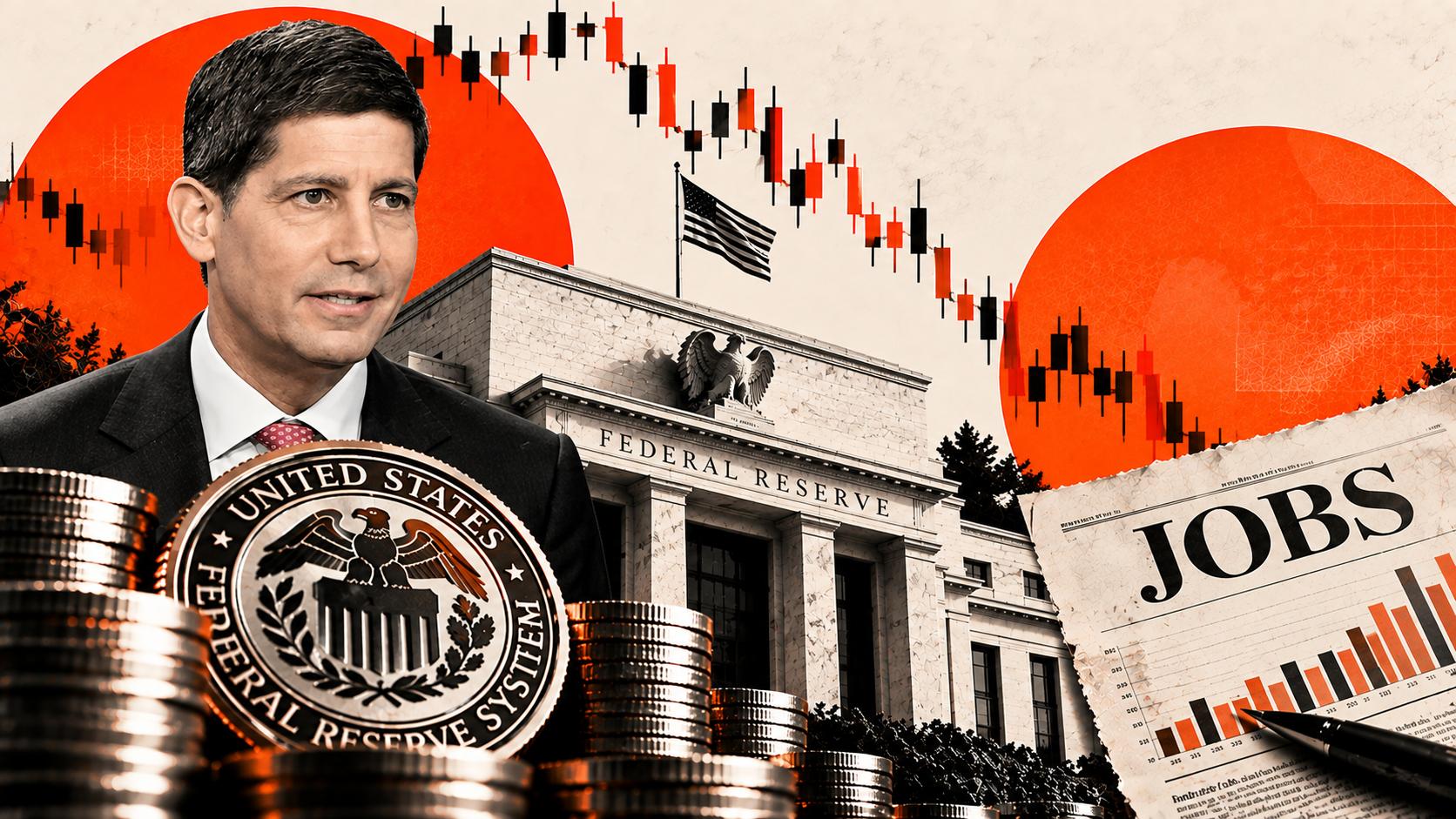
According to the CME FedWatch tool, financial markets are now pricing in a 52% chance of a September interest rate hike, down sharply from the 66% priced in right before the release. Recent remarks from Federal Reserve Chair Kevin Warsh at the ECB's Sintra conference firmly reaffirmed the central bank’s independent commitment to a 2% price stability target; he also acknowledged that inflation risks and expectations have begun to moderate over the past month.
US labor market forces Wall Street to aggressively rethink its interest rate outlook. The primary catalyst for this shift was the June Nonfarm Payrolls (NFP) report released on Thursday. The US economy added just 57,000 jobs last month, completely missing the market consensus of 110,000. While the headline unemployment rate managed an unexpected tick downward to 4.2% from May's 4.3%, the severe hiring slowdown heavily signals a cooling broader economy.
On Thursday, the Federal Statistical Office of Switzerland reported that consumer prices rose 0.5% year-on-year in June, meeting forecasts but slowing to their lowest reading since March. Monthly prices remained flat, missing the expected 0.1% increase, while annual core inflation held steady at 0.3%.
Swiss Franc FAQs
The Swiss Franc (CHF) is Switzerland’s official currency. It is among the top ten most traded currencies globally, reaching volumes that well exceed the size of the Swiss economy. Its value is determined by the broad market sentiment, the country’s economic health or action taken by the Swiss National Bank (SNB), among other factors. Between 2011 and 2015, the Swiss Franc was pegged to the Euro (EUR). The peg was abruptly removed, resulting in a more than 20% increase in the Franc’s value, causing a turmoil in markets. Even though the peg isn’t in force anymore, CHF fortunes tend to be highly correlated with the Euro ones due to the high dependency of the Swiss economy on the neighboring Eurozone.
The Swiss Franc (CHF) is considered a safe-haven asset, or a currency that investors tend to buy in times of market stress. This is due to the perceived status of Switzerland in the world: a stable economy, a strong export sector, big central bank reserves or a longstanding political stance towards neutrality in global conflicts make the country’s currency a good choice for investors fleeing from risks. Turbulent times are likely to strengthen CHF value against other currencies that are seen as more risky to invest in.
The Swiss National Bank (SNB) meets four times a year – once every quarter, less than other major central banks – to decide on monetary policy. The bank aims for an annual inflation rate of less than 2%. When inflation is above target or forecasted to be above target in the foreseeable future, the bank will attempt to tame price growth by raising its policy rate. Higher interest rates are generally positive for the Swiss Franc (CHF) as they lead to higher yields, making the country a more attractive place for investors. On the contrary, lower interest rates tend to weaken CHF.
Macroeconomic data releases in Switzerland are key to assessing the state of the economy and can impact the Swiss Franc’s (CHF) valuation. The Swiss economy is broadly stable, but any sudden change in economic growth, inflation, current account or the central bank’s currency reserves have the potential to trigger moves in CHF. Generally, high economic growth, low unemployment and high confidence are good for CHF. Conversely, if economic data points to weakening momentum, CHF is likely to depreciate.
As a small and open economy, Switzerland is heavily dependent on the health of the neighboring Eurozone economies. The broader European Union is Switzerland’s main economic partner and a key political ally, so macroeconomic and monetary policy stability in the Eurozone is essential for Switzerland and, thus, for the Swiss Franc (CHF). With such dependency, some models suggest that the correlation between the fortunes of the Euro (EUR) and the CHF is more than 90%, or close to perfect.
Author

Akhtar Faruqui
FXStreet
Akhtar Faruqui is a Forex Analyst based in New Delhi, India. With a keen eye for market trends and a passion for dissecting complex financial dynamics, he is dedicated to delivering accurate and insightful Forex news and analysis.