|

Stocks extend their consolidation – Will they attempt to reach new highs?

The stock market rebounded from yesterday’s local lows, but is this the start of a new short-term uptrend?

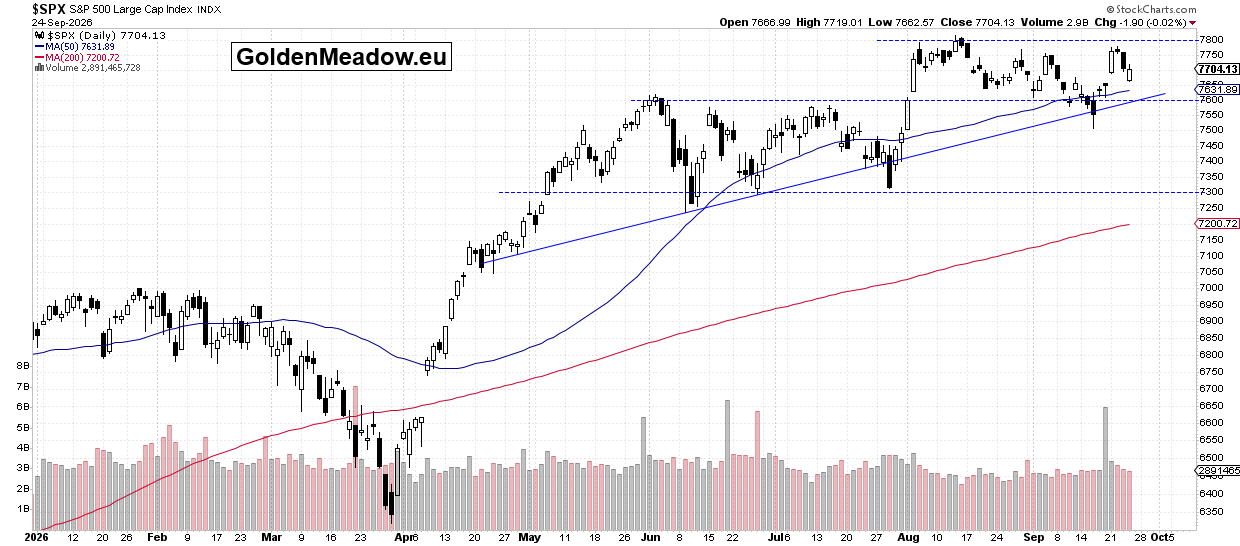
The S&P 500 index closed 0.02% lower on Thursday, rebounding from a local low of around 7,663. The market retraced a large part of its Monday-Tuesday advance as uncertainty surrounding the conflict in the Middle East continued. Today, the index is expected to open 0.2% higher, potentially leading to further sideways trading.

Investor sentiment has slightly improved, as reflected in Wednesday’s AAII Investor Sentiment Survey, which reported that 32.7% of individual investors are bullish, while 48.1% are bearish.

The S&P 500 is essentially extending its two-month-long consolidation, as shown on the daily chart.
Chart

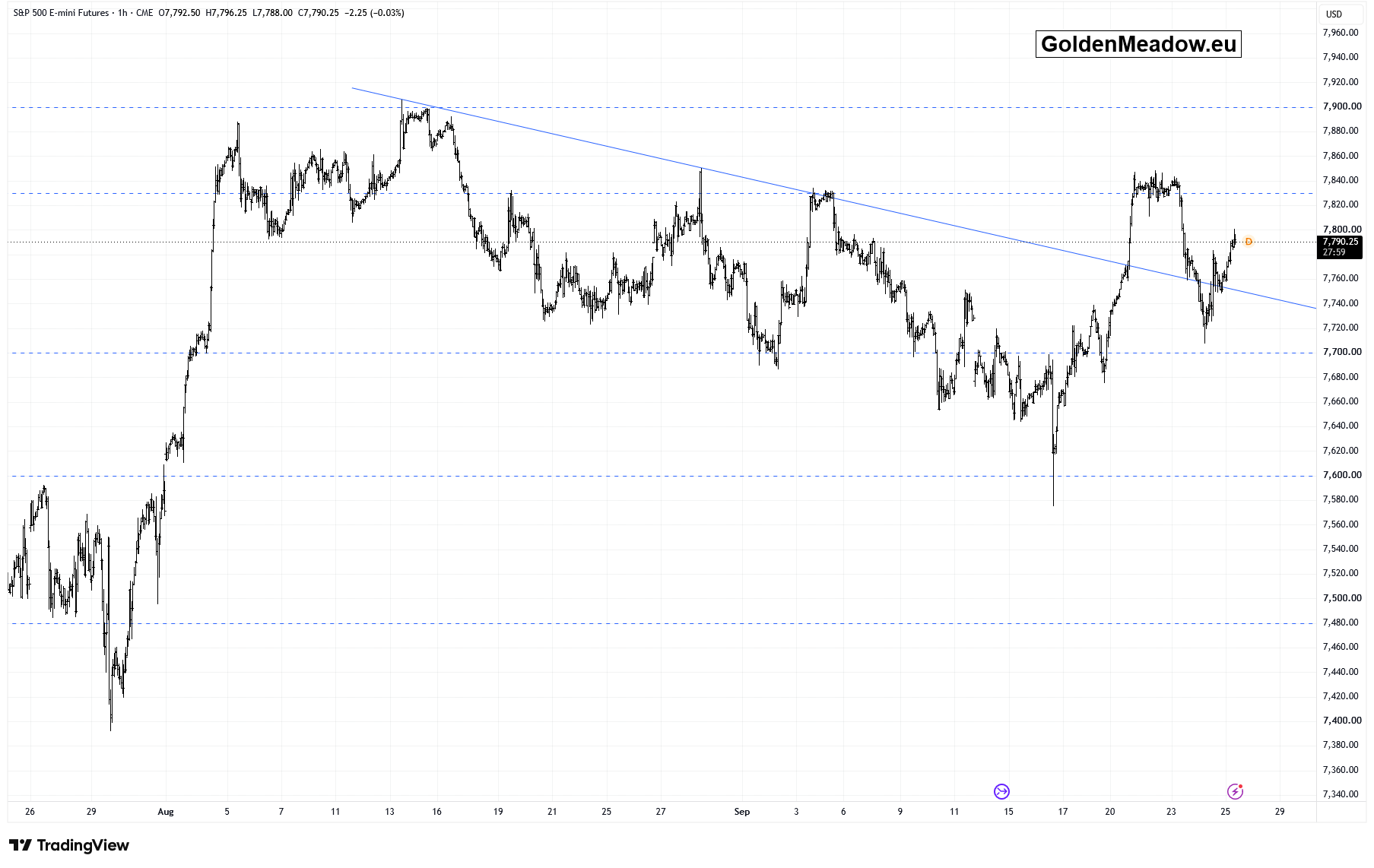
S&P 500 futures contract: Nearing the 7,800 level again

This morning, the S&P 500 futures contract is trading higher, extending its short-term upward move.

Resistance is currently at 7,800-7,820, while support is at 7,760, among other levels.
Chart

Market outlook: Within a two-month-long consolidation range

The S&P 500 index is set to extend yesterday’s rebound. So far, this appears to be a correction of its recent decline. However, the index has managed to stay above several important support levels, including the area around 7,650, where the market closed on Monday.

The ongoing Middle East conflict, elevated oil prices, and rising bond yields remain negative factors for the market.

For now, the market still appears to be undergoing a flat correction of its advances from early August.

Here's what I think is most likely:

  • The S&P 500 index is likely to extend its consolidation as investors digest mixed geopolitical and economic news.
  • My Volatility Breakout System is currently long in the market.

Want free follow-ups to the above article and details not available to 99%+ investors? Sign up to our free newsletter today!

Author

Paul Rejczak

Paul Rejczak

Gold Price Forecast

Paul Rejczak is a stock market strategist who has been known for the quality of his technical and fundamental analysis since the late nineties.


More from Paul Rejczak
Share:

Editor's Picks

AUD/USD defends 0.7000 ahead of RBA on Tuesday

AUD/USD is defending 0.7000 at the start of a new week, trading near its lowest level since August 4 amid a bullish US Dollar. US yields hold near multi-year highs amid inflation risks from higher oil prices and rising bets on an October Fed rate hike. This, along with the US-Iran standoff, continues to underpin the safe-haven buck and weigh on the pair ahead of Tuesday's RBA policy announcements.

USD/JPY climbs back toward 158.00 after BoJ minutes amid firm USD

USD/JPY finds dip-buyers and reverses part of Friday's slide driven by speculation that authorities will step in again to prop up the Japanese Yen. However, the BoJ's dovish Minutes cap the JPY. Meanwhile, the US Dollar regains traction as the US-Iran standoff supports crude oil prices, fueling inflation fears and reaffirming bets for an October Fed rate hike. This further supports the pair, driving it back toward 158.00.

Gold cracks $4,200 for the first time in eight weeks

Gold falls hard at the start of a new week, breaching $4,200 for the first time in eight weeks. Firming October Fed rate-hike bets, along with oil-driven inflation risks, keep US bond yields elevated near multi-year highs, helping the US Dollar regain positive traction amid persistent Iran risks. These factors weigh heavily on the bullion.

Bitcoin takes a breather, Ethereum faces pullback, XRP consolidates 
Bitcoin (BTC), Ethereum (ETH) and Ripple (XRP) take a breather at the start of the week on Monday after their recent gains last week. BTC pulls back, trading below $83,600 while ETH extends its losses, trading below $2,700, and XRP consolidates around $1.500. The price action of these top three cryptocurrencies suggests a mild pullback or consolidation as traders assess their next direction.
After the Trump Xi summit, markets are trading three clocks
The summit delivered time, not a deal. Trade, oil and chips now each run to a date, and the macro backdrop matters more than the pageantry. Markets wanted a deal and got a calendar date instead. Xi Jinping left Washington on Friday after tea at the White House and a tour of the National Archives.
Fed vs BoJ: Both hiked. The market only believes one of them – and the chart shows which

The Fed and the BoJ have just done something remarkably similar. Both central banks raised interest rates by 25 bps last week, both are confronting inflation risks, and both signal that future decisions will depend on incoming economic data.