S&P 500 fights for eighth straight gain on Friday afternoon
- Worries over Saturday's peace talks in Pakistan overshadow tech gains.
- S&P 500 has gained for seven straight days but trades in red heading into close.
- Materials and technology are the only sectors witnessing equity gains on Friday.
- US consumer sentiment contracts in preliminary survey for April.

The S&P 500 is struggling to hold onto what would mark its eighth consecutive day of gains on Friday. The index rose 0.2% by lunchtime, aided by a slightly lower core Consumer Price Index (CPI) reading than expected and expectations of a negotiated settlement between the US and Iran over the coming weekend, only to sink to -0.1% by the late afternoon.
The S&P 500 has risen nearly 8% off its March 30 lows over the past eight sessions, particularly boosted by the initial call for a ceasefire on Tuesday evening. US Vice-President JD Vance is heading to Islamabad, Pakistan, with other US negotiators to secure a peace deal with Iran, while Israel’s continued bombing of Lebanon threatens the talks from getting started.
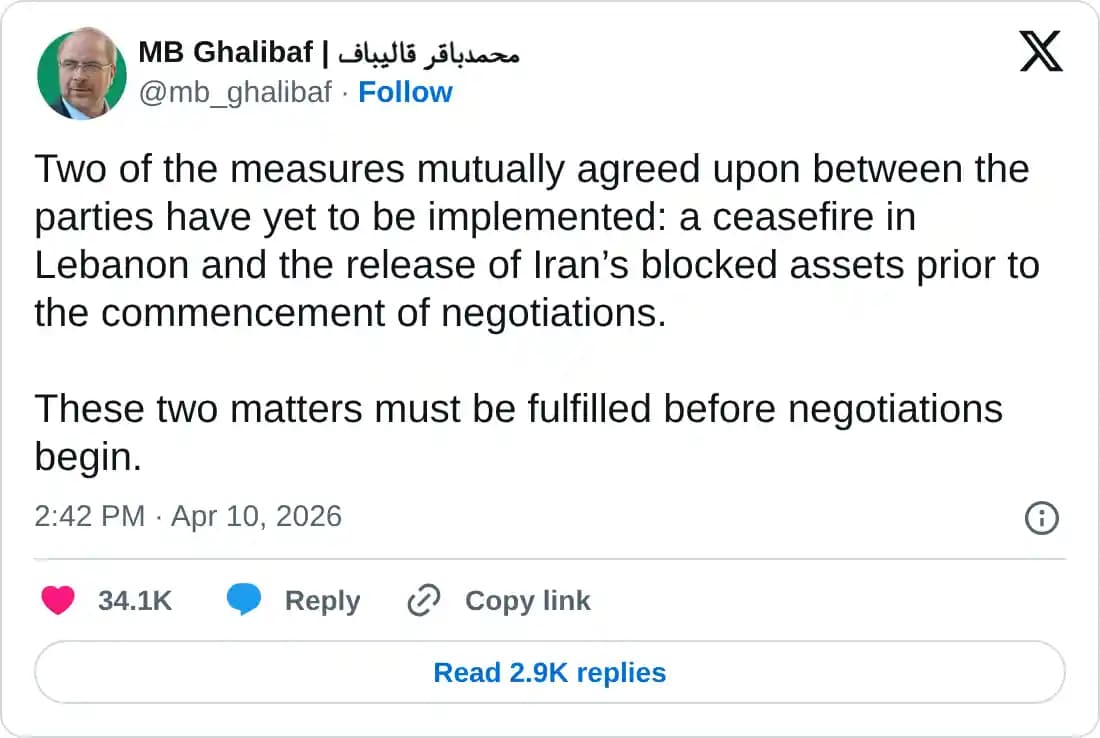
Iran’s Parliament Speaker and primary negotiator, Mohammad Ghalibaf, posted on X two stipulations to begin talks that could become barriers to any talks taking place.
Unconfirmed reports arrived on Friday afternoon that the US had released its hold on $7 billion worth of Iranian funds held in Qatar. This is a good sign that the talks will be held on Saturday, but Israel’s aggressive military operation in Lebanon threatens to derail any deal.
Additionally, Iran is still largely keeping the Strait of Hormuz closed on Friday, arguing that it won't be fully open to tanker traffic until Israel and the US abide by the stipulations in its 10-point plan.
Overall, only the technology and materials sectors showed gains by the afternoon, while energy, financial and healthcare saw widespread selling. The NASDAQ Composite (IXIC) is clinging onto a 0.2% gain, while the Dow Jones Industrial Average (DJIA) has soured by half a percentage point.
Economic data offers dismal outlook
The March CPI report showed a 10.9% jump in energy costs due to the closure of the Strait of Hormuz, but the steady core inflation rate has fueled hopes that the Federal Reserve (Fed) may not need to tighten policy further.
The March CPI rose from 2.4% to 3.3% on an annual basis, but the market welcomed the annualized core CPI only rising by a tenth of a percent to 2.6%.
Still, the Preliminary Michigan Consumer Sentiment Index for April fell from 53.3 to 47.6, demonstrating that US consumers are quite pessimistic when it comes to rising fuel prices.
The Preliminary UoM 1-year Consumer Inflation Expectations for April showed a strong rise from 3.8% to 4.8%, which tells us that consumers might reduce their spending until Oil prices return to pre-war levels.
S&P 500 daily chart analysis
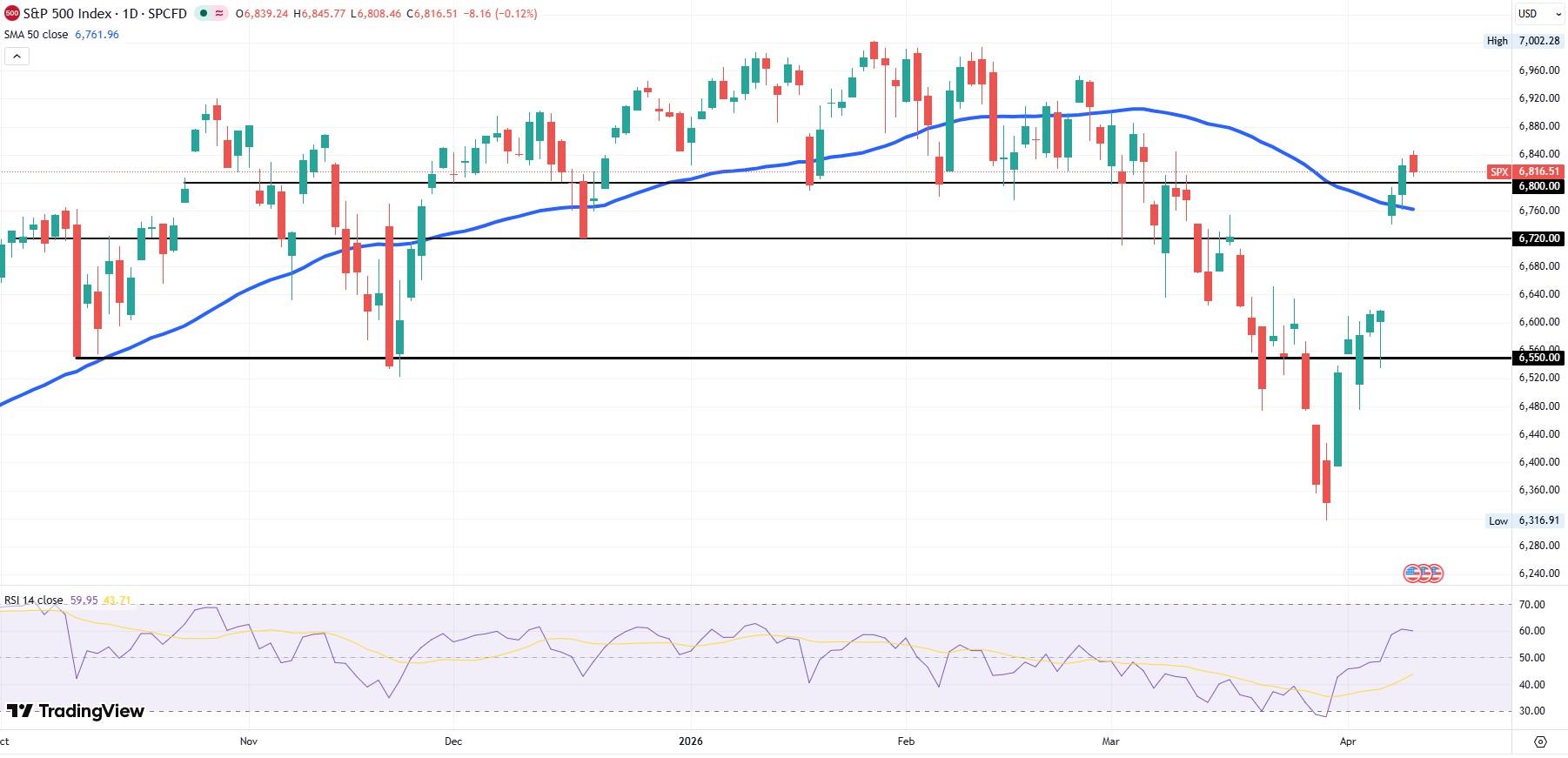
The S&P 500 is witnessing its first pushback after a 500-point gain during the previous seven trading days. The initial ceasefire announcement on Tuesday evening led to a gap up on Wednesday, but Friday's uncertainty over the ceasefire has put pressure on equities.
Bulls have a right to remain positive now that the index is trading above the 6,800 level. That price worked as resistance and support going back to last October, and should become a floor for consolidation if a peace plan is realized in Islamabad this weekend.
The Relative Strength Index (RSI) at 60 tells us that momentum is holding in a positive direction for now. A solid agreement to open the Strait of Hormuz will usher in a wave of buying that could push the index back to all-time highs near 7,000 in short order.
If the talks fail, however, expect a quick move back to 6,720 next week. That was the supportive level during the December 17, 2025, sell-off.
Author

Clay Webster
FXStreet
Clay Webster grew up in the US outside Buffalo, New York and Lancaster, Pennsylvania. He began investing after college following the 2008 financial crisis.