Silver surges past $91 as hot PPI, tariffs stoke inflation fears
- Silver rallies as US PPI tops forecasts, signaling renewed inflation pressures.
- Tariff-driven price gains in services amplify concerns of cost pass-through to consumers.
- Trade uncertainty and stalled US-Iran talks underpin safe-haven demand despite a firm US Dollar.
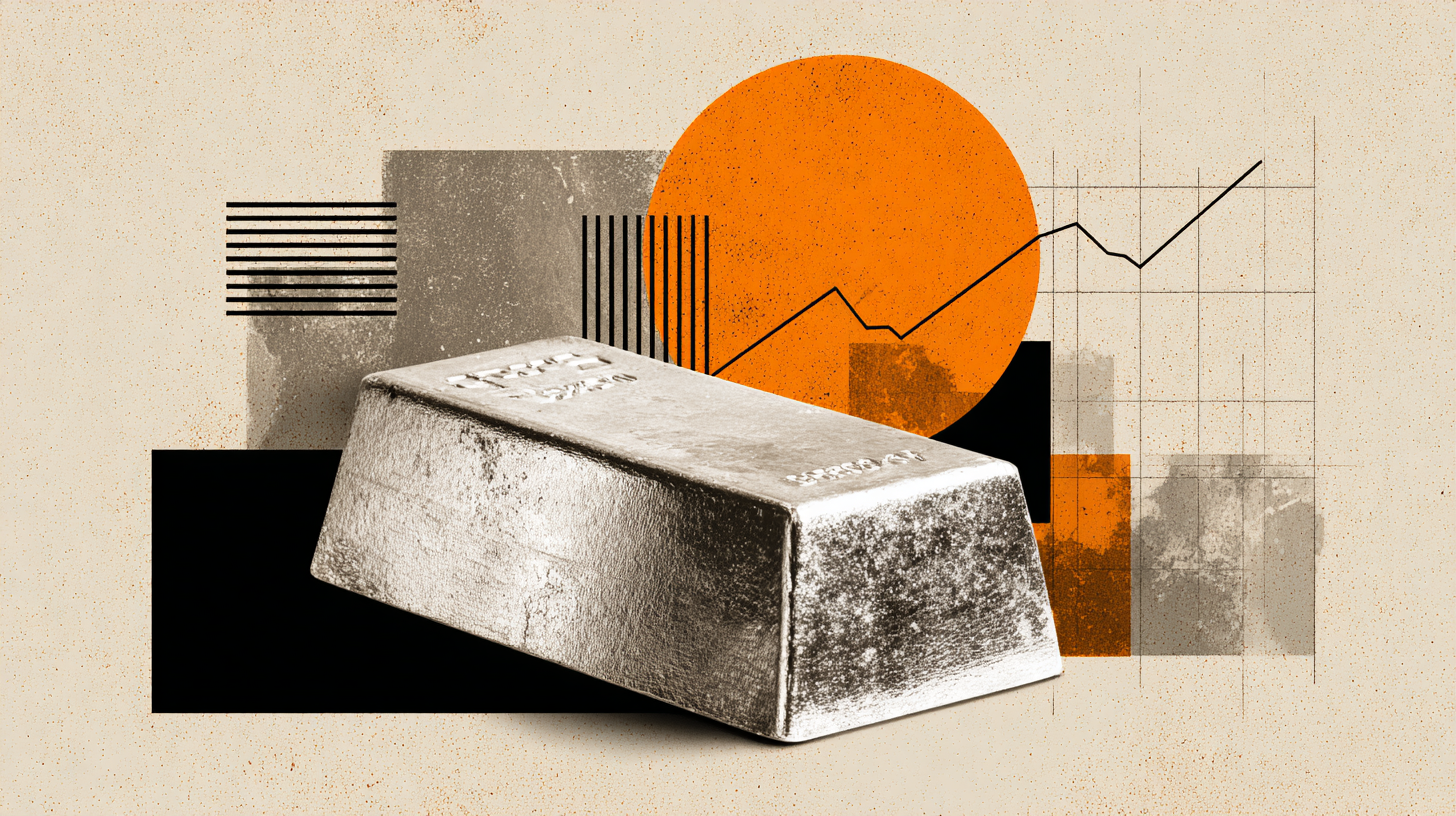
Silver price (XAG/USD) extends its gains for the third consecutive day on Friday after the latest inflation report in the United States prompted investors to seek the safety of the white metal, while the Greenback remained firm. At the time of writing, XAG/USD trades near $91.39, up close to 3%.
XAG/USD jumps as elevated US producer prices, trade tensions revive haven demand
Market mood turned negative as the US Producer Price Index (PPI) in January exceeded estimates driven by import tariffs, signaling that inflation could reaccelerate in the upcoming months.
Headline PPI dipped from 3% to 2.9% YoY but exceeded forecasts of 2.6%. Core PPI, which excludes volatile items and reflects a clear picture of prices, increased by 3.6% YoY, missing estimates and the last month's reading of 3% and 3.3%, respectively.
Tariffs are the main reason for the price jump. Services accounted for a 0.8% increase in PPI, led by trade services up 2.5%. Margins for professional and commercial equipment rose 14.4%, a signal that businesses were passing on tariffs.

Aside from this, uncertainty about tariffs and the lack of progress of nuclear talks between the US and Iran are a tailwind for Silver prices, which are set to finish the month with gains of nearly 10%.
Breaking news emerged that the US authorized the departure of some embassy personnel and families from Israel amid safety risks, as the risks of an attack over the weekend on Iran are rising.
US Trade Representative Jamieson Greer said that the country has begun collecting 10% tariffs since Tuesday, under Section 122. He added that for some countries, duties will rise to15%.
XAG/USD Price Forecast: Technical outlook
In the daily chart, XAG/USD trades at $91.69. The near-term bias is cautiously bullish as price holds well above the rising 50–200-day simple moving average cluster around $84–85, keeping the broader uptrend intact despite recent volatility. Daily RSI around 57 stays above its midline and edges higher, signaling recovering upside momentum after the mid-range consolidation. Multiple upward-sloping support trend lines from the $20s through the $60s reinforce the long-term ascending structure, indicating that pullbacks remain corrective within a dominant bullish phase.
Initial support emerges near the dynamic zone of the longer moving averages around $84–85, with a deeper cushion aligning with prior swing congestion in the low-$80s if sellers extend a correction. A sustained break below this band would expose the next downside area toward the high-$70s, where the broader trend structure would come under pressure. On the topside, immediate resistance is defined by the recent highs just above $96, and a daily close above that barrier would reopen the path toward the psychological $100 handle. A clean break over $100 would confirm trend continuation, leaving scope for a retest and potential extension of the rally within the prevailing bullish channel.
(The technical analysis of this story was written with the help of an AI tool.)
Silver FAQs
Silver is a precious metal highly traded among investors. It has been historically used as a store of value and a medium of exchange. Although less popular than Gold, traders may turn to Silver to diversify their investment portfolio, for its intrinsic value or as a potential hedge during high-inflation periods. Investors can buy physical Silver, in coins or in bars, or trade it through vehicles such as Exchange Traded Funds, which track its price on international markets.
Silver prices can move due to a wide range of factors. Geopolitical instability or fears of a deep recession can make Silver price escalate due to its safe-haven status, although to a lesser extent than Gold's. As a yieldless asset, Silver tends to rise with lower interest rates. Its moves also depend on how the US Dollar (USD) behaves as the asset is priced in dollars (XAG/USD). A strong Dollar tends to keep the price of Silver at bay, whereas a weaker Dollar is likely to propel prices up. Other factors such as investment demand, mining supply – Silver is much more abundant than Gold – and recycling rates can also affect prices.
Silver is widely used in industry, particularly in sectors such as electronics or solar energy, as it has one of the highest electric conductivity of all metals – more than Copper and Gold. A surge in demand can increase prices, while a decline tends to lower them. Dynamics in the US, Chinese and Indian economies can also contribute to price swings: for the US and particularly China, their big industrial sectors use Silver in various processes; in India, consumers’ demand for the precious metal for jewellery also plays a key role in setting prices.
Silver prices tend to follow Gold's moves. When Gold prices rise, Silver typically follows suit, as their status as safe-haven assets is similar. The Gold/Silver ratio, which shows the number of ounces of Silver needed to equal the value of one ounce of Gold, may help to determine the relative valuation between both metals. Some investors may consider a high ratio as an indicator that Silver is undervalued, or Gold is overvalued. On the contrary, a low ratio might suggest that Gold is undervalued relative to Silver.
Author

Christian Borjon Valencia
FXStreet
Markets analyst, news editor, and trading instructor with over 14 years of experience across FX, commodities, US equity indices, and global macro markets.