Silver Price Forecast: XAG/USD falls toward 11-month lows after slipping below $54.00
- Silver may stabilize amid bargain-hunting and declining crude oil prices.
- Security talks between Iran, Saudi Arabia, Pakistan, and Turkey temporarily soften near-term inflation concerns.
- Markets expect a Fed rate pause in October, alongside upcoming decisions from the ECB, BoJ, and BoC.

Silver price (XAG/USD) depreciates after posting minor gains in the previous day, trading around $53.80 per troy ounce during Asian hours on Tuesday. Non-yielding Silver is trading near an 11-month low of $53.01, recorded on Monday, as elevated energy prices keep inflation risks in focus, sustaining expectations for further monetary tightening. However, the downside pressure on the white metal could ease as falling oil prices and bargain-hunting ahead of the Federal Reserve’s (Fed) upcoming policy decision offer some support.
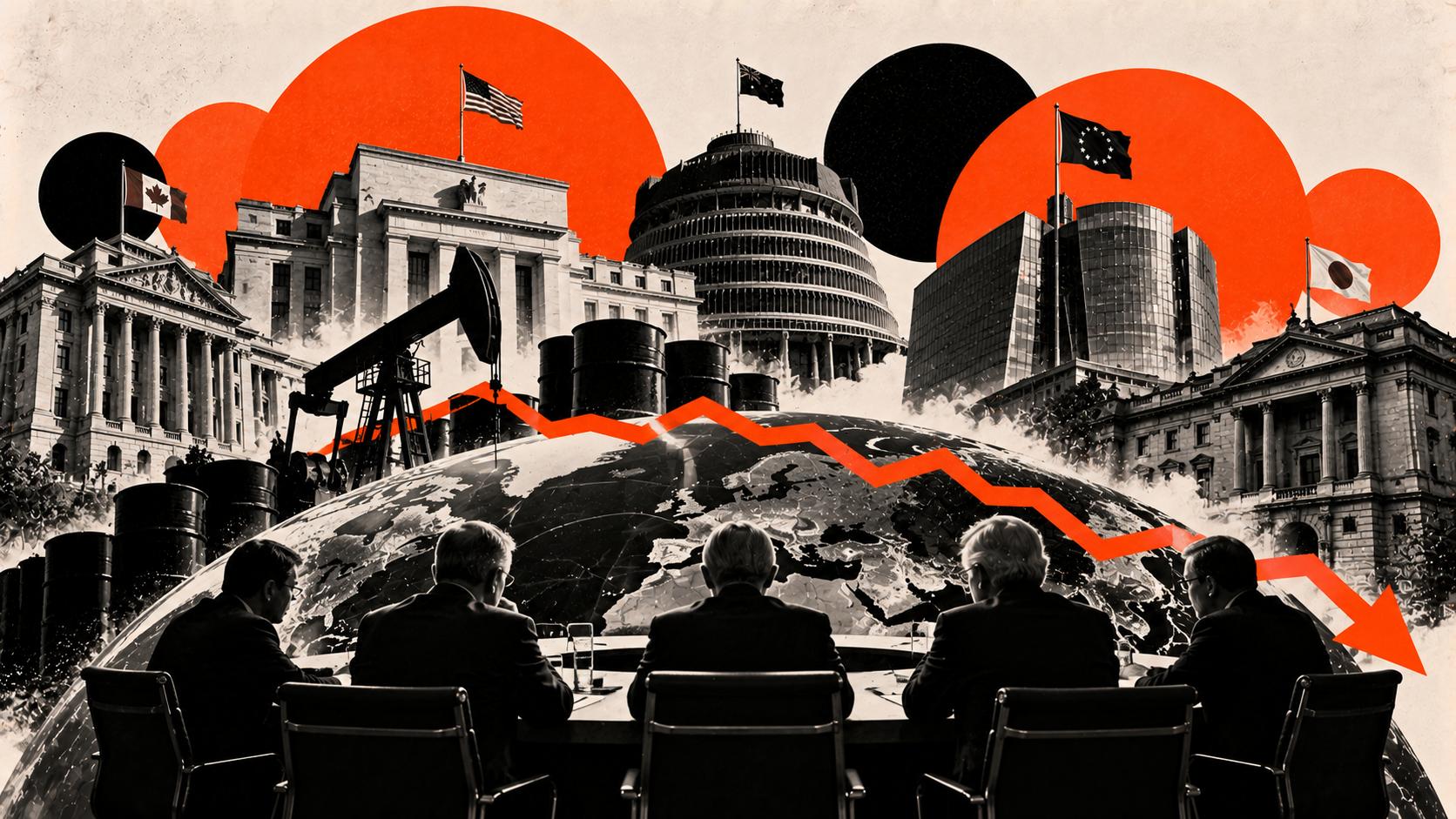
Crude oil prices have declined amid renewed diplomatic efforts to defuse US-Iran tensions, which has helped ease near-term inflation concerns. Following high-level talks in Tehran, Iran, Saudi Arabia, Pakistan, and Turkey agreed on Monday to continue security discussions and enhance regional cooperation, according to Islamic Republic of Iran Broadcasting (IRIB). A joint statement released after the initial meeting between Iran and senior officials representing the Mecca Joint Defence Agreement noted that all four countries agreed to maintain dialogue and consultations focused on regional peace, security, and stability.
In central banking, financial markets anticipate that the Federal Reserve will keep interest rates unchanged at its upcoming October meeting before potentially pursuing another rate hike in December. According to the CME FedWatch Tool, market pricing currently reflects an 89.5% probability of a rate pause in October, alongside an 82.3% chance of a rate increase in December. Meanwhile, the European Central Bank (ECB) and Bank of Japan (BoJ) are also set to leave their key interest rates unchanged, while the Bank of Canada (BoC) is expected to deliver a 25-basis-point rate hike this week.
Technical Analysis: Silver falls to near oversold territory
In the daily chart, XAG/USD trades at $53.80, maintaining a bearish near-term bias as price holds below both the nine- and 50-day Exponential Moving Averages (EMAs). The Moving Average Exponential structure suggests rallies are likely to be capped by these overhead levels, while the 14-day Relative Strength Index (RSI) at 31.06 hovers near oversold territory, hinting that downside momentum is stretched but not yet reversed. The FXS Fed Sentiment Index consolidating around 127.51 reinforces a cautious backdrop for silver amid tight monetary expectations.
On the topside, initial resistance is located at the nine-day EMA at $55.74, with a stronger barrier emerging at the 50-day EMA near $60.74, where a break would be needed to ease the prevailing bearish tone. With no clear technical support levels immediately beneath the current price in this dataset, the metal remains vulnerable to further declines until buyers can reclaim the short-term EMA cluster, which would be the first sign of stabilization on the daily chart.
(The technical analysis of this story was written with the help of an AI tool. Know more.)
Silver FAQs
Silver is a precious metal highly traded among investors. It has been historically used as a store of value and a medium of exchange. Although less popular than Gold, traders may turn to Silver to diversify their investment portfolio, for its intrinsic value or as a potential hedge during high-inflation periods. Investors can buy physical Silver, in coins or in bars, or trade it through vehicles such as Exchange Traded Funds, which track its price on international markets.
Silver prices can move due to a wide range of factors. Geopolitical instability or fears of a deep recession can make Silver price escalate due to its safe-haven status, although to a lesser extent than Gold's. As a yieldless asset, Silver tends to rise with lower interest rates. Its moves also depend on how the US Dollar (USD) behaves as the asset is priced in dollars (XAG/USD). A strong Dollar tends to keep the price of Silver at bay, whereas a weaker Dollar is likely to propel prices up. Other factors such as investment demand, mining supply – Silver is much more abundant than Gold – and recycling rates can also affect prices.
Silver is widely used in industry, particularly in sectors such as electronics or solar energy, as it has one of the highest electric conductivity of all metals – more than Copper and Gold. A surge in demand can increase prices, while a decline tends to lower them. Dynamics in the US, Chinese and Indian economies can also contribute to price swings: for the US and particularly China, their big industrial sectors use Silver in various processes; in India, consumers’ demand for the precious metal for jewellery also plays a key role in setting prices.
Silver prices tend to follow Gold's moves. When Gold prices rise, Silver typically follows suit, as their status as safe-haven assets is similar. The Gold/Silver ratio, which shows the number of ounces of Silver needed to equal the value of one ounce of Gold, may help to determine the relative valuation between both metals. Some investors may consider a high ratio as an indicator that Silver is undervalued, or Gold is overvalued. On the contrary, a low ratio might suggest that Gold is undervalued relative to Silver.
Author

Akhtar Faruqui
FXStreet
Akhtar Faruqui is a Forex Analyst based in New Delhi, India. With a keen eye for market trends and a passion for dissecting complex financial dynamics, he is dedicated to delivering accurate and insightful Forex news and analysis.