Everyone's bracing for a hawkish central bank week. Here's why the surprise could be dovish
Five of the world's major central banks are preparing to announce monetary policy decisions this week, with investors increasingly anticipating higher interest rates as the global energy shock continues to push inflation above target.
The Bank of Canada (BoC), Federal Reserve (Fed), Reserve Bank of New Zealand (RBNZ), European Central Bank (ECB) and Bank of Japan (BoJ) all face growing pressure to prevent elevated Oil prices from turning into persistent inflation.
However, beneath the increasingly hawkish market expectations, two developments suggest that monetary policy could become less restrictive than investors currently anticipate.
Five central banks face the same Oil shock, but different inflation problems
The latest inflation shock originates largely from the disruption to global energy supplies caused by the conflict in the Middle East, particularly restrictions on shipments through the Strait of Hormuz. Higher Oil prices have pushed headline inflation higher across major economies, reviving concerns about a prolonged period of restrictive monetary policy.
In the Eurozone, annual inflation as measured by the Harmonised Index of Consumer Prices (HICP) reached 3.8% YoY in September, with energy contributing approximately 1.71 percentage points, or 45% of the overall increase. However, core inflation remained considerably lower at 2.5%. Canada presents an even sharper contrast. Consumer Price Index (CPI) headline inflation reached 3.1% in September, while inflation excluding gasoline stood at 2.2%. The BoC's preferred underlying inflation measures, CPI-trim and CPI-median, remained below 2%.
The United States (US) presents a more complicated picture. Headline inflation accelerated to 3.7% in September, while the Fed's preferred core Personal Consumption Expenditures (PCE) inflation measure stood at 3% in August, suggesting that underlying price pressures extend beyond energy.
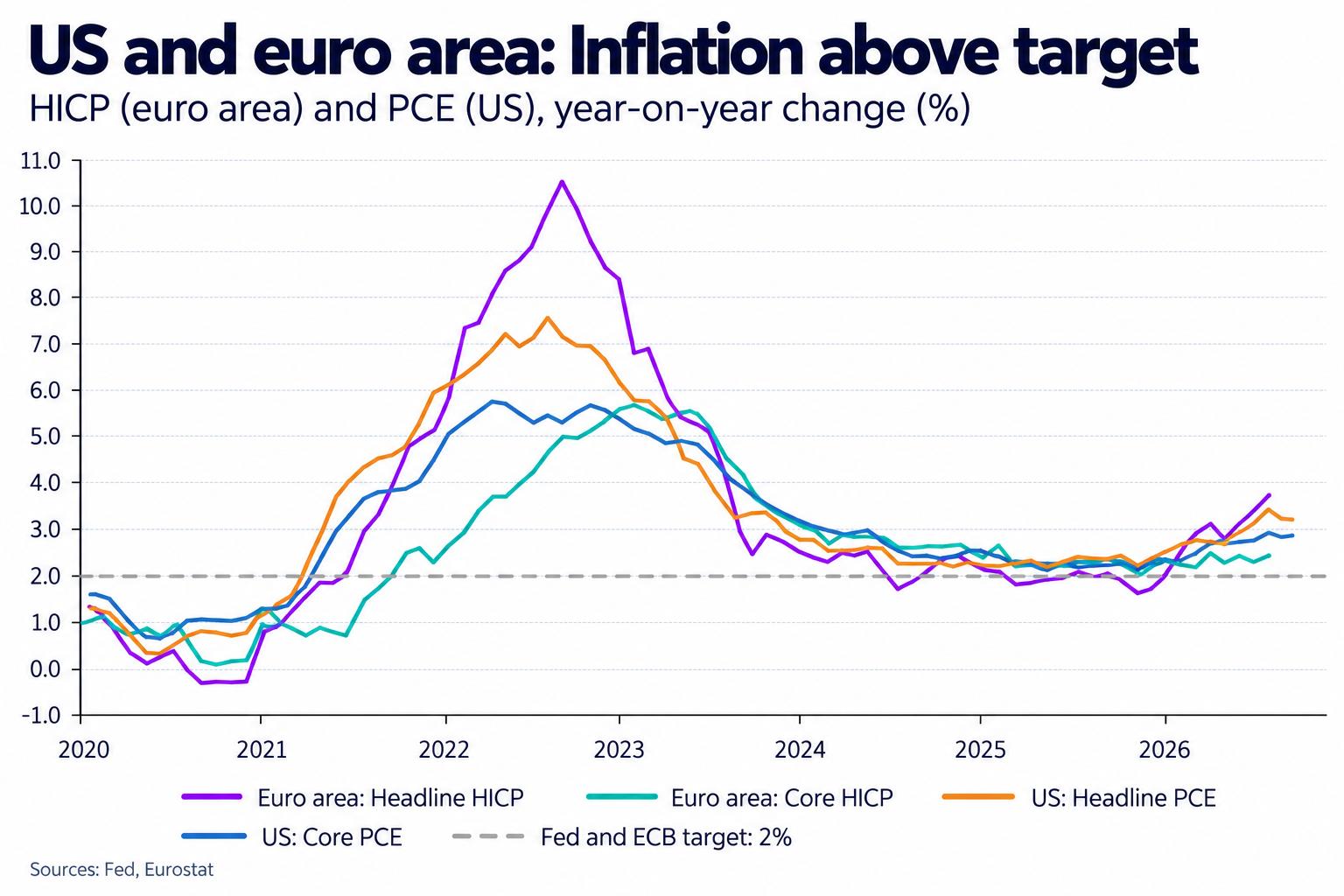
These differences matter because higher interest rates cannot directly resolve an energy supply disruption. Monetary policy operates primarily by reducing demand, making borrowing more expensive and slowing economic activity. The danger is that central banks could weaken economic growth unnecessarily if they respond too aggressively to inflation that eventually subsides as energy markets stabilize.
GAM Investments Chief Multi-Asset Investment Strategist Julian Howard warned about the risks of using interest rates to combat an energy supply shock: "The kind of interest rates that are needed to actually stop people filling up their car, to stop people flying, would be seriously high, very, very high — and recession-inducing," he said at CNBC.
Why the absence of second-round effects could change the 2027 outlook
Central banks are particularly concerned about second-round inflation effects, which occur when higher energy costs feed into persistent wage increases and broader price adjustments across the economy. However, evidence of these effects remains limited in several major economies.
In the Eurozone, wage growth has not yet shown a significant response to the latest energy shock, while longer-term inflation expectations remain relatively close to the ECB's 2% target. Morgan Stanley highlighted this distinction in their assessment of the ECB's upcoming decision, according to Dow Jones Newswires: "So far, there is no evidence of significant indirect or even second-round effects from the second energy shock on inflation. The recent increase of long-term yields provides some degree of additional tightening."
Rabobank reaches a similar conclusion, arguing that the ECB has little reason to accelerate its tightening cycle: "There is no compelling reason to accelerate the pace of hikes. There is no evidence yet that inflation is becoming more broad-based and entrenched, although some policymakers will argue that the ECB cannot wait for clear evidence of second-round effects, because they would have to intervene more strongly after these dynamics start."
This distinction becomes particularly important when considering the outlook for 2027. According to the US Energy Information Administration's (EIA) October projections, Brent Crude Oil prices could decline from approximately $105 per barrel in the fourth quarter to around $74 by the end of 2027.
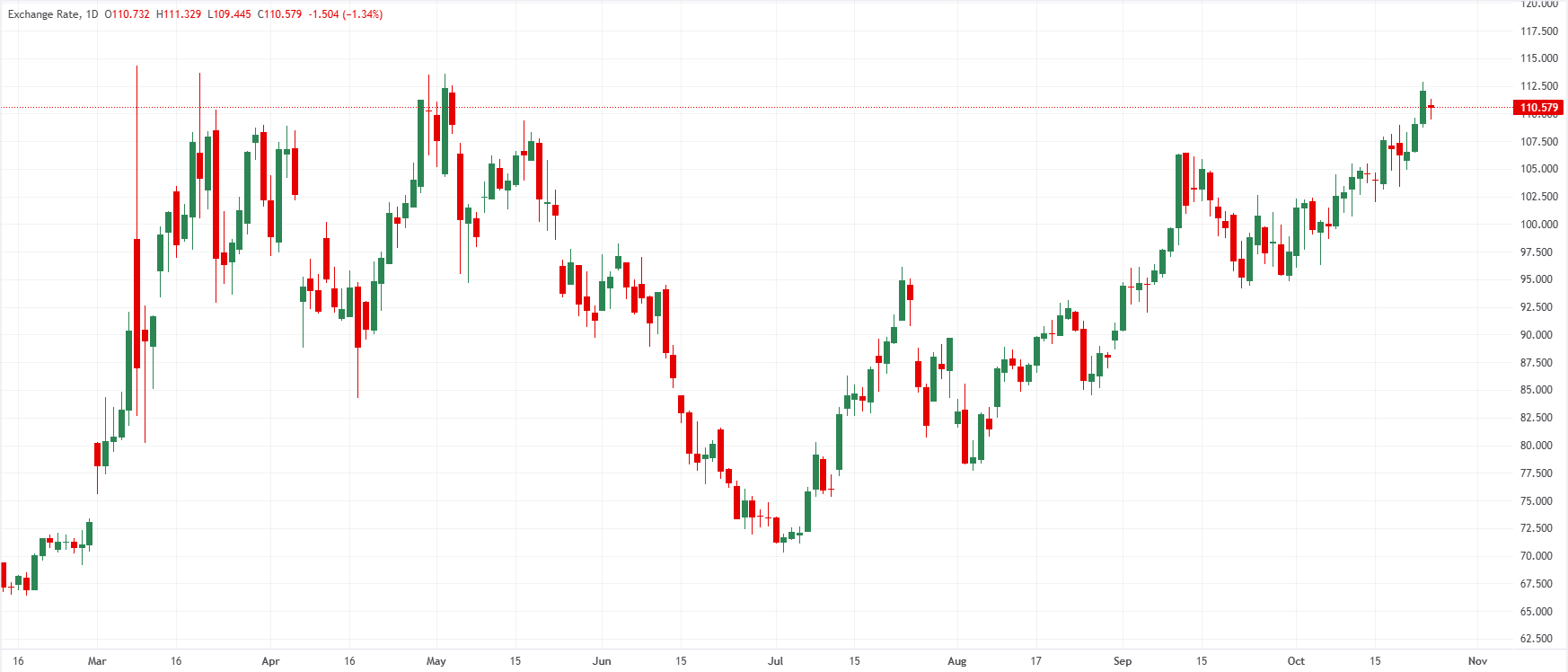
If this scenario materializes, energy could shift from being a major contributor to inflation this year to exerting downward pressure on annual inflation in 2027. This does not mean consumer prices would return to previous levels. Instead, the annual rate of increase could slow significantly as the initial energy shock fades.
Since monetary policy affects economic activity and inflation with a delay, aggressive interest rate increases now could hit hardest when energy inflation is already moderating. That possibility strengthens the case for central banks to remain cautious about committing to extended tightening cycles.
Bond markets may have already done part of the central banks' work
The second argument for a potentially dovish surprise comes from government bond markets. Global bond yields have risen substantially in recent months as investors reassess inflation risks, government borrowing requirements and the likelihood of further interest rate increases.
According to the Royal Bank of Canada (RBC), French 10-year government bond yields have surged nearly 120 basis points over three months, while US Treasury yields have increased by approximately 70 basis points. Canadian yields have risen by less than 50 basis points over the same period.
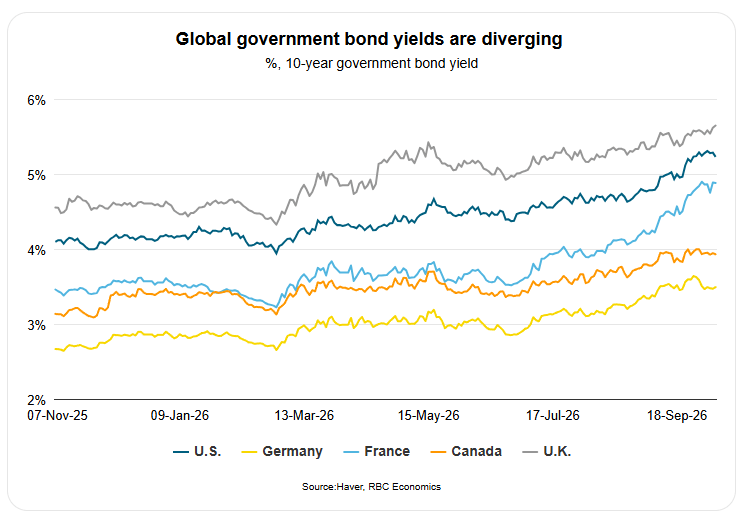
These movements matter because borrowing costs for households and businesses depend not only on central bank policy rates but also on market interest rates. Higher sovereign yields can translate into more expensive mortgages, corporate loans and investment financing, reducing economic activity even without additional monetary policy tightening.
In Europe, ING estimates that the increase in German bond yields since September has already produced an economic effect comparable to an additional 25-basis-point ECB rate hike. In France, the estimated effect is closer to 50 basis points.
T. Rowe Price Head of International Fixed Income Ken Orchard emphasizes the implications for future monetary policy: "Rising bond yields do not necessarily mean central banks will deliver the rate hikes markets currently expect. If yields rise far enough to constrain economic activity, they could reduce the need for further policy tightening."
What to expect from this week's five central bank meetings
Immediate decisions may still appear relatively hawkish, even if the longer-term outlook becomes more balanced. The RBNZ is among the most likely to raise interest rates this week. Westpac expects a 25-basis-point increase to 3.00% on Wednesday, citing elevated near-term inflation. However, the bank also warns against an excessively aggressive tightening cycle.
The BoC faces growing pressure to raise interest rates to 2.50% after the latest Canadian inflation figures prompted a sharp increase in market expectations for an October rate hike. The stronger-than-expected inflation data have reinforced concerns that price pressures could prove more persistent, although signs of weakness in the labour market and rising bond yields may still encourage policymakers to proceed cautiously.
The Fed is widely expected to hold its benchmark rate at 3.75%-4.00% on Wednesday, following September's increase. However, expectations of another hike in December remain elevated. The ECB is also expected to keep its deposit rate unchanged at 2.50% on Thursday, with December emerging as the more likely opportunity for another increase. Meanwhile, the BoJ is expected to hold its policy rate at 1.25% on Friday, although investors anticipate further normalization as domestic wage and inflation pressures strengthen.
Japan represents an important exception to the broader energy-driven inflation narrative, as its monetary tightening also reflects structural changes in domestic inflation and wage dynamics.
The real surprise may come from what central banks say about 2027
The biggest surprise this week may not come from the interest rate decisions themselves, but from how central banks describe the path ahead. Markets have already adjusted to the possibility of additional tightening. Consequently, a rate hike or a decision to hold rates while maintaining a hawkish bias may not be sufficient to push interest rate expectations significantly higher.
Instead, investors will look for signs that policymakers are becoming more concerned about the cumulative impact of elevated energy prices, rising bond yields and slowing economic activity.
The risk to this more dovish scenario remains substantial. Persistent Oil supply disruptions, accelerating services inflation or rising wage demands could force central banks to tighten more aggressively.
The Fed, in particular, has less room to disregard inflation, as underlying price pressures remain elevated even after excluding energy. Nevertheless, if inflation remains concentrated in energy and financial conditions continue to tighten independently, central banks could increasingly question the need for the full series of interest rate increases markets currently anticipate.
This creates the possibility of a hawkish week in terms of immediate policy decisions, but a considerably less hawkish outlook for 2027. For investors, the key distinction is between how high interest rates rise in the coming months and how long central banks believe they need to remain restrictive. The first may still point toward additional hikes. The second could deliver the week's biggest dovish surprise.
Author

Ghiles Guezout
FXStreet
Ghiles Guezout is a Market Analyst with a strong background in stock market investments, trading, and cryptocurrencies. He combines fundamental and technical analysis skills to identify market opportunities.