Record: 45% of central banks expect to buy more Gold in the short term
- Almost half of the world’s central banks expect to increase their Gold holdings over the next twelve months.
- Central bankers increasingly see Gold as a strategic asset, contributing to the sustained demand for the precious metal.
- The major factor that reinforces Gold’s appeal to central banks as a strategic reserve asset has been geopolitical uncertainty.
Demand for Gold by global central banks is anticipated to remain strong this year despite bullion prices rising over 120% in the last two years, data from the World Gold Council (WGC) published on Tuesday shows.
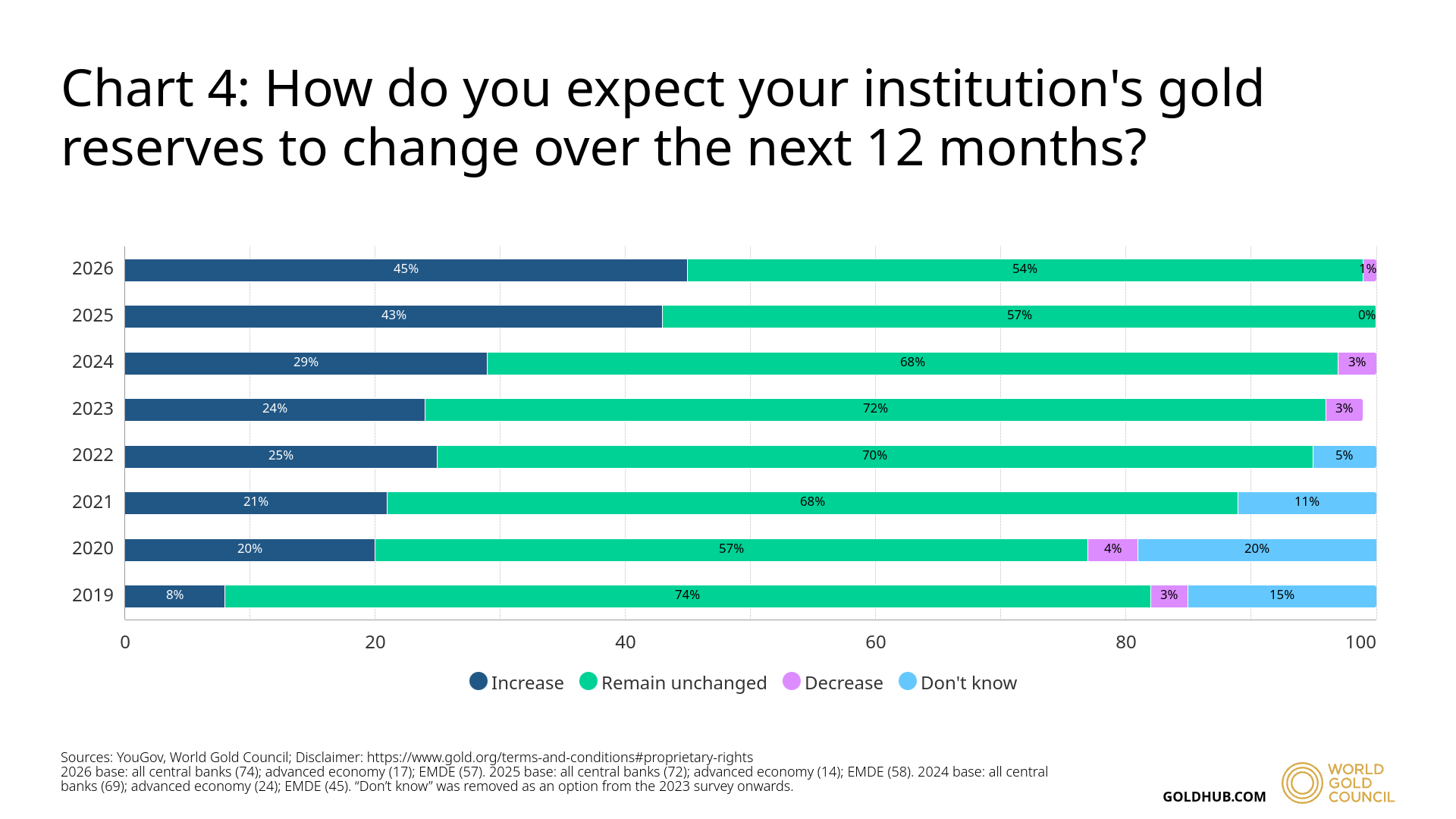
The 2026 Central Bank Gold Reserves (CBGR) survey, conducted between February 5 and May 1, shows that 45% of respondents (reserves managers at central banks) expect their own Gold reserves to increase over the next 12 months, the highest share ever. The majority of the respondents (54%) see no change in current reserves, while only 1% forecast a reduction in bullion holdings.
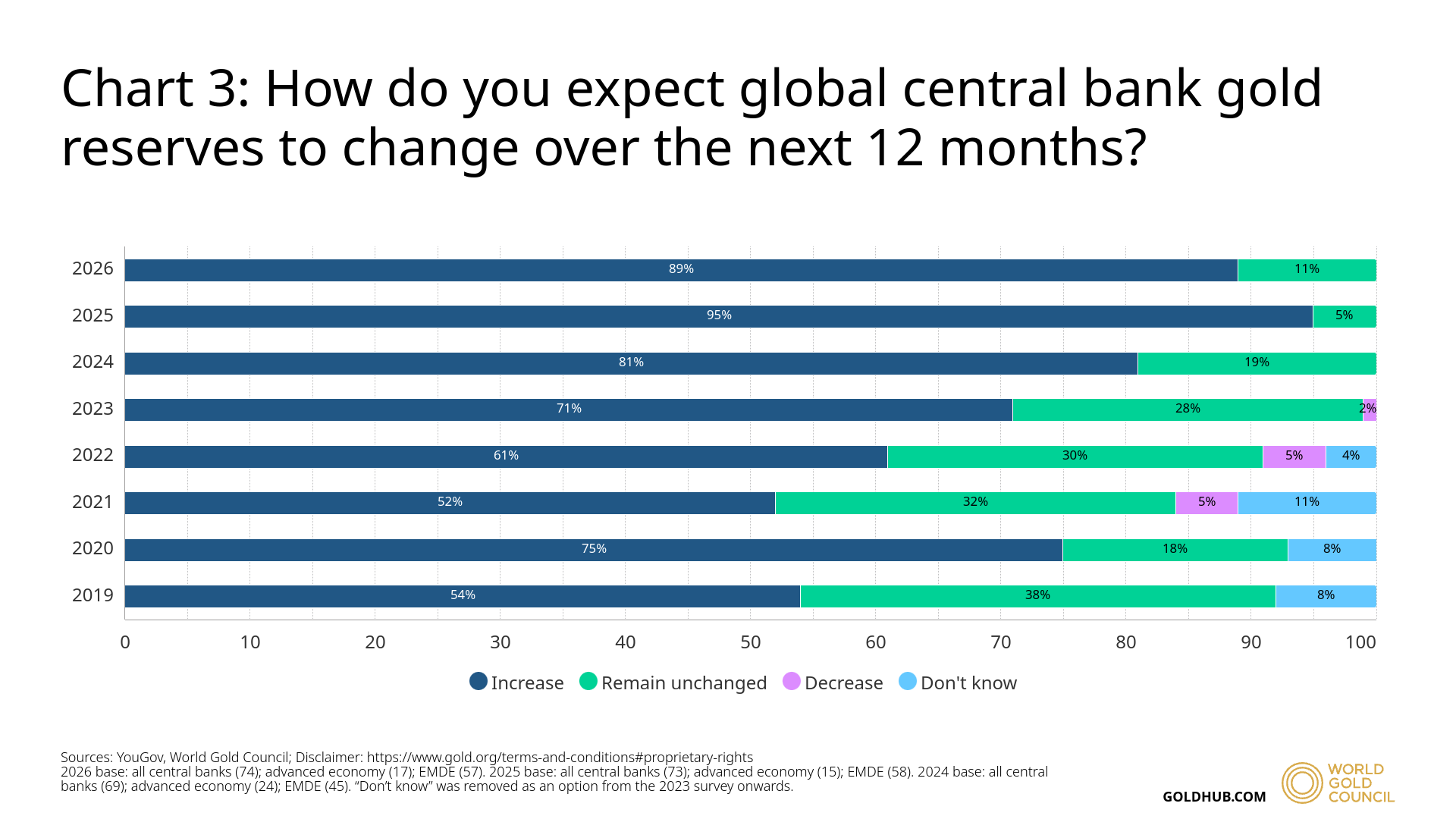
The survey also showed that 89% of respondents expect global central banks' total Gold reserves to increase over the next 12 months.
The demand for Gold by global central banks has remained robust in the last few years, becoming one of the main factors supporting the price rally seen in 2025. Central banks remained gung-ho for buying bullion as a hedge against geopolitical tensions and high inflation.
The data from the World Gold Council (WGC) shows that central banks have accumulated an average of 1,000 tonnes of Gold over the past four years, up significantly from the 500 tonnes average over the preceding decade.
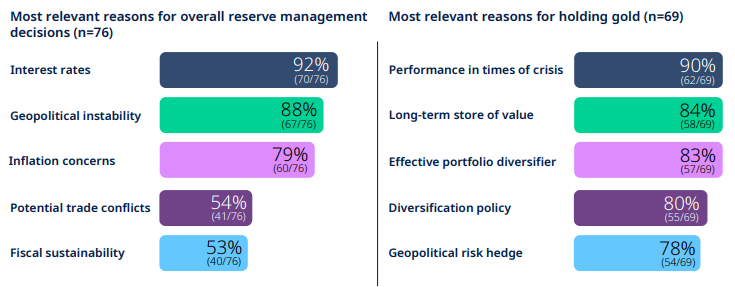
The CBGR survey mentions interest rate decisions highly responsible for decisions regarding the management of Gold reserves, followed by geopolitical instability and inflation concerns.
The major factor that reinforces Gold’s appeal to central banks as a strategic reserve asset has been geopolitical uncertainty. 90% of respondents indicated that Gold’s performance during times of crisis is highly relevant to their organisation. 84% of respondents indicated that Gold’s role as a store of value was a relevant factor while 83% pointed to gold’s attribute as a portfolio diversifier.
On US Dollar (USD) holdings, the survey showed that 74% of respondents expect moderate or significantly lower US Dollar holdings within global reserves over the next five years. Meanwhile, the share of holdings of other currencies, such as Euro (EUR) and the Chinese Renminbi (RMB), is expected to remain steady.
Author

Sagar Dua
FXStreet
Sagar Dua is associated with the financial markets from his college days. Along with pursuing post-graduation in Commerce in 2014, he started his markets training with chart analysis.