|

Pound Sterling Price News and Forecast: GBP/USD surges against US Dollar ahead of US Trump-Harris battle

Pound Sterling surges against US Dollar ahead of US Trump-Harris battle

The Pound Sterling (GBP) performs strongly against its major peers at the start of the week, with investors also focusing on the Bank of England’s (BoE) monetary policy decision, which will be announced on Thursday.

The BoE is expected to cut interest rates by 25 basis points (bps) to 4.75%. Out of the nine-member led Monetary Policy Committee (MPC), seven members are expected to vote in favor of a rate reduction, while two are expected to support leaving interest rates unchanged at 5%. BoE external MPC member Catherine Mann is likely to be one of those who would support keeping rates stable. Read more...
Chart

GBP/USD Forecast: Pound Sterling struggles to hold above key technical level

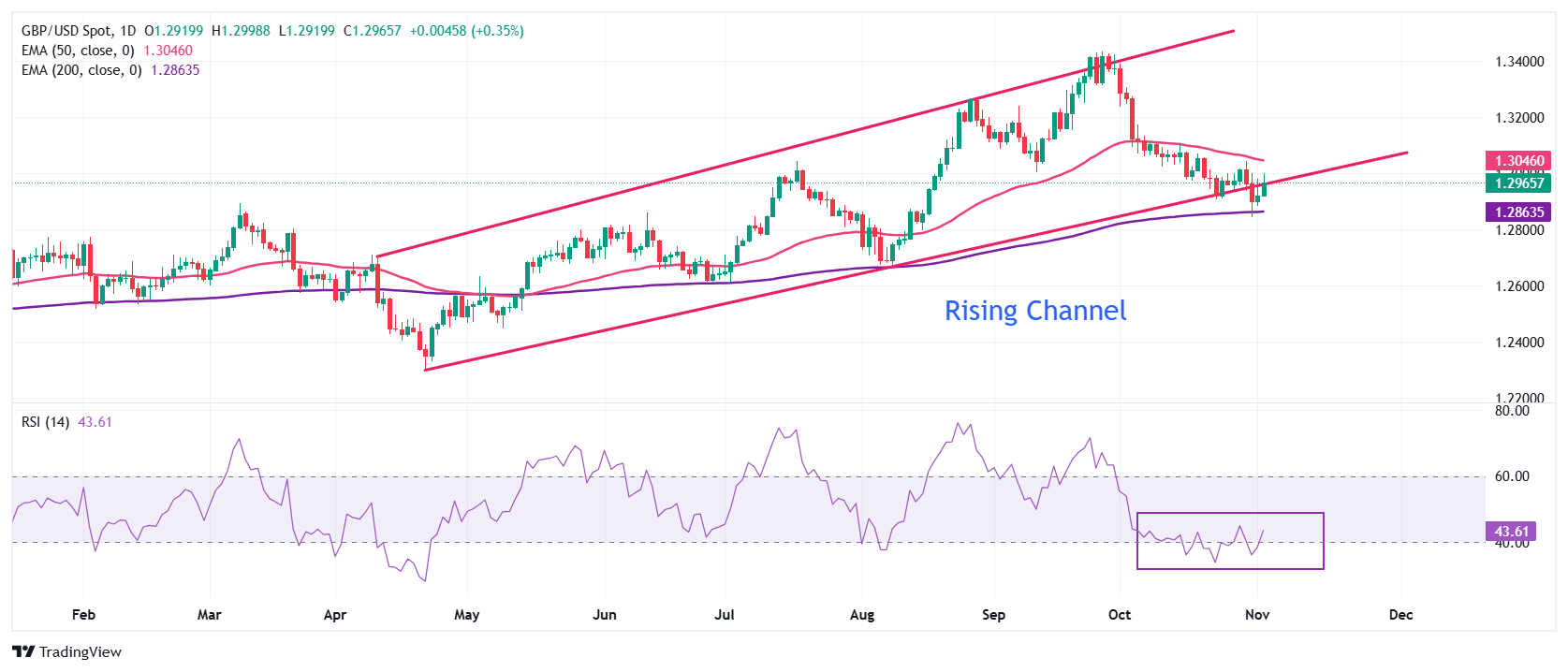
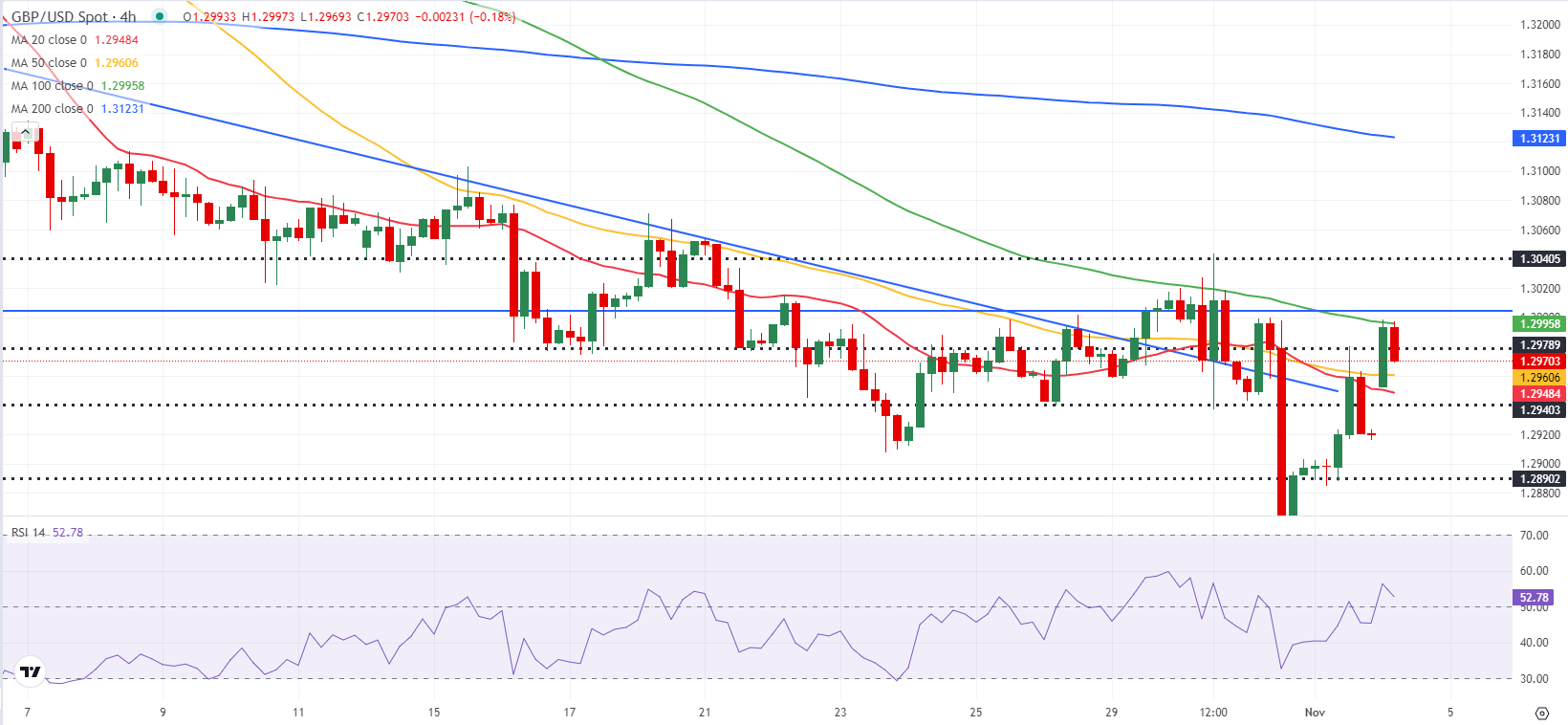
After closing the fifth consecutive week in negative territory, GBP/USD opened with a bullish gap and rose toward 1.3000 early Monday. 

The broad-based selling pressure surrounding the US Dollar (USD) fuelled GBP/USD's rally at the beginning of the week. The uncertainty surrounding the outcome of the US presidential election seems to be weighing on the USD, especially after betting site PredictIt has placed a 51% odd of a Kamala Harris win on Tuesday, marking the vice president's first lead over Donald Trump since October 9. Read more...
GBPUSD

Author

FXStreet Team

Composed of a group of economic journalists and FX experts, the FXStreet content team produces and oversees all content published on FXStreet. It provides a purely journalistic approach to the Forex market.


More from FXStreet Team
Share:

Editor's Picks

AUD/USD flirts with 0.7000, lowest since early August amid bullish USD

AUD/USD hits a fresh low since early August during the Asian session on Friday and looks vulnerable near 0.7000 after breaking below the 200-day SMA overnight. Against the backdrop of the hawkish Fed, a two-day rally in oil prices revives inflation fears and continues to push US bond yields to multi-year highs. Adding to this, geopolitical risks lift the US Dollar to a two-month high, overshadowing RBA rate hike bets and weighing on the pair.

USD/JPY pulls back from three-week high after failing near 159.00

USD/JPY edges lower during the Asian session on Friday, stalling its recent strong move to a three-week high of 159.00 as Japanese Yen bears turn cautious amid intervention fears. Meanwhile, the US Dollar retains a strong bullish undertone as the Fed's hawkish outlook and oil-driven inflation fears continue to push US bond yields to multi-year peaks. Furthermore, the BoJ's dovish rate hike last week might cap JPY and support spot prices.

Gold treads water below $4,300

Gold grabs some buying attention and advances marginally at the end of the week, partially retracing the weekly decline, although it is still navigating below the key $4,300 mark per troy ounce. The fresh selling bias on the Greenback and the modest decline in US Treasury yields appear to support the humble advance in the precious metal.

Crypto Today: Bitcoin and Ethereum edge lower, XRP extends recovery as macro headwinds weigh

The broader cryptocurrency market is consolidating on Friday, with Bitcoin paring losses slightly above $84,000. Ethereum declines in tandem with BTC. Ripple (XRP), meanwhile, paints a different picture.


Fed vs BoJ: Both hiked. The market only believes one of them – and the chart shows which
The Federal Reserve (Fed) and the Bank of Japan (BoJ) have just done something remarkably similar. Both central banks raised interest rates by 25 basis points (bps) last week, both are confronting inflation risks, and both signal that future decisions will depend on incoming economic data.
Fed vs BoJ: Both hiked. The market only believes one of them – and the chart shows which

The Fed and the BoJ have just done something remarkably similar. Both central banks raised interest rates by 25 bps last week, both are confronting inflation risks, and both signal that future decisions will depend on incoming economic data.













