|

Pound Sterling Price News and Forecast: GBP/USD gains ground to around 1.3395

British Pound strengthens to near 1.3400 as UK political risk fades

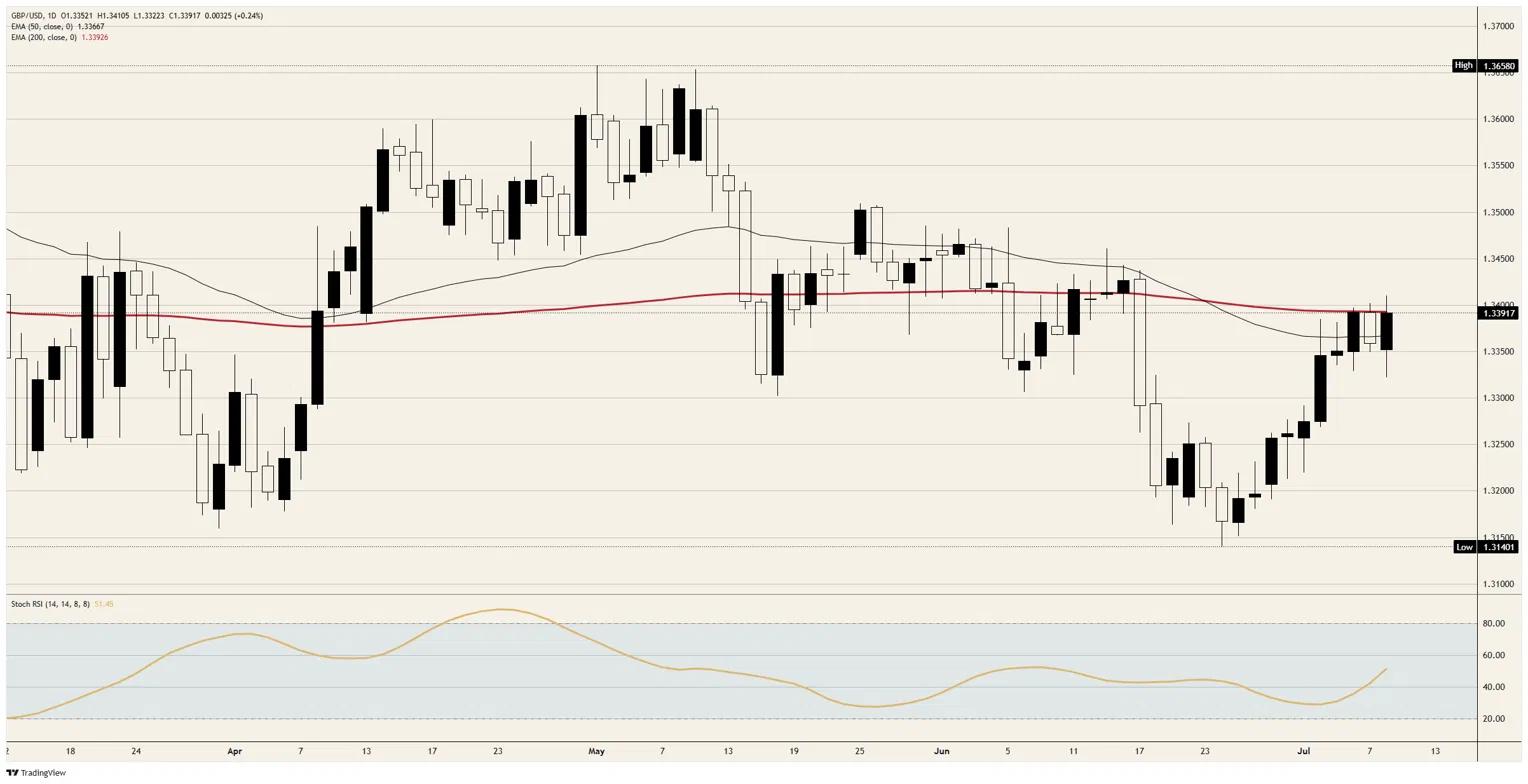
The GBP/USD pair gathers strength near 1.3395 during the Asian trading hours on Thursday, bolstered by fading domestic political uncertainty. However, hawkish minutes from the Federal Reserve (Fed) and renewed tensions between the US and Iran might support the US Dollar (USD) and cap the upside for the major pair.

Following the resignation of Keir Starmer in late June, UK political risk has eased significantly, lifting the Cable. The formal race to replace outgoing Prime Minister Keir Starmer begins on July 9. Frontrunner Andy Burnham is widely expected to become Prime Minister by July 20. Read more...

British Pound Sterling wins the day and stays stuck in the same trap

GBP/USD trades just below 1.3400 on Wednesday, up around a quarter of a percent and once again leaning on the 200-day Exponential Moving Average (EMA) that has repelled every advance since the pair clawed back from its mid-June washout. Cable has recovered roughly two big figures from the 1.3150 area in under two weeks, and the reward for the effort is a ceiling it cannot break and a floor it refuses to leave.

The Pound's bid is not homegrown: Fresh US strikes on Iran sent Crude Oil surging more than 6% and dragged Bank of England (BoE) tightening expectations up with it. Markets now fully price a 25-basis-point hike by year-end, up from roughly three-quarters odds before President Trump declared the Versailles ceasefire over, and a November move trades better than even. The June hold at 3.75% already carried two dissenters voting for 4.00%, so the hawkish bloc only needs the energy shock to persist, and the Strait of Hormuz is supplying persistence daily. Read more...
Author

FXStreet Team

Composed of a group of economic journalists and FX experts, the FXStreet content team produces and oversees all content published on FXStreet. It provides a purely journalistic approach to the Forex market.


More from FXStreet Team
Share:

Editor's Picks

GBP/USD holds a constructive bullish tone above 1.3400 as UK political risk eases

The GBP/USD pair trades in positive territory around 1.3405 during the early European trading hours on Thursday. Fading political uncertainty in the United Kingdom provides some support to the British Pound against the US Dollar. Following the resignation of Keir Starmer in late June, UK political risk has eased significantly.

EUR/USD sticks to positive bias above 1.1400; Mideast tensions cap gains

The EUR/USD pair attracts some buyers for the second straight day, though it lacks follow-through and remains confined within the previous day's range during the Asian session on Thursday. Spot prices currently trade around the 1.1420 area, up less than 0.10% for the day, and remain at the mercy of the US Dollar price dynamics.

Gold sees more pain as Iran tensions revive inflation fears

Gold price reflects signs of softness on Thursday, trading 0.5% lower at around $4,056 during the Asian trading session. The precious metal is under pressure as Middle East hostilities have revived fears of high global inflation, a scenario that discourages major central banks from easing monetary conditions. This framework bodes well for interest-bearing assets, but diminishes the appeal of non-yielding assets, such as Gold.


Ripple and Stellar extend downside as weakening technicals

Ripple and Stellar extend losses on Thursday, correcting over 6% and 10%, respectively, so far this week. XRP falls below $1.090, while XLM posts a fifth consecutive day of correction and closes below key support levels.

2.50%: Why the Kiwi's first hike in three years is a wager on a number nobody can see
The Reserve Bank of New Zealand (RBNZ) raised the Official Cash Rate (OCR) by 25 basis points to 2.50% at 02:00 GMT on Wednesday, its first hike in three years and the moment the bank that cut deeper than any G10 peer last cycle turned to face the other way.
Bye, forward guidance: How to trade when central banks choose silence

Central banks have spent years telling markets what might come next. Now, traders face the possibility that they say a lot less. From the Federal Reserve to the European Central Bank and the Bank of England, policymakers are pushing back against forward guidance.















