|

Pound Sterling picks up following a post-NFP slump, returns above 1.2600

GBP/USD picks up following a post-NFP slump, returns above 1.2600

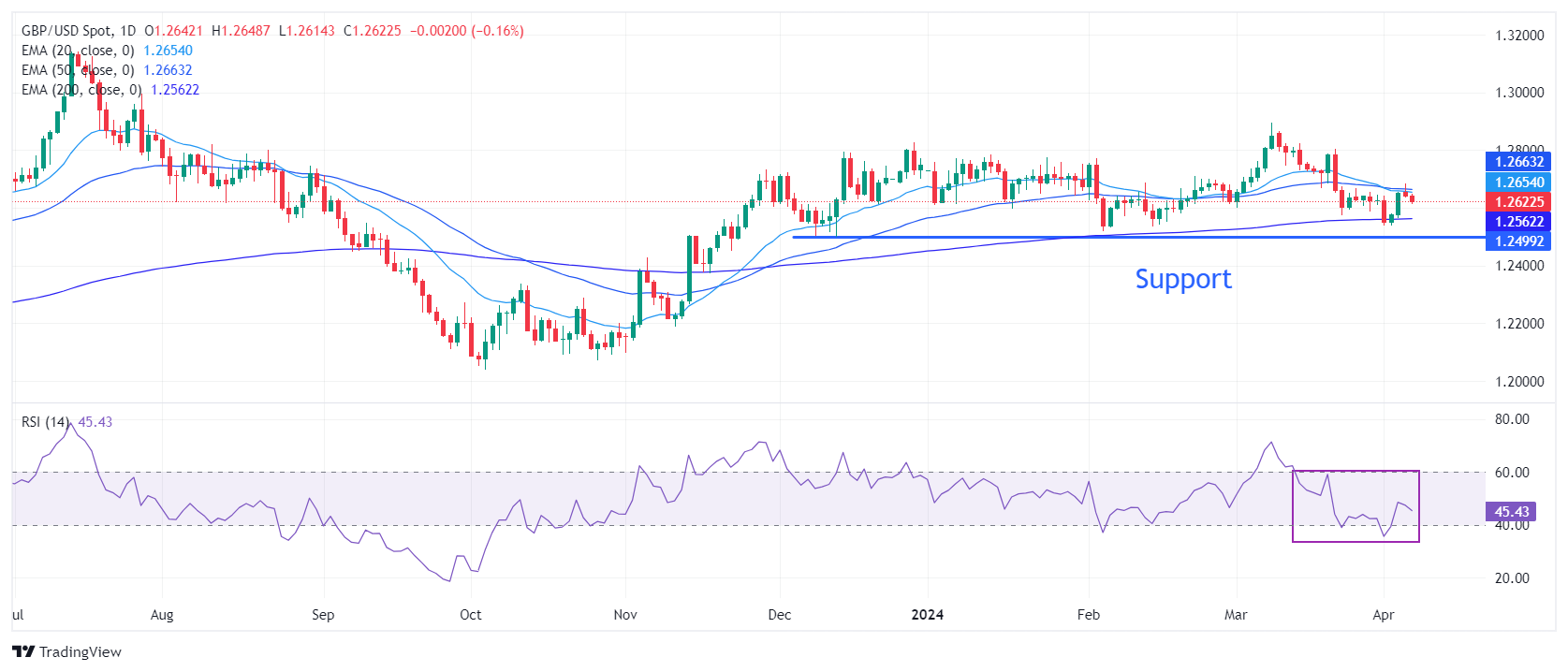
The Sterling is regaining lost ground on Friday’s US session following a significant reversal, with a strong US employment report sending the Dollar soaring. The pair, however, remains practically flat in the weekly chat after having whipsawed over the last few days. Read More...

GBP/USD

Overview
Today last price1.2635
Today Daily Change-0.0008
Today Daily Change %-0.06
Today daily open1.2643
 
Trends
Daily SMA201.2691
Daily SMA501.2668
Daily SMA1001.2665
Daily SMA2001.2588
 
Levels
Previous Daily High1.2684
Previous Daily Low1.2635
Previous Weekly High1.2668
Previous Weekly Low1.2586
Previous Monthly High1.2894
Previous Monthly Low1.2575
Daily Fibonacci 38.2%1.2654
Daily Fibonacci 61.8%1.2665
Daily Pivot Point S11.2624
Daily Pivot Point S21.2606
Daily Pivot Point S31.2576
Daily Pivot Point R11.2672
Daily Pivot Point R21.2702
Daily Pivot Point R31.272

Pound Sterling slumps after upbeat US Nonfarm Payrolls data

The Pound Sterling (GBP) falls sharply to 1.2600 in Friday’s early American session. The GBP/USD pair weakens as upbeat United States Nonfarm Payrolls (NFP) data for March has boosted demand for the US Dollar. Read More...
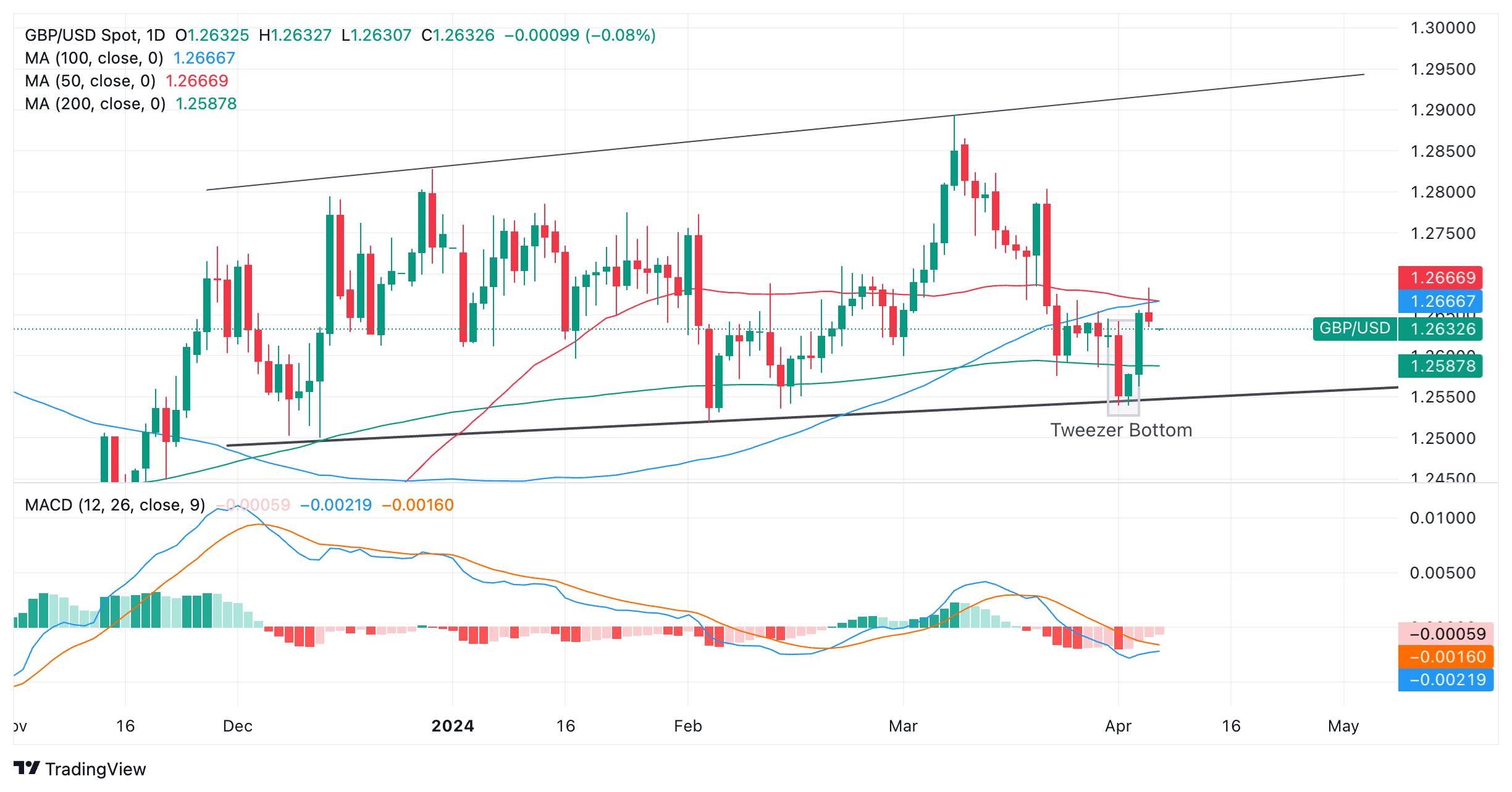
GBP/USD Price Analysis: Bounces off bottom of range but soon stalls

GBP/USD has just bounced off the bottom of a medium-term consolidation range after forming a bullish Tweezer Bottom Japanese candlestick pattern.   

The pair rose up strongly on Wednesday and Thursday but then hit stubborn resistance at the intersection of two major moving averages – the red 50-day and blue 100-day Simple Moving Averages (SMA) – and stalled. Read More...
Author

FXStreet Team

Composed of a group of economic journalists and FX experts, the FXStreet content team produces and oversees all content published on FXStreet. It provides a purely journalistic approach to the Forex market.

More from FXStreet Team

Share:

Editor's Picks

GBP/USD remains slightly bid near 1.3300

GBP/USD now advances marginally and manages to dispute the 1.3300 region on Tuesday. Indeed, Cable regains some balance on the back of the lacklustre performance of the Greenback, all preceding the Fed’s meeting on Wednesday and the BoE’s gathering on Thursday.

EUR/USD recedes from tops, back below 1.1400

EUR/USD manages to set aside part of the recent weakness and clinches decent gains on Tuesday. Indeed, spot keeps the trade below the 1.1400 mark amid acceptable losses in the US Dollar, all following rising optimism of a US-Iran deal and steady caution prior to the FOMC gathering on Wednesday.

Gold bounces on poor US data

Gold remains under marked downside pressure on Tuesday, although the $4,000 zone per troy ounce emerges as a decent support for now. The precious metal’s pullback comes despite the modest losses in the US Dollar in a context of easing geopolitical tensions ahead of the key Fed event on Wednesday.

XRP falls toward $1.00 despite dwindling exchange reserves
Ripple (XRP) continues to trade under increasing pressure on Tuesday. This marks the second consecutive day of declines, reflecting broader risk-off sentiment as investors appear to shift gears in anticipation of the Federal Reserve (Fed) interest rate decision. On Wednesday, the Federal Open Market Committee (FOMC) is widely expected to leave interest rates unchanged in the 3.50%-3.75% range.
Warning signs in the stock market: Is this the top, or just a very short fuse?
Overnight, South Korea's Kospi fell more than 10%, SK Hynix lost close to 15% and Samsung Electronics lost 13%. Into that, Dow Jones Industrial Average futures traded up around 1% on paint and soft drinks, and S&P 500 futures sat roughly flat. An index that absorbs a memory-chip panic and prints nothing is not a calm market.
US Dollar mid-year outlook: Exceptional currency, exceptional risks?
The US Dollar enters the second half of 2026 in a markedly different position from a year ago. The King currency has recovered, reflecting persistent US inflation, changing expectations for Fed policy, geopolitical tensions and renewed demand for defensive assets.