NZD/USD fluctuates around 0.6450/60 following Fed Powell’s press conference
- The US Federal Reserve raised rates as expected, though pushed back against a Fed pivot.
- Officials expect the Federal Funds rate to peak at around 5.1% in 2023, while rate cuts are seen until 2024.
- According to the Federal Reserve’s projections, the US economy is foreseen to grow by 0.5% in 2022 and 2023.
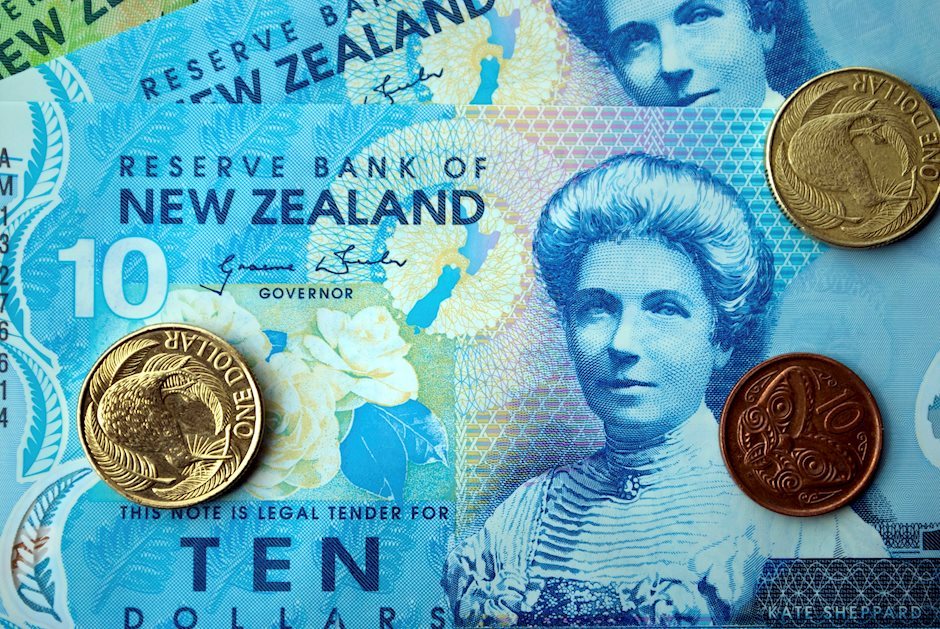

The NZD/USD remains volatile, fluctuating on Wednesday, following the Federal Reserve’s decision to raise rates by 50 bps while emphasizing the need for a higher “terminal” rate than September’s projections, as reported by the Summary of Economic Projections (SEP). At the time of writing, the NZD/USD remains volatile, trading at 0.6450s, below its opening price.
Federal Reserve Chair Jerome Powell Q&A’s remarks
As the Federal Reserve Chair Jerome Powell takes its Q&A after the release of the monetary policy statement, the NZD/USD has bounced off the day’s lows, almost erasing some of the losses attained at the release of the Fed decision. He reiterated the central bank’s commitment to getting inflation to the 2% target and said that they expect ongoing rate increases to get sufficiently restrictive.
Powell added that 50 bps hikes are still large, and forward decisions would depend on incoming data and would be done meeting by meeting, “taking forceful steps.” The Fed Chair added that history cautions against prematurely loosening policy and reiterated that the central bank would stay on course until inflation reaches the 2% target.
Summary of the Federal Reserve statement
The Federal Reserve Open Market Committee (FOMC) made the widely anticipated decision to raise the Federal Funds rate (FFR) toward 4.25-4.50%. The US central bank decision was spurred by a tight labor market and inflation reflecting various supply and demand imbalances due to the pandemic, higher food and energy prices, and broader price pressures. Policymakers added that further increases in policy are needed for inflation to return back over to the 2% target and stated that “cumulative tightening of monetary policy,” inflation, and economic and financial developments, to achieve the Fed’s target.
According to the Summary of Economic Projections, Federal officials predict a “terminal” rate average near 5.10%, with GDP anticipations at 0.5% for both 2022 and 2023; inflation is expected to reach 3.5% by 2023 before declining further in future years down toward the 2% US central bank, target.
NZD/USD 5-minute Chart
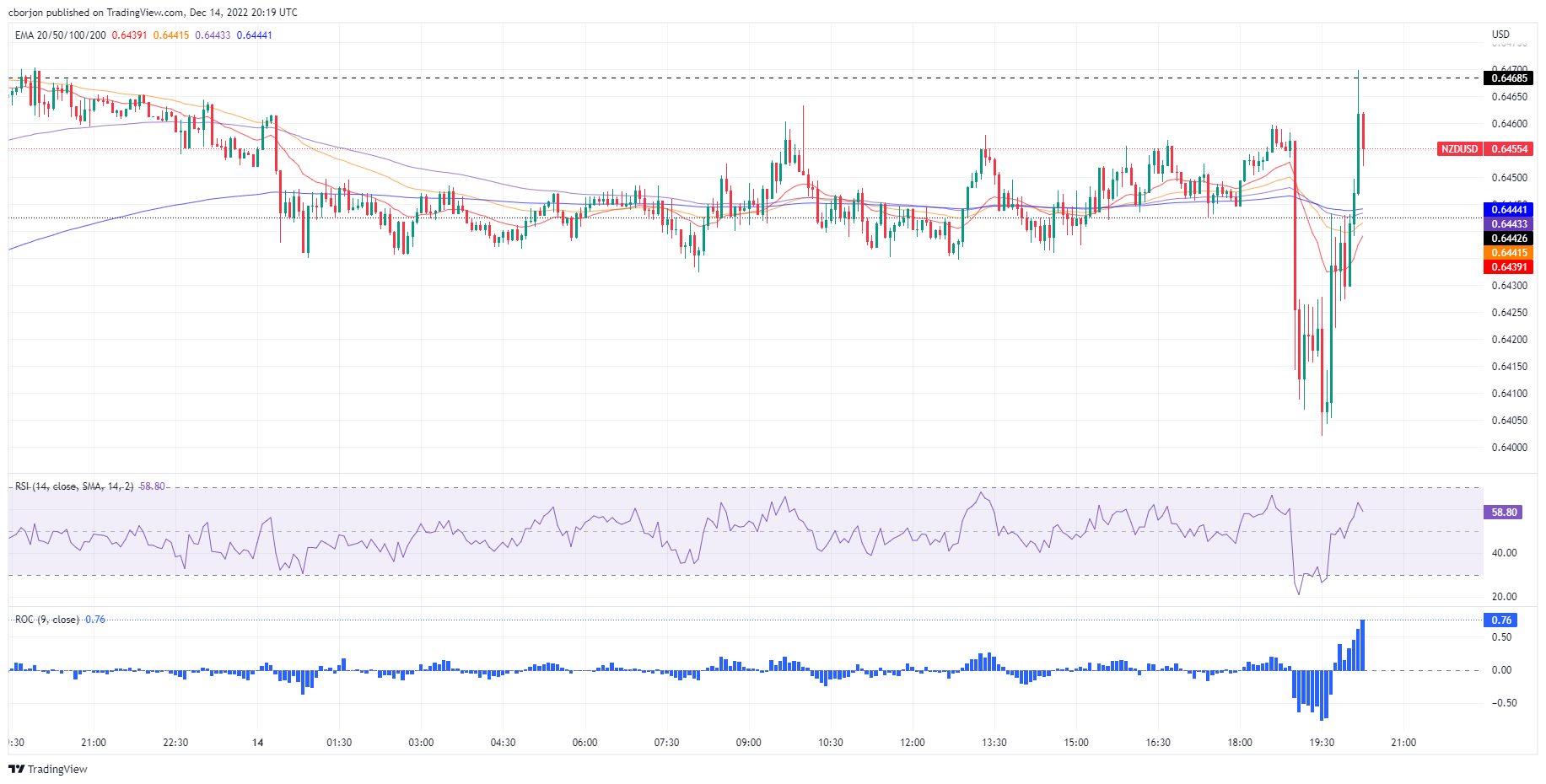
The NZD/USD dropped toward its lows around 0.6402 and so far rallied back towards the pre-release of the Federal Reserve’s policy decision while the Fed Chair Powell takes the stand. It should be said the NZD/USD is back trading in the green, though it would remain volatile. On the upside, the NZD/USD key resistance levels lie at 0.6500, followed by the YTD high of 0.6575, ahead of the 0.6600 mark. On the flip side, the NZD/USD first support would be the 0.6400 mark, followed by the 20-day Exponential Moving Average (EMA) at 0.6288.
Author
Christian Borjon Valencia
FXStreet
Markets analyst, news editor, and trading instructor with over 14 years of experience across FX, commodities, US equity indices, and global macro markets.