Nintendo’s stock faces a critical test: Profitability and recovery

The recent deterioration in Nintendo’s financial outlook has intensified concerns surrounding the company’s stock performance, with investors increasingly questioning whether the Japanese gaming giant can maintain profitability during one of the most inflationary periods the semiconductor industry has experienced in years.
Weak earnings guidance could limit stock recovery
Today, the company declared that it expects to sell 16.5 million units of the Switch 2 during the fiscal year ending March 31, 2027. While this would still represent a strong hardware performance by industry standards, it marks a notable decline from the 19.86 million units sold during the previous fiscal year. More importantly for investors, the guidance came in significantly below market expectations and reinforced fears that rising production costs are beginning to weigh heavily on Nintendo’s growth trajectory.
Nintendo also delivered guidance that disappointed markets across its key financial metrics. The company forecasts annual net sales of 2.05 trillion yen for the current fiscal year, implying an 11.4% decline compared to the previous year and coming in significantly below the 2.46 trillion yen expected by analysts surveyed by LSEG. Nintendo additionally expects net profit to fall 27% to 310 billion yen, missing market expectations of 418.5 billion yen by a wide margin.
These disappointing projections help explain why Nintendo’s stock has remained under sustained pressure over recent months. Since reaching a record high above 14,000 yen last August, shares have fallen nearly 50%, as investors increasingly price in the negative impact of the global memory chip shortage and rising manufacturing costs.
At the core of the problem is the unprecedented rise in memory prices that we explained in our previous analysis. Switch 2 consoles rely heavily on DRAM, NAND Flash and other advanced memory components that have surged in price due to the rapid global expansion of AI data centers. As major technology firms aggressively secure memory supply for artificial intelligence infrastructure, gaming hardware manufacturers are finding themselves squeezed out of the supply chain or forced to pay sharply higher prices.
This structural cost pressure has already forced Nintendo to raise Switch 2 prices, with the company explaining that the decision was made “in light of changes in market conditions” and “the global business outlook.” Nintendo had already increased prices for the original Switch last year, but this marks the first price increase for the Switch 2 since its launch in June.
The timing of the price hike is particularly sensitive because Nintendo is still in the critical adoption phase of its new console cycle. Unlike mature consoles that already have large installed user bases, the Switch 2 still needs to rapidly attract players in order to expand software sales, subscriptions and long-term ecosystem revenues. Higher hardware prices therefore risk slowing adoption at a moment when scale is essential.
This dynamic could become increasingly problematic for the stock because Nintendo’s business model relies heavily on software monetization after hardware adoption accelerates. If elevated console prices discourage consumers from upgrading, the company could face weaker game sales growth, slower online ecosystem expansion and reduced recurring digital revenue.
Investor concerns have been amplified further by reports regarding profitability pressure on the Switch 2 itself. According to Bloomberg, some Nintendo shareholders are worried that the console may already be “deeply unprofitable” at its current $450 price point due to soaring memory costs. The situation has reportedly worsened following the Iran conflict, which has increased shipping expenses and pushed up the cost of many raw materials.
This combination of declining sales expectations, shrinking margins and rising geopolitical costs creates a difficult environment for Nintendo shares in the short term. The market is increasingly worried that the company may continue facing downward earnings revisions if component inflation remains elevated throughout 2026 and into 2027.
Robin Zhu of Bernstein points out that the current memory shortage creates a long-term obstacle for the gaming industry. With supply lagging behind, console makers are under pressure to find effective ways to offset these rising costs until the market eventually rebalances.
What could stabilize sentiment and potentially support a recovery in the stock price?
According to The Financial Times, there are a couple of things that investors are likely to monitor.
The first key variable is the trajectory of memory supply. Investors will closely monitor whether manufacturers can significantly increase production capacity over the next two years. Some analysts believe the market may not fully rebalance before 2028, meaning memory inflation could remain a structural headwind for the gaming industry for an extended period.
The second factor is Nintendo’s forecasting guidance for the future quarters. Investors may eventually regain confidence if the company adopts more conservative guidance and convinces the market that the worst-case scenario has already been priced into the stock.
The third and potentially most important catalyst for sentiment is software. Nintendo’s upcoming Nintendo Direct showcase in June could become a major event for the stock if the company announces a blockbuster franchise title capable of accelerating Switch 2 adoption despite higher hardware prices.
Several analysts believe a new installment in The Legend of Zelda could be announced. Historically, flagship Nintendo franchises have played a crucial role in driving hardware sales by encouraging more dedicated gamers to upgrade consoles early in the cycle. A major first-party release could therefore partially offset the negative impact of higher console pricing and weaker consumer purchasing power.
To improve the situation longer term, Nintendo may need to accelerate its transition toward higher-margin recurring revenues rather than relying primarily on hardware profitability. Expanding digital game sales, subscription services, downloadable content and ecosystem monetization could help reduce sensitivity to future semiconductor cost cycles.
The company may also need to diversify component sourcing strategies and secure longer-term supply agreements with memory manufacturers to improve cost visibility and reduce exposure to future shortages.
Technical outlook of Nintendo Shares
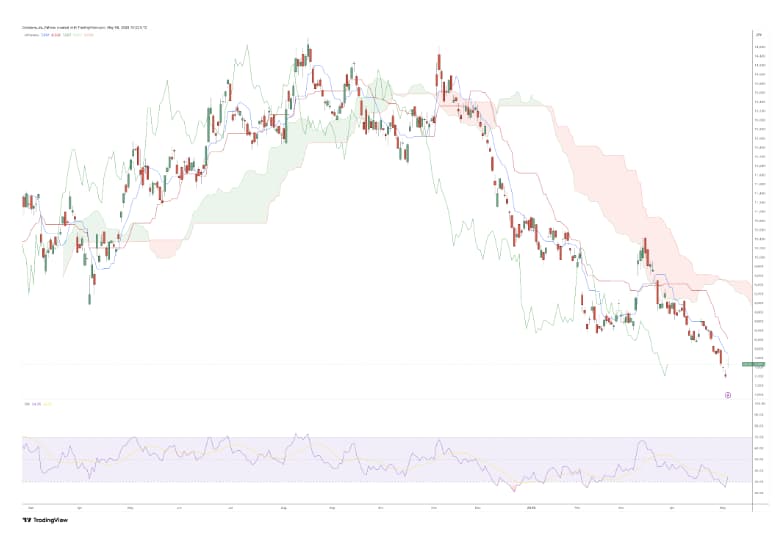
For traders, the key issue is whether the current weakness represents a cyclical supply-chain shock or the beginning of a more structural profitability problem for the console business. Over the coming months, markets will likely focus on four main indicators: memory price trends, Switch 2 sales momentum, potential earnings revisions and the strength of Nintendo’s software pipeline.
If memory inflation begins stabilizing while Nintendo successfully launches a major blockbuster title, sentiment toward the stock could improve significantly from current depressed levels. However, if hardware demand weakens further while production costs remain elevated, investors may continue reducing exposure to the company despite the long-term strength of Nintendo’s gaming franchises.
Stay up to date with what's moving and shaking on the world's markets and never miss another important headline again! Check ActivTrades daily news and analyses here.
Author

Carolane de Palmas
ActivTrades
Carolane graduated with a Masters in Corporate Finance & Financial Markets and got the AMF Certification (Financial Markets Regulator in France). Afterward, she became an independent trader, investing mostly in European and American stocks/indices.