Nikkei 225 and S&P/ASX200 surge to fresh record highs

Both Japan’s Nikkei 225 and Australia’s S&P/ASX200 climbed to record intraday highs today, underscoring the strong bullish sentiment sweeping across Asia-Pacific markets. In Tokyo, optimism was fuelled by a wave of upgraded earnings forecasts from major Japanese companies, many of which now believe the fallout from U.S. tariffs will be far less severe than initially feared.
Meanwhile, in Sydney, the Australian sharemarket extended its winning streak, marking a second consecutive session at all-time highs. The rally comes as traders position themselves ahead of a pivotal Reserve Bank of Australia (RBA) meeting, where the central bank’s next move could set the tone for both domestic equities and the Australian dollar.
With investors encouraged by resilient corporate performance in Japan and dovish monetary policy expectations in Australia, the question now is whether this momentum can be sustained—or if these markets are nearing overextended territory.
Let’s break down the drivers behind the surge.
Tariff relief, corporate upgrades, and a weak Yen propel Nikkei to new highs
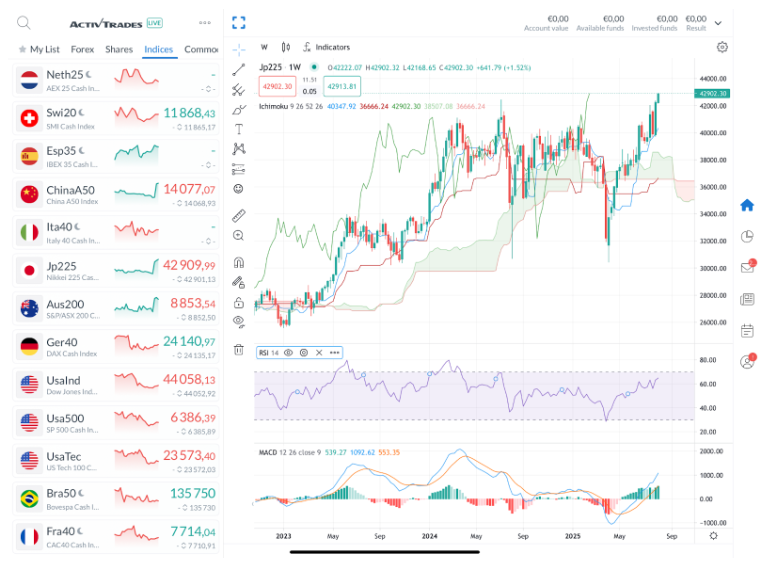
Weekly Nikkei 225 Chart - Sources: ActivTrades
Japan’s Nikkei Stock Average (the Nikkei 225) climbed to a fresh intraday record, marking its highest level in over a year, as optimism replaced earlier trade-related anxieties. The breakthrough came after several major Japanese companies revised their earnings guidance upward, citing a smaller-than-expected hit from U.S. tariffs. This shift in sentiment followed a series of developments on the trade front, including President Trump’s decision to extend the deadline for higher tariffs on China by 90 days.
The trade agreement, announced on July 22, reframed the narrative for Japan’s corporate sector. Under the deal, Japan committed $550 billion in funding directed by the United States toward rebuilding and expanding American industries, though the vast majority will take the form of loans rather than direct investment.
According to senior Japanese lawmaker Ryosei Akazawa, Tokyo will save roughly ¥10 trillion (about $68 billion) through reduced tariff rates. Instead of the previously threatened 25% levy, Japanese goods will face a baseline tariff rate of 15%, easing pressure on exporters in key industries such as automobiles, manufacturing, agriculture, and aerospace.
This shift in policy removed a significant overhang for investors. Even with earlier confusion over overlapping tariffs—which was later resolved after the Trump administration revised the presidential order—many companies began adjusting their forecasts upward.
Sony, for instance, lifted its full-year operating profit outlook by 4% to 1.33 trillion yen ($9 billion), saying it now expects tariffs to trim earnings by ¥70 billion, down from ¥100 billion projected in May. Honda also reduced its expected tariff impact, cutting the forecasted hit to ¥450 billion from ¥650 billion, allowing for an earnings upgrade for the fiscal year.
These corporate reassessments have combined with another powerful tailwind: a weaker yen. Since April 2025, the Japanese currency has fallen more than 4.5% against the U.S. dollar, boosting the overseas earnings of exporters when converted back into yen. Over the same period, the Nikkei has risen more than 35%, thanks to favourable currency moves among other factors.
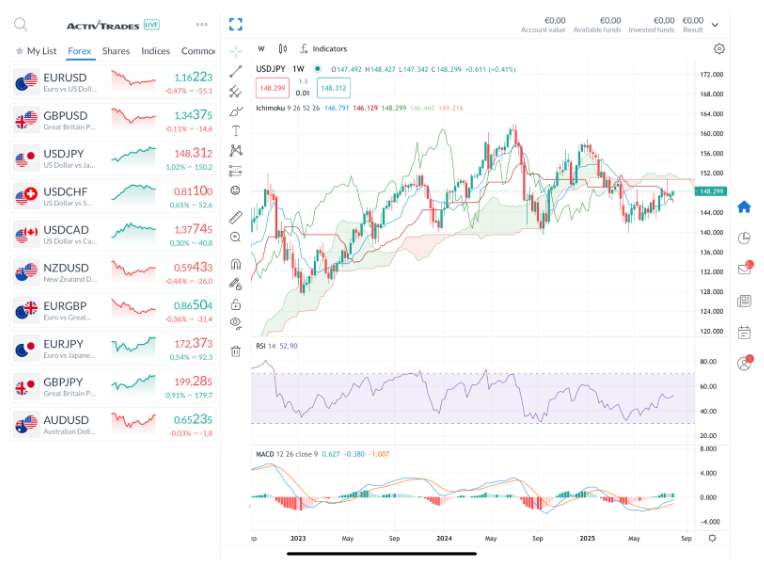
Weekly USD/JPY Chart - Sources: ActivTrades
US–China tariff extension fuels Australian market breakout ahead of the RBA
Australia’s benchmark stock index (the S&P/ASX 200) surged to fresh record highs this week, buoyed by renewed optimism over global trade after the U.S. President Donald Trump announced a significant tariff reprieve for China. Late Monday, Trump signed an executive order granting Beijing a 90-day extension on tariffs that had been scheduled to rise the very next day. The decision keeps the tariff rate on Chinese imports at 30% until November 9, rather than allowing it to climb to the higher level that had been threatened.
The extension offers a crucial breathing space for negotiations, with Washington and Beijing expected to hold further talks in the coming weeks and a potential face-to-face meeting between Trump and Chinese President Xi Jinping anticipated this autumn. Last month’s discussions in Sweden between U.S. and Chinese officials were described by both sides as constructive, hinting that a pathway toward de-escalation is still open.
For Australia, the development is more than just a geopolitical headline. China is the country’s largest export market, absorbing a vast share of its commodities, agricultural goods, and services. Any improvement in trade relations between the world’s two largest economies tends to boost investor sentiment in Australia, as stronger Chinese demand often translates into higher export volumes and improved terms of trade.
Still, the tariff issue carries underlying risks. If higher U.S. tariffs were to take effect in the future, the resulting price increases in America could suppress demand for goods globally, affecting Australian exporters directly. Indirect effects are also possible: if U.S. trade policy leads to shifts in competitiveness among Australia’s regional trading partners, local producers could face stiffer competition in other markets, weighing on export sales.
For now, however, the prospect of a thaw in U.S.–China relations, coupled with a stable tariff environment through early November, has given investors reason to push Australian equities into record-breaking territory. The rally reflects both relief at the avoided tariff hike and optimism that the current pause could be the first step toward a more lasting settlement.
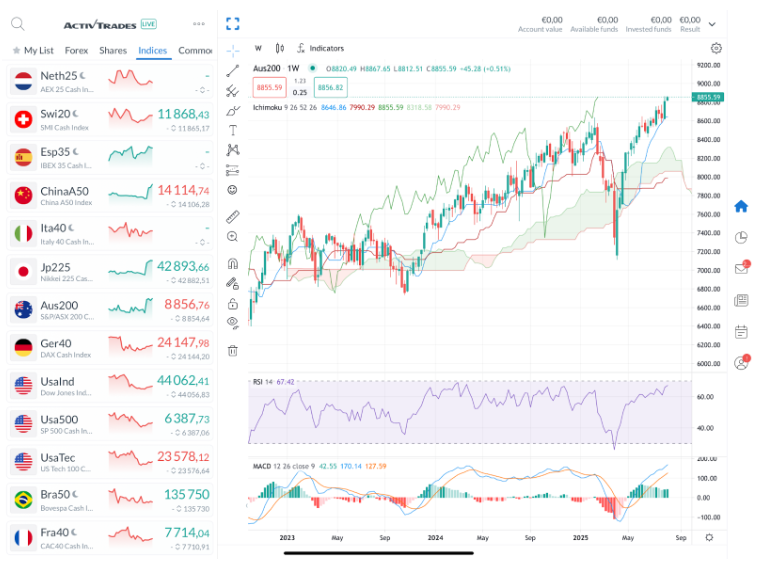
Weekly S&P/ASX 200 Chart - Sources: ActivTrades
Stay up to date with what's moving and shaking on the world's markets and never miss another important headline again! Check ActivTrades daily news and analyses here.
Stay up to date with what's moving and shaking on the world's markets and never miss another important headline again! Check ActivTrades daily news and analyses here.
Author

Carolane de Palmas
ActivTrades
Carolane graduated with a Masters in Corporate Finance & Financial Markets and got the AMF Certification (Financial Markets Regulator in France). Afterward, she became an independent trader, investing mostly in European and American stocks/indices.