|

Netflix stock crashes after streamer misses EPS consensus by 8%

  • Netflix stock shed 9% afterhours on Thursday.
  • The streamer missed GAAP EPS consensus by a noticeable amount.
  • Company's Q2 forecast underwhelms Wall Street analysts.
  • Q1 revenue beats consensus by $80 million.

Netflix (NFLX) stock sank over 9% late Thursday after the king of streaming missed Wall Street's consensus earnings estimate for the first quarter.

Netflix issued GAAP EPS of $1.23, which missed the consensus by $0.11. NFLX sank from its close at $107.88 to momentarily below $98.00.

Revenue was a bright spot. The company printed sales of $12.25 billion, up 16% YoY. That figure beat the consensus by $80 million.

However, Netflix lowered its outlook for the second quarter to below consensus. Executives now estimate Q2 sales of $12.57 billion versus analyst consensus of $12.63 billion. Likewise, they forecast Q2 GAAP EPS $0.78 versus the prior consensus of $0.84.

"We expect Q2 to have the highest [YoY] content amortization growth rate in 2026, before decelerating to mid-to-high single digit growth in the second half of the year," Netflix said in a statement. "As a result, we forecast Q2 operating margin of 32.6% compared with 34.1% in the year ago quarter. We expect year-over-year operating margin growth in Q3 and Q4 in order to deliver our 2026 margin target."

Q1 saw an operating margin of 32.3%, which was higher than the year earlier mark of 31.7%. For the

"Our full year 2026 guidance is unchanged: we forecast 2026 revenue of $50.7 billion-$51.7 billion, which represents 12%-14% growth (11%-13% F/X neutral), driven by continued healthy membership growth, pricing and a projected rough doubling of our ads revenue," Netflix said in their press release.
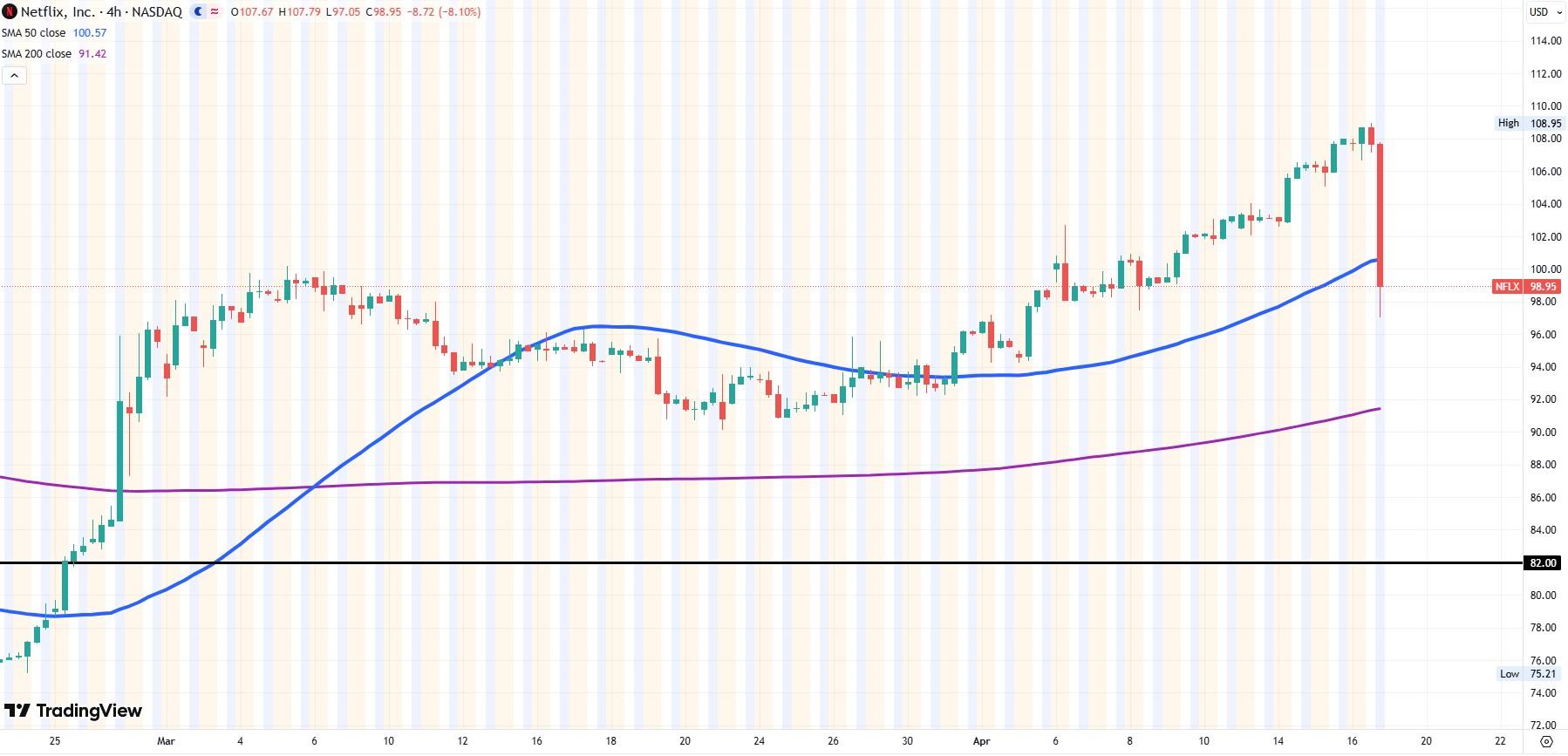
Netflix 4H stock chart
NFLX 4-hour stock chart

Author

Clay Webster

Clay Webster

FXStreet

Clay Webster grew up in the US outside Buffalo, New York and Lancaster, Pennsylvania. He began investing after college following the 2008 financial crisis.


More from Clay Webster
Share:

Editor's Picks

AUD/USD sticks to positive bias above 0.7100; lacks bullish conviction

AUD/USD trades with a positive bias for the second straight day, holding above 0.7100 in the Asian session on Friday as softer US bond yields keep US Dollar bulls on the back foot. Furthermore, hawkish RBA Governor Bullock's comments boost rate hike bets and support the Aussie. However, the Fed's hawkish outlook, along with geopolitical uncertainties, limits USD losses and caps the pair.

USD/JPY approaches 158.00 as Japanese Yen resumes decline

USD/JPY is resuming its upside in the European session on Friday, refreshing two-week highs and nearing 158.00. The Japanese Yen extends losses, despite the Bank of Japan's (BoJ) expected rate hike to 1.25% and hawkish Governor Ueda's comments, as two surprise dissents against the rate hike weigh on it.

Gold keeps the bid tone in place; still below $4,400

Gold adds to the optimism seen in the second half of the week, trading with decent gains just below the $4,400 mark per troy ounce on Friday. The precious metal’s advance finds traction in declining crude oil prices and fresh selling pressure on the US Dollar.

Why altcoin season isn't coming back — and what stole its capital
If, after two years of being frozen in ice, Katara and Sokka woke you up to the crypto market, it would seem like 100 years have passed. With Bitcoin soaring to record highs just over a year ago, everyone expected a routine altcoin season, where investors take profits from the top crypto to chase higher returns in altcoins.
BoJ Recap: Not as hawkish as expected

The BoJ raised its short-term interest-rate target to 1.25% from 1.00% in a 7-2 vote, marking another step in the normalisation of monetary policy and widely matching what everyone has been expecting for weeks. Governor Kazuo Ueda said the policy phase had changed.

BoJ Recap: Not as hawkish as expected

The Bank of Japan (BoJ) raised its short-term interest-rate target to 1.25% from 1.00% in a 7-2 vote, marking another step in the normalisation of monetary policy and widely matching what everyone has been expecting for weeks.












