Meta's share price brushes off legal woes, but there are more to come

The main story in the tech world was expected to be Nvidia’s earnings that are released later today, however, Meta is grabbing the headlines, as it faces paying $16.7bn in damages after reaching an agreement on a long running legal battle with 29 US states who sued the social media giant.
The case against Meta was linked to its alleged failures to protect children who use its apps including Facebook and Instagram, and how these apps promote social media addiction in the young.
Meta forced to make lasting changes to Facebook and Instagram
The agreement includes several requirements that Meta must implement going forward, including daily usage limits for children, nighttime blocks, enhanced age assurance measures and additional tools for parents to control how their children are interacting with Meta’s apps.
Pressure on Meta to change its ways
The States who sued Meta said that this agreement will make social media safer for children. This remains to be seen, a judge still needs to ratify the agreement, however, it would be in Meta’s best interests to implement these changes and pay the fine as soon as possible, otherwise its own lawyers said that the case, and other cases like it, could cost the company hundreds of billions of dollars in potential fines.
Meta’s share price shrugs off fine, but for how long?
The financial impact from the fine can be absorbed by Meta. It generated $60.8bn in revenues in Q2, a 28% increase in a year. However, a fine of this scale, could make a serious dent in its future quarterly earnings reports as a one-off charge. This is likely to impact Q4 earnings, or even 2027 numbers, due to the lags in payment. Meta has also said it will hold back $5.3bn, unless Youtube and TikTok pay the same amount. Meta is justifying this move by arguing that teens move fluidly across platforms.
Further fines for Meta expected
There could be further fines to come for Meta. The European Commission has issued two findings of non-compliance against Meta under its Digital Services Act, including utilizing addictive design features and not protecting teens from harmful content. These are similar allegations that were used in the US case, so the EU could push for a chunky fine of the same scale as the US. If Meta is found guilty of these breaches, then it could face a fine of up to 6% of global annual revenue that it will need to pay in the EU. Other countries could also follow suit, and we may see an accumulation of fines in the coming years for Meta, which could have a meaningful impact on its future earnings and profitability levels.
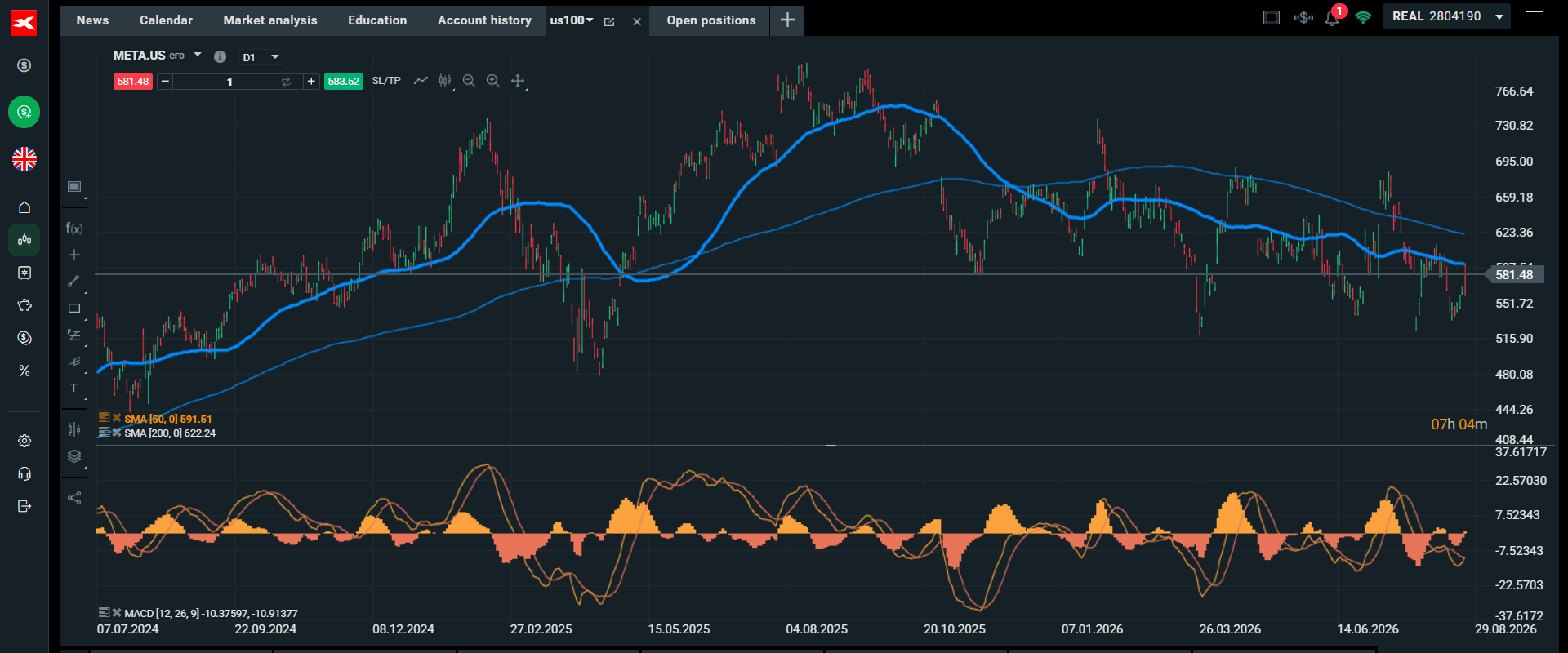
In the aftermath of today’s ruling, Meta’s share price has reversed early losses and is now higher by more than 2%. This is likely a relief rally that the court case won’t go ahead in the US, and the fine will be a maximum of $16.7bn. As mentioned, Meta is facing further legal action around the world, which could limit its share price recovery. Meta is one of the weakest performers in the Magnificent 7 this year, and its share price is down 13% YTD.
Longer term impact on its business model
We believe that concerns about legal costs, and the company’s spending on its AI ambitions could keep the stock subdued in the medium term. However, the longer-term direction of the stock could depend on how the business reacts to legal requirements that will restrict access to its main apps by younger teens and children. This could have a major impact on Meta's business model. If teens and children can't access its apps, how will they interact with Meta when they get older? Will this impact advertising revenues and its broader AI ambitions? Could it hurt Meta’s profitability? It is too early to know at this point, but if it does, Meta could see its share price struggle in the long term.
Chart 1: Meta, daily price chart, Meta is approaching the 50-day sma resistance.
Source: XTB
Author

Kathleen Brooks
XTB UK
Kathleen has nearly 15 years’ experience working with some of the leading retail trading and investment companies in the City of London.